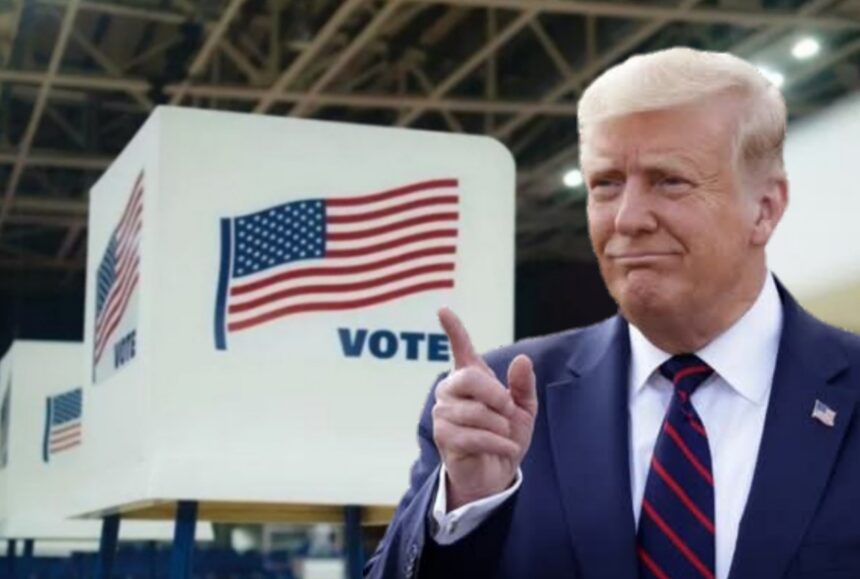
U.S. President Donald Trump has reignited controversy over the integrity of America’s electoral system, using a nationally televised prime-time address to warn of what he described as serious threats to the upcoming midterm elections. Promising “really, really big news” before his speech, Trump unveiled a set of declassified but heavily redacted documents that ultimately failed to provide the explosive evidence many supporters had anticipated. Instead, the documents and Trump’s remarks have fueled a new political debate over whether the president is laying the groundwork to challenge future election results if Republicans suffer significant losses.
During his address, Trump alleged that large numbers of non-citizens could illegally participate in federal elections, claimed that China was attempting to gain access to U.S. voter databases, warned of vulnerabilities in election infrastructure, and criticized the continued use of mail-in ballots, arguing that they leave the voting process open to fraud. He urged Americans to pressure lawmakers into passing the proposed SAVE America Act, legislation that would require proof of U.S. citizenship and a nationwide photo identification requirement for voting in federal elections. However, political observers note that the measure currently lacks sufficient Republican support in the Senate, making its passage highly unlikely.
Critics argue that the speech was less about advancing election legislation than about shaping a political narrative ahead of the midterm vote. They contend that Trump has repeatedly maintained that any election he does not win—or does not win by a decisive margin—must have been compromised. According to opponents, Thursday night’s address was another attempt to cast doubt on the credibility of future election results before ballots are even counted.
The issue also resurfaced during Senate confirmation hearings for Trump’s nominee for Director of National Intelligence, Jay Clayton. When asked directly who won the 2020 presidential election, Clayton declined to explicitly acknowledge Joe Biden’s victory, stating only that Biden had been “certified as President.” The response drew sharp criticism from Democratic Senator Jon Ossoff, who questioned whether senior government officials were being pressured to avoid contradicting the president’s long-standing claims about election fraud.
Leading Democrats have expressed deeper concerns about the potential consequences of Trump’s rhetoric. Representative Jim Himes, the ranking Democrat on the House Intelligence Committee, warned that the president appeared to be creating a political justification to dispute the election outcome if Republicans underperform. Himes suggested that claims of widespread non-citizen voting could potentially be used to justify extraordinary federal intervention in the election process, including the deployment of Homeland Security personnel in disputed states—a scenario that he warned would pose a serious challenge to America’s democratic institutions.
Election experts note that disputes over voting procedures have become increasingly polarized in recent years, with debates surrounding voter identification laws, mail-in ballots, election security, and foreign interference dominating the U.S. political landscape. While supporters argue that stricter voting requirements are necessary to protect election integrity, opponents warn that such measures could make voting more difficult for millions of eligible citizens without addressing widespread fraud, for which evidence remains limited.
As the United States moves closer to another pivotal midterm election, Trump’s renewed focus on election fraud has once again placed confidence in the country’s democratic process at the center of national debate. The outcome of the elections is expected not only to determine control of Congress but also to test public trust in America’s electoral institutions at a time of deep political polarization and growing concern over the future of democratic governance.
US midterm elections heat up, Trump’s speech sparks new political crisis