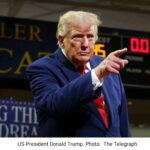
Israeli Prime Minister Benjamin Netanyahu is set to hold high-level talks with US President Donald Trump at the White House next Tuesday during an official visit to Washington, according to a statement from the Israeli Prime Minister’s Office. The visit will also include Netanyahu’s attendance at the funeral of the late Republican Senator Lindsey Graham, one of Israel’s strongest advocates in the US Congress, whose sudden death last week marked the end of a long-standing political alliance that significantly shaped US-Israel relations.
The meeting will be Netanyahu’s seventh visit to the White House since Trump began his second term, underscoring the exceptionally close relationship between the two leaders and highlighting Washington’s continued strategic commitment to Israel amid one of the most volatile periods in the Middle East in recent years.
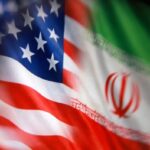
The visit comes as regional tensions continue to intensify following the collapse of a ceasefire established under a Memorandum of Understanding (MoU) between the United States and Iran. Israel had strongly opposed the agreement from the outset, arguing that it failed to address Tehran’s military capabilities and regional influence. At the same time, Israeli military operations in Lebanon have repeatedly threatened broader diplomatic efforts aimed at stabilising the region.
The Trump administration is currently overseeing negotiations between Israel and Lebanon intended to bring an end to hostilities without the participation of Hezbollah. Although both governments have agreed in principle to a framework that would eventually transfer Israeli-held areas to the Lebanese Armed Forces, little has changed on the ground, and Israeli forces remain deployed in key positions. During a recent meeting with Lebanese President Joseph Aoun, President Trump stopped short of providing any timetable for a potential Israeli withdrawal.
Meanwhile, the military confrontation involving the United States and Iran has continued to escalate. US Central Command (CENTCOM) announced that American forces had completed their thirteenth consecutive night of strikes against Iranian targets. Iran has responded with repeated attacks on US military assets across the region, including a strike on a base in Jordan that reportedly killed three American service members. Washington has also continued reinforcing Israel with additional military assets, a move that many security analysts interpret as preparation for a broader regional confrontation.
Netanyahu’s visit also takes place against the backdrop of the ongoing war in Gaza. Despite a US-backed ceasefire announced last October, Israeli military operations have continued, including frequent airstrikes and new displacement orders affecting Palestinian civilians. According to United Nations agencies, approximately 1.4 million people—around 67 percent of Gaza’s population—remain trapped in conditions of acute food insecurity or worse. Local Palestinian health authorities say more than 73,000 Palestinians have been killed since the war began, including over 1,100 deaths recorded since the current ceasefire took effect. The humanitarian crisis has drawn increasing international concern, with aid agencies warning that living conditions across the territory continue to deteriorate.
Violence has also intensified across the occupied West Bank. Palestinian officials reported that four Palestinians were killed during clashes involving Israeli forces and settlers near Nablus, while Israeli authorities confirmed that one Israeli settler was also killed and several others injured. According to Palestinian sources, at least 86 Palestinians have been killed in the occupied West Bank since the beginning of the year, including dozens during attacks involving Israeli settlers.
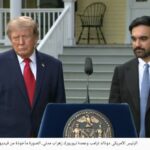
The Washington visit is further overshadowed by growing legal and political controversy surrounding Netanyahu. New York City Mayor Zohran Mamdani recently urged US federal authorities to arrest the Israeli prime minister in connection with an International Criminal Court (ICC) arrest warrant alleging war crimes in Gaza. Although Mamdani later acknowledged that he lacked the legal authority to order such an arrest, his remarks reignited debate over the ICC’s jurisdiction and international accountability.
The United States, which is not a party to the Rome Statute establishing the ICC, has consistently rejected the court’s authority over American and Israeli officials. The Trump administration has taken an especially confrontational approach toward the ICC, imposing sanctions on court officials and organisations supporting its investigations. President Trump has publicly stated that Netanyahu would not face arrest while on American soil, reaffirming Washington’s unwavering support for the Israeli leader.
Analysts expect the Trump-Netanyahu meeting to focus on a wide range of critical issues, including the expanding conflict with Iran, military coordination between the United States and Israel, the future of the Gaza war, security developments in Lebanon, and broader regional stability. Discussions may also address proposed US defence legislation designed to deepen military integration between Washington and Tel Aviv, further strengthening one of America’s closest strategic partnerships.
Despite continued government support for Israel, public opinion within the United States has shifted significantly during the Gaza conflict. Recent polling indicates declining support for Israeli military operations, while divisions have emerged within both major political parties over America’s role in the region. Some influential conservative voices have also argued that Israel’s confrontation with Iran has drawn the United States deeper into a costly and prolonged regional conflict.
As a result, Netanyahu’s upcoming visit to Washington is expected to carry significance well beyond bilateral diplomacy. The outcome of the White House meeting could influence future US-Israel strategic cooperation, shape the next phase of regional security policy, and affect diplomatic efforts aimed at preventing a wider conflict across the Middle East at a time of mounting instability.
Trump and Netanyahu to hold high-level meeting at White House over Middle East crisis