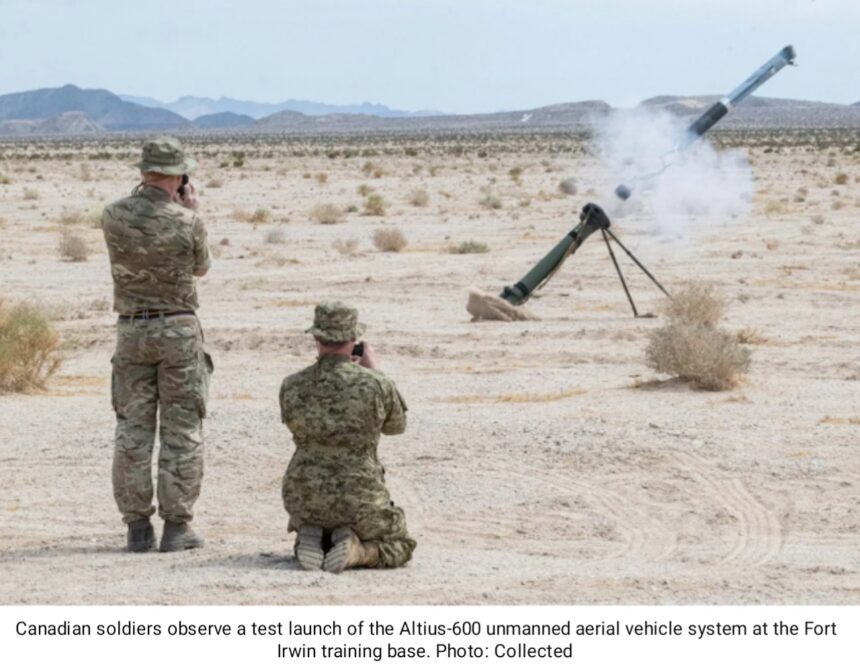
The blistering expanse of the Mojave Desert has become the testing ground for what military planners describe as a glimpse into the future of warfare, where soldiers, autonomous systems, drones and artificial intelligence operate side by side in an effort to replicate the conditions of a modern battlefield as closely as possible. Far from the urban skylines of Las Vegas and Los Angeles, troops are training in an unforgiving environment designed to expose the operational challenges they could face in a real conflict, with commanders saying the objective is not simply to rehearse tactics but to create the most realistic prediction of what future combat may look like and prepare forces to adapt to it as rapidly as possible. Laser-based training weapons, robotic platforms, networked sensors and advanced battlefield simulation systems may resemble the equipment of a sophisticated game, yet military officials stress that the exercise is intended to recreate the pressures, uncertainty and split-second decision-making that define high-intensity warfare. Participants are confronted with simulated electronic attacks, disrupted communications, contested airspace, autonomous threats and rapidly changing battlefield conditions, forcing units to coordinate across multiple domains while responding to evolving scenarios in real time. Defense analysts say the exercise reflects a broader shift in military planning driven by lessons from recent conflicts, where drones, precision-guided weapons, cyber capabilities and real-time intelligence have fundamentally altered the conduct of war and demonstrated that technological superiority can be as decisive as conventional firepower. Officials involved in the exercise argue that the controlled environment of a military drill provides an opportunity to identify weaknesses, refine operational concepts and strengthen coordination before forces are confronted with the consequences of an actual battlefield, where mistakes carry irreversible costs. While injuries during training may be limited to broken bones or equipment failures, commanders acknowledge that the same errors in combat could result in heavy casualties, failed missions and strategic setbacks with far-reaching consequences. As global militaries continue investing in artificial intelligence, autonomous systems and next-generation command-and-control networks, exercises such as those conducted in the Mojave are increasingly viewed as essential laboratories for testing the technologies and doctrines expected to shape future conflicts. Military planners say the ultimate measure of success will not be determined during a training exercise but on the day when armed forces are required to fight a real war, where the stakes will no longer be simulated outcomes or training evaluations, but the lives of soldiers, the security of nations and the outcome of conflicts that could reshape regional and global stability.
US is rehearsing future battlefields with lasers, robots and drones