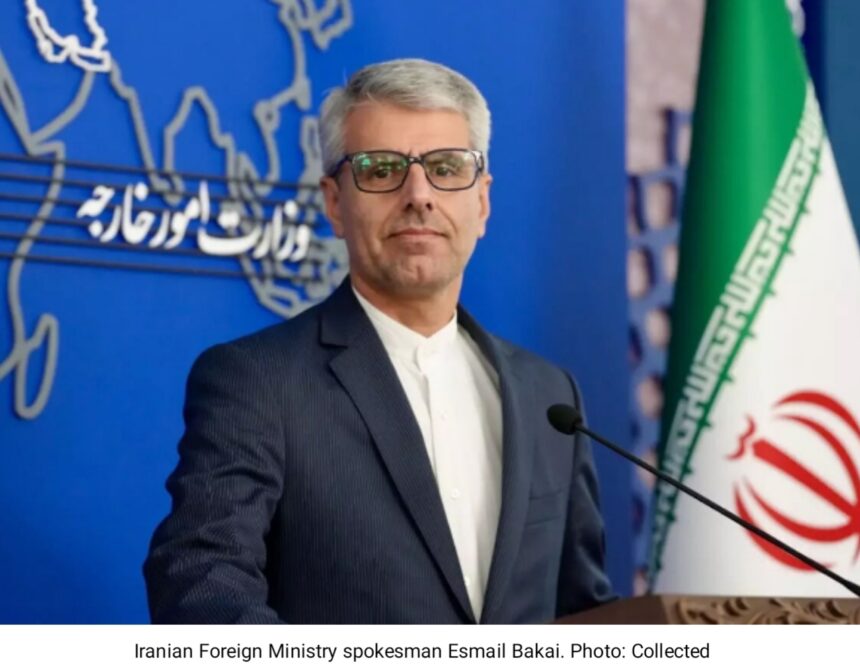
TEHRAN — Iran and Oman are making steady progress in negotiations aimed at establishing a new framework for safe maritime navigation through the Strait of Hormuz, one of the world’s most strategically important energy corridors, according to Iranian Foreign Ministry spokesman Esmaeil Baghaei.
Speaking on Tuesday, Baghaei said discussions between the two neighboring coastal states have advanced at both the technical and political levels, with officials working to develop mechanisms that would ensure the uninterrupted movement of commercial shipping while protecting the sovereign rights and national security interests of both countries.
“The talks, which are being held between the two coastal states of the Strait of Hormuz, are focused on establishing safe shipping routes while safeguarding the sovereign rights and security interests of Iran and Oman alike,” Baghaei said.
The negotiations come at a time when the Strait of Hormuz remains under close international scrutiny due to heightened geopolitical tensions and its critical role in global energy supplies. Roughly one-fifth of the world’s seaborne oil trade passes through the narrow waterway, making any security arrangement there significant for international markets and maritime commerce.
According to the Iranian Foreign Ministry, Tehran and Muscat are jointly developing the technical and operational mechanisms that could serve as the foundation for future shipping arrangements. Baghaei said the final details would be announced only after negotiations have been fully concluded and both sides reach a formal agreement.
Iran has also firmly rejected suggestions that the United States is involved in the ongoing discussions. While some U.S. officials have indicated that Washington has a role in developments concerning the strategic waterway, Tehran maintains that the negotiations are strictly a bilateral initiative conducted exclusively between Iran and Oman.
Iranian officials argue that maritime security in the Persian Gulf and the Strait of Hormuz should be managed through regional cooperation among neighboring states, rather than through the involvement of outside powers. Oman has long played the role of a regional mediator and maintains diplomatic relations with both Iran and Western countries, positioning Muscat as a key partner in efforts to reduce tensions in the Gulf.
Regional analysts say that if the negotiations result in a formal maritime security arrangement, the agreement could help strengthen confidence among international shipping companies, reduce the risk of disruptions to global energy exports, and contribute to greater stability in one of the world’s most strategically sensitive waterways.
The outcome of the talks is expected to be closely watched by governments, energy markets, and the global shipping industry, as any new framework governing navigation through the Strait of Hormuz could carry significant geopolitical and economic implications well beyond the Middle East.
Tehran and Muscat on the verge of reaching an agreement on the Strait of Hormuz, final decision soon