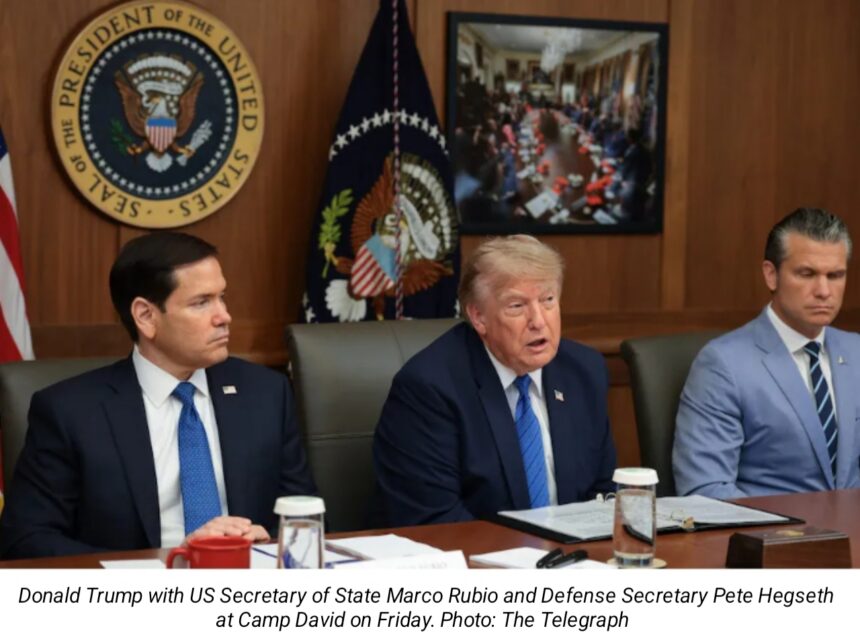
INTERNATIONAL DESK: The Middle East is once again facing the prospect of a dangerous military escalation after reports emerged that U.S. President Donald Trump has ordered preparations for a new wave of strikes targeting Iran’s energy infrastructure. According to reports published by several international media outlets, the operation could begin as early as this weekend and continue for several days, with the stated objective of increasing pressure on Tehran and compelling its leadership to return to negotiations over its nuclear program and broader regional security issues. While the reports have attracted widespread international attention, the White House has not publicly confirmed the operational details or timeline of any impending military action.
Sources cited in the reports indicate that the proposed campaign would focus on key components of Iran’s energy sector, including oil production facilities, natural gas infrastructure, fuel storage depots, refineries, power generation sites, and other strategic assets considered vital to the country’s economy. Analysts say Iran’s energy industry remains the backbone of its state revenue, making it a central target for any strategy aimed at applying maximum economic and political pressure. Military experts argue that strikes against such infrastructure could significantly disrupt domestic energy production while increasing financial strain on Tehran, though they also warn that attacks on civilian-linked energy facilities carry the risk of broad regional and global consequences.
The reported plans come amid heightened tensions following months of military confrontations, diplomatic deadlock, and growing concerns over Iran’s expanding nuclear activities. Washington has repeatedly maintained that it seeks to prevent Tehran from acquiring a nuclear weapon and has insisted that military options remain available should diplomatic efforts fail. At the same time, U.S. officials have continued to emphasize that diplomacy remains the preferred path, provided Iran is willing to engage in meaningful negotiations.
Iranian officials have responded with strong warnings, declaring that any new attacks on the country’s strategic infrastructure would trigger a forceful and immediate response. Tehran has stated that retaliation would not necessarily be confined to Iranian territory and has warned that U.S. military bases, regional allies, and strategic energy installations across the Gulf could become potential targets if a new military campaign is launched. Iranian officials have also cautioned neighboring countries against allowing their territory or military facilities to be used in support of any U.S. operation, arguing that such involvement could draw them directly into the conflict.
Security analysts warn that a renewed exchange of strikes between Washington and Tehran could rapidly expand beyond the two countries, threatening the stability of the wider Middle East. Particular concern surrounds the Strait of Hormuz, through which a significant share of the world’s seaborne oil exports passes each day. Any disruption to maritime traffic in the strategic waterway could trigger sharp increases in global oil prices, disrupt international shipping, and place additional pressure on already fragile global supply chains. Financial markets have also been closely monitoring developments, with investors assessing the potential economic consequences of another major regional conflict.
Regional governments have intensified diplomatic efforts to prevent further escalation, with several Gulf states urging restraint and calling for renewed negotiations. International observers note that while military preparations may be underway, diplomatic channels have not been completely abandoned. Behind-the-scenes mediation by regional and international actors is reportedly continuing in an effort to reduce tensions before they spiral into a broader confrontation.
Defense experts believe the coming days could prove decisive. If the reported plans proceed, the Middle East may witness one of its most significant military confrontations in recent years, with implications extending far beyond the region. Conversely, a breakthrough in diplomacy could still avert another cycle of conflict. For now, uncertainty continues to dominate the strategic landscape as governments, energy markets, and international institutions closely watch whether the crisis moves toward military escalation or renewed negotiations.
Trump’s new military plan: Preparing to attack energy infrastructure to bring Iran back to talks