Iran is moving to rebuild parts of its air-defence network after suffering significant damage during its conflict with the United States and Israel, with recent reports suggesting that Tehran is seeking new supplies of shoulder-fired surface-to-air missile systems as it attempts to restore its ability to defend against low-altitude aircraft and drones. The reported procurement highlights the wider military consequences of the conflict and could add a new layer of uncertainty to an already volatile security environment across the Middle East.
According to a recent Reuters report citing sources familiar with the matter, Iran was expected to receive hundreds of Chinese-made man-portable air-defence systems, commonly known as MANPADS, under a deal that could involve between 300 and 400 systems. The systems are designed to provide relatively mobile, short-range protection against aircraft and other aerial targets flying at low altitudes. The reported agreement was estimated by sources to be worth tens of millions of dollars. China, however, has rejected the report as unfounded, meaning the precise status and delivery of the systems could not be independently established.
The reported effort comes after Iran’s air-defence infrastructure was placed under severe pressure during its confrontation with the United States and Israel. Large fixed radar installations and other elements of the country’s integrated air-defence network were reportedly targeted during the fighting, exposing vulnerabilities in a system that Tehran has spent years developing to deter air attacks.
For Iran, rebuilding its air defences is likely to be a central element of its post-war military strategy. Rather than relying exclusively on large, fixed missile batteries and radar installations, Tehran could seek to expand the number of smaller and more mobile defensive units capable of operating from dispersed locations. Such systems are difficult to detect and destroy and can complicate the planning of air operations, particularly when used alongside longer-range surface-to-air missile batteries, electronic warfare systems and radar networks.
Man-portable air-defence missiles do not provide a complete solution to the vulnerabilities of a country’s airspace. Their relatively short range means they cannot replace sophisticated long-range air-defence systems or an integrated radar and command network. But they can provide an additional layer of protection against helicopters, drones and aircraft operating at lower altitudes, potentially increasing the risks faced by attacking forces.
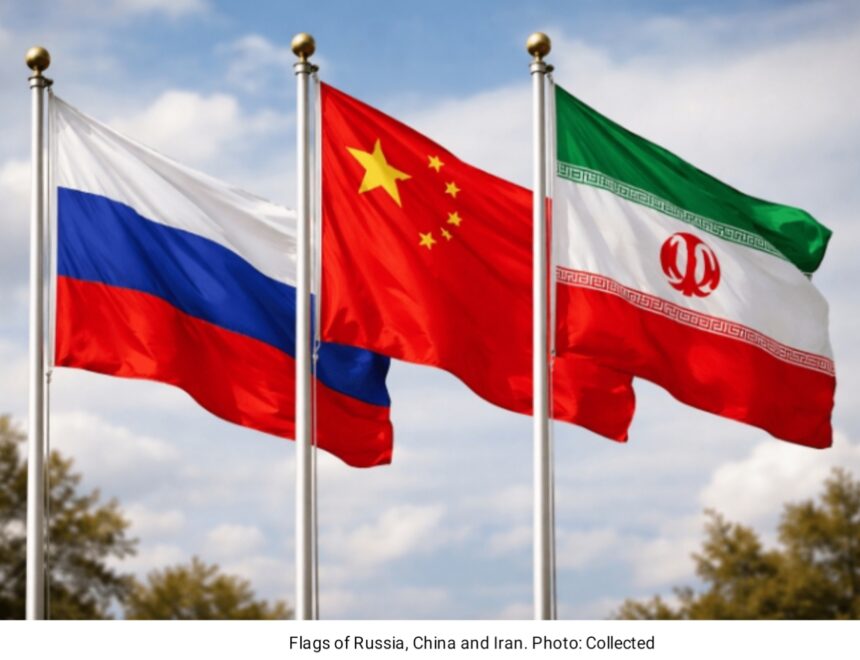
The reported Chinese involvement has also raised questions about the future of military cooperation between Beijing and Tehran. China has maintained close economic and diplomatic ties with Iran and has repeatedly called for a political solution to regional conflicts. At the same time, Beijing’s growing strategic relationship with Tehran has attracted increasing attention from Washington and its allies, particularly as competition between the United States and China expands beyond the Asia-Pacific region.
Russia’s role is also being closely watched. Moscow and Tehran have developed extensive strategic and military ties in recent years, although specific claims that hundreds of Russian shoulder-fired air-defence missiles have already been delivered to Iran have not been independently confirmed. Any substantial expansion of Russian military assistance could further complicate the regional security balance and provide Tehran with additional options as it attempts to rebuild its defensive capabilities.
The issue extends beyond the immediate question of how many missiles Iran may acquire. Modern air defence depends on the integration of sensors, command-and-control systems, radar networks, electronic warfare capabilities, interceptor missiles and aircraft. Replacing individual missile systems without rebuilding the broader network would therefore do little to restore the full defensive capacity that Iran lost during the conflict.
Nevertheless, even a relatively limited increase in mobile air-defence weapons could influence the calculations of potential adversaries. A force equipped with dispersed shoulder-fired missiles can create additional risks for helicopters, drones and aircraft operating close to the ground. It can also force attacking forces to devote more resources to intelligence gathering, suppression of enemy air defences and route planning.
The reported effort to rebuild Iran’s air defences also comes as the United States faces its own military challenges following the prolonged conflict. Reuters has reported that Washington used a substantial quantity of long-range precision weapons during the war with Iran, while US missile-defence systems were also placed under considerable operational pressure. The experience has highlighted the enormous cost associated with sustained high-intensity air and missile warfare.
For Israel, the reconstruction of Iran’s air-defence network could present a different challenge. Israel has repeatedly demonstrated the ability to conduct long-range air operations and strike targets deep inside hostile territory, but a more dispersed Iranian defensive architecture could make future operations more complicated. Even if such systems do not prevent an air campaign, they could increase the risks and costs associated with it.
Iran’s efforts therefore appear to form part of a broader attempt to rebuild its military deterrence after the conflict. Tehran is likely to focus not only on replacing destroyed equipment but also on changing the structure of its air-defence network to make it more resilient against future attacks. Mobility, concealment, redundancy and the ability to operate independently from damaged command centres could become increasingly important components of that strategy.
The reported procurement also demonstrates how the aftermath of the conflict could deepen the involvement of outside powers in the Middle East’s military landscape. If Iran succeeds in obtaining additional air-defence systems from China, Russia or other suppliers, the country could gradually rebuild a layered defensive network designed to make future air operations more difficult. At the same time, any significant transfer of military technology to Tehran could attract additional pressure from Washington and its allies.
For now, however, significant uncertainty remains over the scale of the reported deliveries and the extent to which Iran has actually received new systems. China’s denial of the reported deal means that some of the most important details remain disputed, while claims concerning Russian supplies also require further independent verification.
What is clear is that Iran is attempting to recover from a conflict that exposed serious weaknesses in its air-defence architecture. Whether Tehran can transform that effort into a more resilient and integrated defensive network will depend on its access to foreign technology, its ability to restore radar and command systems, and the extent of assistance provided by partners such as China and Russia.
The consequences could extend well beyond Iran’s borders. A stronger Iranian air-defence network would affect the calculations of Israel and the United States, while deeper Chinese or Russian involvement could further complicate an already contested regional security environment. The rebuilding of Iran’s air defences may therefore become one of the most important indicators of how the military balance in the Middle East evolves after the latest conflict.
Strong indications of Chinese-Russian arms assistance in rebuilding Iran’s air defense