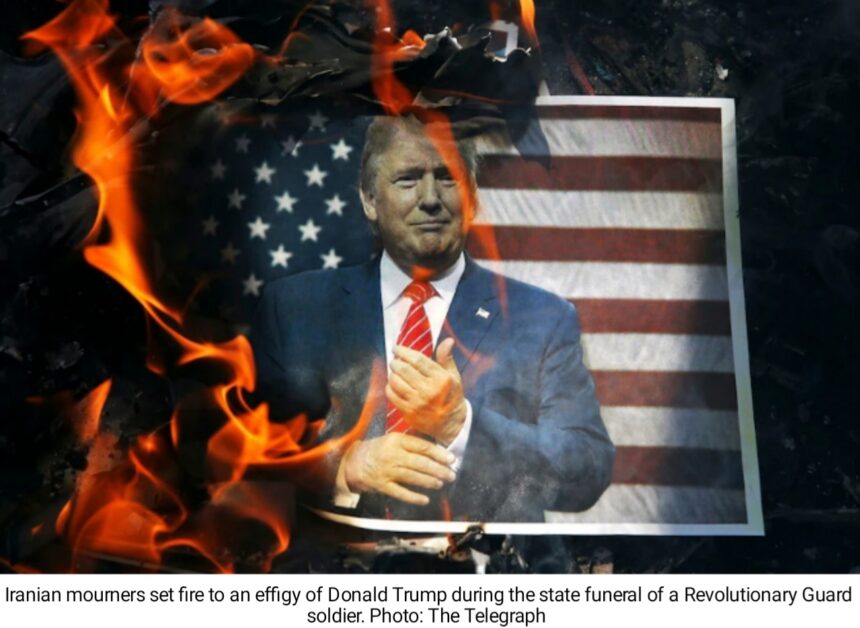
TEHRAN/WASHINGTON — The confrontation between Iran and the United States has entered a more dangerous phase as a fragile ceasefire, escalating military tensions and the intensifying dispute over the Strait of Hormuz converge around an increasingly hostile strategic contest. Iranian Army Commander-in-Chief Major General Amir Hatami announced on August 16 that anyone who kills or captures a U.S. servicemember and hands that person over to Iranian authorities would receive a reward of $30,000, while the payment would reportedly double to $60,000 if the mission were carried out by an Iranian woman. The announcement, reported through Iranian state media and subsequently by international news organisations, came as Tehran said it had received a large number of requests from people seeking to participate in the war effort. Hatami did not specify where or when such operations would be expected to take place, and there is no confirmed deployment of regular U.S. ground forces inside Iran during the current conflict, apart from a reported April rescue mission. The Iranian announcement nevertheless carries a wider regional significance because thousands of U.S. military personnel are stationed at bases and facilities across the Middle East, making the prospect of attacks, kidnappings or attempts to target American personnel outside Iran a potentially serious escalation point. Hatami also said that weapons used in such operations would be purchased by the Iranian military at twice their market value and permanently displayed in a dedicated museum, turning the proposed reward into more than a financial incentive and giving it a symbolic dimension within Tehran’s broader narrative of resistance. The declaration came as Iran simultaneously renewed its demand for the withdrawal of U.S. forces from the Middle East and challenged Washington’s military presence around the Persian Gulf, the Gulf of Oman and the Strait of Hormuz. That message is particularly significant because the dispute over Hormuz has become one of the central flashpoints in the wider confrontation. Reuters reported on August 16 that shipping activity through the strategic waterway had slowed sharply following attacks involving commercial vessels and the failure of U.S.-Iran diplomatic efforts to make meaningful progress. By August 17, Reuters reported that oil prices had risen as peace talks stalled and shipping through Hormuz weakened, with Brent crude reaching as high as $89.40 a barrel and vessel traffic falling dramatically from the previous weekend. The implications extend far beyond the immediate military confrontation: disruption in Hormuz threatens energy markets, maritime trade, shipping insurance, fuel costs and the economic stability of countries that depend heavily on Gulf energy supplies. Tehran has repeatedly asserted that the waterway remains under its control, while Washington has signalled a determination to challenge Iran’s position. Reuters reported that Iranian officials and U.S. authorities were making competing claims over control of the strait as diplomatic efforts remained stalled. The political confrontation intensified further after U.S. President Donald Trump said he intended to declare the Strait of Hormuz U.S. territory, a claim Tehran has strongly rejected. The combination of military pressure, economic sanctions, naval restrictions and competing territorial claims has therefore transformed Hormuz from a regional maritime dispute into a potential trigger for a much wider international crisis. The diplomatic track is also becoming increasingly fragile. Reuters reported on August 12 that Iran and the United States remained at odds over efforts to establish a permanent end to the war, with an Iranian source saying there had been no progress in efforts to revive the interim agreement reached in June and determine a timetable for implementing it. This diplomatic deadlock creates a particularly dangerous environment because every new military incident carries the potential to undermine the remaining framework for restraint. A U.S. servicemember being killed or captured as a direct consequence of the Iranian bounty announcement could, for example, trigger demands for retaliation in Washington and counter-retaliation from Tehran, creating a cycle in which a single battlefield incident rapidly becomes a state-to-state escalation. The danger is not limited to Iran and the United States. Fighting involving Israel, Lebanon and Iran-aligned armed groups has added further layers to the regional security crisis, while attacks against commercial vessels have increased the risks facing international shipping. The Strait of Hormuz is therefore emerging as the strategic centre of gravity of the confrontation: whoever can influence movement through the waterway gains leverage not only over military logistics but also over energy markets and the economic calculations of governments around the world. For Tehran, maintaining pressure around Hormuz is a means of demonstrating that the United States cannot impose its preferred security order without facing significant costs; for Washington, restoring secure navigation and preventing Iran from establishing effective control over the waterway have become central strategic objectives. The $30,000 bounty consequently represents more than a provocative military statement—it is a powerful indication of how deeply the conflict has moved into a phase of direct deterrence, psychological warfare and escalating threats against military personnel. At the same time, the reported doubling of the reward for women and the proposed museum display of weapons used in such operations show how the announcement has been framed as part of a broader mobilisation campaign rather than simply a conventional battlefield order. Yet the absence of specific operational details means the practical scope of the programme remains unclear, and its immediate impact should be assessed separately from its political and psychological significance. For the United States, the announcement raises additional concerns about force protection across the Middle East, particularly at exposed military installations and during movements involving personnel outside heavily secured bases. For Iran, however, the declaration sends a clear message that Tehran intends to continue resisting U.S. military pressure and linking the question of American forces in the region directly to the future of Hormuz. The central question now is whether diplomacy can prevent these increasingly interconnected disputes from triggering another major round of fighting, or whether one attack, one capture, one miscalculation at sea or one confrontation around the Strait of Hormuz will be enough to collapse the fragile restraints that remain. With negotiations stalled, maritime traffic under pressure, energy markets responding to renewed geopolitical risk and both Washington and Tehran maintaining uncompromising positions, the Middle East is facing a moment in which a relatively limited incident could rapidly acquire international consequences. The Iranian bounty announcement has therefore become a significant new warning signal in an already volatile conflict—one that demonstrates how the struggle over U.S. military presence, Iranian resistance and control of the Strait of Hormuz has converged into a single strategic confrontation with consequences extending far beyond the shores of the Persian Gulf.
Iran’s bounty announcement for US soldiers, from $30,000 to $60,000, raises concerns in the Middle East