

By Al-Mujaddid 24com | September 21, 2026
As world leaders prepare to gather in New York for the United Nations General Assembly, growing tensions across the Middle East are putting regional security, maritime trade and energy markets under renewed scrutiny.
The latest concerns center on several overlapping developments: an intensifying confrontation between Saudi Arabia and the Iran-backed Houthi movement in Yemen, new warnings between Tehran and Washington, and heightened concern over possible attacks involving Iran and armed groups aligned with it.
The timing is particularly significant. The United Nations General Assembly’s 81st session is entering its high-level week, with the general debate scheduled from September 22 to 26 and again on September 28. The United Nations says nearly 130 heads of state and government are expected to attend in person.
Against that diplomatic backdrop, developments in Yemen and the wider Gulf region are creating additional pressure on governments arriving in New York.
Yemen Becomes a Major Focus of Regional Security Concerns
The conflict involving Saudi Arabia and the Houthis has intensified in recent days, according to the CNN report provided to Al-Mujaddid 24com.
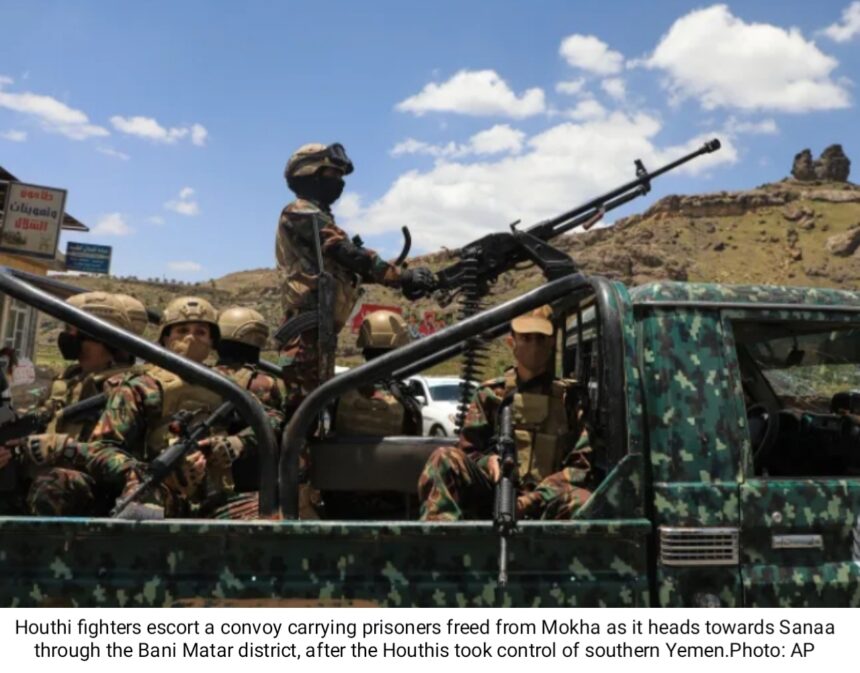
The Houthis, who have maintained close ties with Iran, have reportedly expanded their territorial position in parts of Yemen. The developments described by CNN include the seizure of strategically important territory near the Red Sea and areas overlooking the Bab al-Mandab Strait.
The Bab al-Mandab is one of the world’s important maritime chokepoints. It connects the Red Sea with the Gulf of Aden and provides a major route for international shipping between the Mediterranean region and the Indian Ocean.
Any sustained disruption in the area could therefore have consequences beyond Yemen. Shipping companies, energy producers and international governments closely monitor security around the waterway because instability can increase transportation risks and contribute to higher insurance and freight costs.
The latest fighting also comes after years of conflict between the Houthis and Saudi Arabia. Riyadh has previously conducted military operations in Yemen, while the Houthis have carried out missile and drone attacks against Saudi targets.
CNN reported that US and Gulf officials are increasingly concerned about the Houthis’ ability to consolidate their gains. The report also said Saudi Arabia has received increased US intelligence and targeting support while facing difficulties in reversing the group’s advances.
However, many of the battlefield claims made by the parties involved remain subject to independent verification.
Claims of Attacks on Saudi Arabia
The security situation has become more serious with a series of claims and counterclaims concerning attacks on Saudi territory.
Saudi Arabia accused the Houthis of targeting Mecca, Islam’s holiest city. The Houthis, meanwhile, claimed that they had shot down a Saudi F-15 fighter aircraft over Yemen.
The group also claimed missile and drone attacks against what it described as sensitive locations in Riyadh and an Aramco facility in Yanbu.
These claims carry significant implications because Yanbu is an important industrial and energy center on Saudi Arabia’s Red Sea coast.
At the same time, the distinction between confirmed incidents and claims made by combatants is important. In an active conflict, governments and armed groups frequently release competing accounts of battlefield events, while independent confirmation can take time.
The reported developments nonetheless demonstrate how the conflict in Yemen is becoming increasingly connected to the wider confrontation involving Saudi Arabia, Iran and the United States.
Washington Issues Security Warnings
The deteriorating security environment has also prompted warnings from the United States.
According to the material provided by CNN, the US State Department warned Americans in the region that the conflict could escalate rapidly and urged increased vigilance.
The US Embassy in Saudi Arabia separately imposed restrictions on travel by US government personnel to Taif and Yanbu without special authorization.
The broader US travel advisory for Saudi Arabia, issued September 15, currently advises Americans to reconsider travel because of risks including Iranian drone and missile targeting of US interests, armed conflict and terrorism. It also advises against travel to the Yemen border because of terrorism risks.
Such warnings illustrate how developments in Yemen are affecting not only the countries directly involved but also diplomatic missions and foreign nationals across the region.
For Washington, the challenge is particularly complicated because the United States maintains close security relationships with Saudi Arabia and other Gulf states while also trying to avoid being drawn directly into every confrontation involving regional armed groups.
Iran Warns Against Possible New US Military Action
At the same time, tensions between Iran and the United States have produced fresh warnings.
According to the CNN report, Iran’s central military command said it had received information indicating that the United States, with support from regional partners, could be preparing new military action against Iran.
Iran warned that any new US attack would result in sustained strikes against American bases and interests across the region.
Tehran also warned that countries assisting a US operation could be considered parties to the conflict.
These statements represent a significant escalation in rhetoric, although they do not by themselves establish that a new US attack is imminent.
The United States and Iran have remained locked in a wider confrontation, with diplomacy and military pressure continuing alongside economic measures and regional security concerns.
The possibility of renewed hostilities is particularly sensitive because American military installations and personnel are spread across several Middle Eastern countries. A direct US-Iran confrontation could therefore quickly affect other states in the region.
Trump Signals Major Decisions Could Be Near
US President Donald Trump has also issued new comments about Iran.
According to the CNN report, Trump told Fox News that he was in “deciding mode” and that “very big things” could happen soon.
Fox correspondent Trey Yingst reported that Trump had described three possible directions for Iran: reaching a deal with Washington, increasing economic pressure or taking military action.
Trump’s comments add uncertainty to an already tense environment.
At the same time, Trump said his administration remains in contact with the Houthis and continues to avoid direct US military involvement in the Houthi-Saudi conflict.
That position could become increasingly difficult to maintain if attacks expand, particularly if American personnel, facilities or partners come under direct threat.
The Strategic Importance of the Red Sea
The latest Yemen developments cannot be separated from the strategic importance of the Red Sea.
The Red Sea provides a major shipping corridor connecting Europe and Asia through the Suez Canal and the Bab al-Mandab Strait.
The route is particularly important for energy shipments and global commercial trade.
Any prolonged military confrontation near the Bab al-Mandab could force shipping companies to reconsider routes, potentially increasing voyage times and transportation costs.
For energy markets, the situation is especially sensitive because the Middle East remains central to global oil and gas supplies.
Even when physical supplies are not immediately interrupted, the possibility of disruption can affect market expectations. Traders often respond to security risks before any actual shortage occurs.
That means developments in Yemen can have economic consequences thousands of miles away.
Why the UN General Assembly Matters
The timing of the crisis is also important because the world’s political leadership is gathering in New York.
The UN General Assembly’s general debate begins on September 22 and continues through September 26, with an additional day scheduled for September 28.
The official UN theme for the 81st session is “Restoring trust, managing transformation: A United Nations that delivers for all.”
Although the General Assembly covers a broad range of international issues, Middle Eastern security is expected to receive significant diplomatic attention because of the overlapping conflicts and tensions involving Iran, Yemen, Saudi Arabia, Israel, the United States and other regional actors.
Diplomats will also be watching developments affecting maritime security and energy markets.
The General Assembly provides an opportunity for governments to present their positions publicly while also holding private diplomatic meetings on the sidelines.
That makes New York an important venue for communication at a time when direct confrontation between regional powers could have consequences far beyond the Middle East.
Iran’s Presence at the UN
Iranian President Masoud Pezeshkian is expected to attend the General Assembly after the United States approved travel for a core Iranian delegation, according to the CNN report.
The US State Department said that, consistent with Washington’s obligations as the host country, the core Iranian delegation would be permitted to attend the high-level UN meetings.
Iran’s participation could make the diplomatic atmosphere particularly significant given the latest warnings exchanged with Washington.
The General Assembly may provide an opportunity for Iranian officials to outline Tehran’s position directly to the international community while US officials present Washington’s perspective.
Whether those diplomatic contacts can reduce tensions will depend on the positions of the governments involved and the situation on the ground.
Gulf States Prepare for a Difficult Diplomatic Week
Saudi Arabia is also sending a senior delegation to New York, with Foreign Minister Prince Faisal bin Farhan leading the Saudi representation, according to the CNN report.
Qatar, the United Arab Emirates, Kuwait, Oman and Bahrain are also expected to send senior representatives.
For Gulf governments, the current crisis presents several interconnected challenges.
The first is security. Governments must protect their territory and infrastructure against possible missile and drone attacks.
The second is maritime security. Any instability around the Red Sea and Bab al-Mandab could affect commercial shipping.
The third is energy security. Gulf economies remain closely connected to global energy markets, making regional instability an important economic issue.
The fourth is diplomacy. Gulf governments must manage relations with the United States while also dealing with Iran and regional actors with competing interests.
These issues are likely to be discussed both publicly at the UN and privately through diplomatic meetings.
A Wider Regional Confrontation Remains a Concern
The most important question is whether the separate flashpoints across the Middle East remain contained or become connected.
The Yemen conflict already involves Saudi Arabia and the Houthis, with Iran’s support for the Houthi movement adding another layer.
The United States is closely linked to Saudi Arabia and other Gulf partners, while Washington and Tehran remain in a broader confrontation.
If attacks expand to include American military facilities, Saudi energy infrastructure or major maritime routes, the consequences could become wider.
At the same time, governments have strong incentives to avoid an uncontrolled escalation.
A major regional conflict could threaten energy infrastructure, disrupt international shipping, increase economic uncertainty and create new humanitarian emergencies.
For that reason, diplomatic communication remains important even when public rhetoric becomes increasingly hostile.
The Humanitarian Dimension
Behind the military and geopolitical calculations is Yemen’s long-running humanitarian crisis.
Years of conflict have displaced millions of people and damaged essential infrastructure. Any new escalation could increase civilian suffering and further complicate humanitarian access.
Recent fighting along the Red Sea coastline has already resulted in new displacement, according to the reporting provided by CNN.
The humanitarian consequences of another major escalation would extend beyond military targets.
Civilian infrastructure, ports, roads, hospitals and food supply networks could all be affected if fighting expands.
International organizations and governments therefore face the difficult task of responding to immediate security concerns while maintaining humanitarian assistance.
What to Watch in the Coming Days
Several developments will be closely watched as world leaders gather in New York.
First, attention will remain focused on the Saudi-Houthi confrontation and whether attacks continue or expand.
Second, governments will monitor Iran’s warnings about possible US military action and Washington’s response.
Third, any incident involving US military personnel or facilities could significantly alter the diplomatic environment.
Fourth, developments around the Bab al-Mandab Strait and Red Sea shipping routes will remain important for international trade and energy markets.
Finally, diplomatic meetings during the UN General Assembly could provide opportunities for de-escalation, negotiations or the exchange of messages between governments that rarely communicate directly.
The United Nations itself has a broad agenda during the high-level week, including discussions on development, climate, health and international security. The General Assembly’s schedule confirms that the high-level general debate will begin on September 22.
A Critical Diplomatic Moment
The Middle East is entering the UN General Assembly’s high-level week under significant security pressure.
Fighting in Yemen, competing claims of missile and drone attacks, warnings from Iran and the United States, and concerns over maritime and energy security have created a complicated regional picture.
Yet the current situation should be viewed carefully. Some battlefield developments reported by the parties involved remain claims rather than independently verified facts, and political statements about possible future military action do not necessarily mean that such action will occur.
What is clear is that several regional crises are unfolding simultaneously.
The coming days in New York will therefore be closely watched not only for speeches at the General Assembly but also for diplomatic contacts that could influence the trajectory of the wider Middle Eastern confrontation.
With nearly 130 heads of state and government expected to attend the high-level week, the United Nations will provide one of the most important international platforms for governments to communicate their positions.
The central question will be whether diplomacy can prevent the separate flashpoints from becoming a broader regional conflict, while governments work to protect civilians, maintain maritime security and reduce the risk of further military escalation.