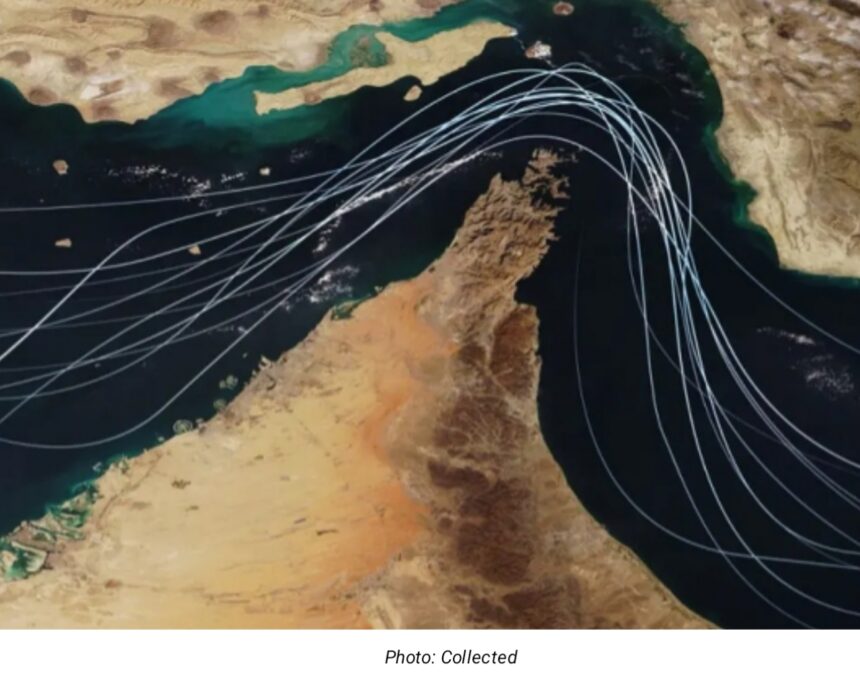
Iraq is moving to reduce its long-standing dependence on the strategic Strait of Hormuz by pursuing a new energy export strategy that could reshape the country’s oil transportation network and strengthen its position in global energy markets. Baghdad has launched a feasibility study for a major crude oil pipeline stretching from the southern oil hub of Basra to Kirkuk in northern Iraq, with plans to extend the route to Türkiye’s Mediterranean port of Ceyhan and potentially onward to Syria’s port city of Baniyas. If implemented, the project would mark one of Iraq’s most significant energy infrastructure initiatives in decades, providing alternative export corridors beyond the Persian Gulf while reducing vulnerability to geopolitical tensions in one of the world’s most sensitive maritime chokepoints.
Speaking to the Iraqi News Agency during a visit to Washington, Iraqi Oil Minister Basim Mohammed Khudair said the government has adopted a long-term strategy aimed at diversifying the country’s oil export routes rather than relying almost exclusively on the Strait of Hormuz. He noted that Iraq has signed a memorandum of understanding with an international consortium comprising U.S.-based Chevron, TE Capital, and Qatar’s UCC to conduct technical, commercial, and economic feasibility studies for the proposed pipeline network. According to Khudair, the initial phase would connect Basra with Kirkuk before linking to the Turkish Mediterranean export terminal at Ceyhan, while a separate branch to Syria’s Mediterranean port of Baniyas is also under consideration.
Baniyas is home to one of Syria’s principal oil refineries and export facilities. Historically, Iraqi crude was transported through the Kirkuk–Baniyas pipeline, but that route has remained out of service for years due to the Syrian civil war, extensive damage to infrastructure, and the impact of international sanctions. Reviving the corridor could restore a historically important export route while providing Iraq with greater flexibility in reaching European and other international energy markets.
As the second-largest oil producer in OPEC, Iraq depends heavily on crude oil exports for government revenue, with the overwhelming majority of its shipments currently passing through the Persian Gulf and the Strait of Hormuz. However, repeated periods of heightened tension between the United States and Iran, regional military confrontations, and disruptions to commercial shipping in the Strait have reinforced Baghdad’s determination to establish alternative export routes capable of maintaining uninterrupted supplies during times of crisis.
Energy analysts say the proposed pipeline would not only improve Iraq’s energy security but also enhance the resilience of global oil supply chains by creating additional export options to the Mediterranean. The project could strengthen economic cooperation among Iraq, Türkiye, and potentially Syria while reducing the strategic risks associated with reliance on a single maritime corridor. Although the initiative remains in the feasibility assessment stage and no final investment decision has yet been announced, its successful implementation would represent a landmark shift in Iraq’s energy policy and could significantly influence the geopolitical landscape of Middle Eastern energy exports in the years ahead.
Iraq to build new oil pipeline via Türkiye-Syria