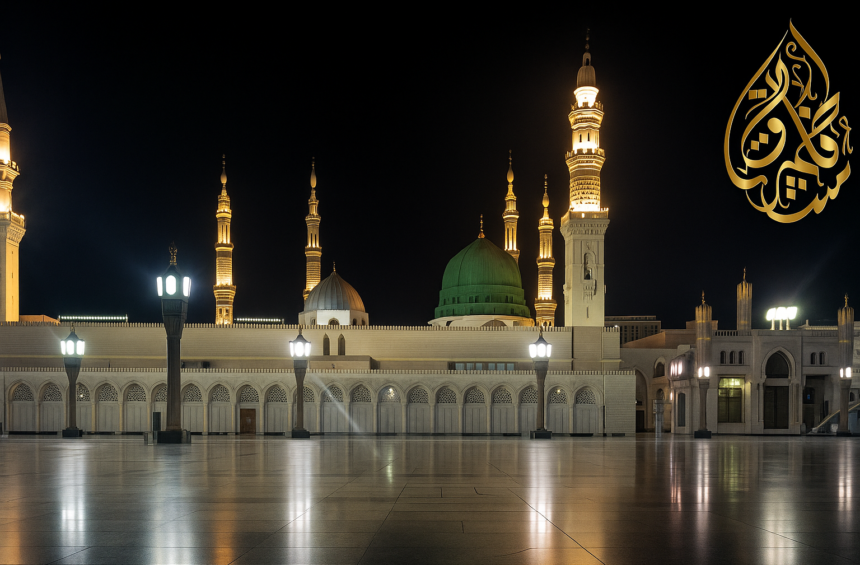
Akheri Chahar Shambah, commonly understood in South Asian Muslim communities as the final Wednesday of the Islamic month of Safar, is a traditional observance associated with the memory of Prophet Muhammad (PBUH) and the final period of his life, particularly his illness and subsequent moments of recovery; accounts surrounding the occasion have remained emotionally significant for many Muslims, although scholars distinguish between practices firmly established by authentic Islamic sources and customs that developed later within Muslim societies; among the most detailed authentic accounts of the Prophet’s final illness is the narration of Umm al-Mu’minin Aisha (RA), recorded in Sahih al-Bukhari, in which she described how the Prophet (PBUH) became seriously ill and sought permission from his wives to remain in her room so that she could care for him, after which he stayed with her; when his illness became severe, he requested that water from seven waterskins be poured over him, and after experiencing some relief, he went out to the people, a narration that provides an important glimpse into the final days of the Messenger of Allah (PBUH) and reflects his determination to remain connected with the Muslim community even during a period of severe physical weakness; Islamic sources also contain authentic reports concerning an incident of magic involving the Prophet (PBUH), narrated from Aisha (RA), in which Labid ibn al-A’sam was reported to have carried out magic against him and Allah subsequently granted His Messenger (PBUH) relief from its effects; the incident is recorded in authentic hadith collections, while the Qur’anic chapters Al-Falaq and An-Nas remain among the important means of seeking Allah’s protection from evil, envy and harmful influences; Muslims are therefore encouraged to maintain regular supplication, Qur’an recitation and authentic prophetic practices rather than relying on unsupported claims or rituals; the Prophet’s illness also highlights the extraordinary love and concern shown by his Companions, whose lives demonstrated that love for the Messenger of Allah (PBUH) was not merely an emotional attachment but was expressed through obedience, sacrifice, charity, courage, loyalty and commitment to the teachings he brought; however, a number of popular accounts circulated in connection with Akheri Chahar Shambah—including specific claims about individual Companions donating fixed amounts of gold or large numbers of camels after the Prophet’s recovery—require careful examination of their chains of transmission and historical sources, and such reports should not be presented as established facts without reliable evidence; what is firmly established through authentic Islamic sources is that the Companions held the Messenger of Allah (PBUH) in unparalleled esteem and were prepared to sacrifice their wealth, security and even their lives in the service of Allah and His Messenger; this devotion offers a broader lesson for Muslims today, because genuine love for Prophet Muhammad (PBUH) is demonstrated not simply by commemorating a particular date but by following his Sunnah, adopting his moral character, maintaining justice and compassion, helping the vulnerable, strengthening family and community bonds, and living according to the guidance of the Qur’an and authentic Sunnah; the life of the Prophet (PBUH), including his struggles in Makkah, his migration to Madinah, his leadership, worship, family life, treatment of the poor and oppressed, patience in hardship and conduct during illness, represents a comprehensive model for Muslim life; consequently, the significance attached to Akheri Chahar Shambah can be understood within the wider spiritual framework of remembering the Prophet (PBUH), expressing gratitude to Allah, sending abundant blessings and salutations upon him, studying his authentic teachings and renewing one’s commitment to his example; rather than allowing cultural practices or unverified narratives to overshadow the established teachings of Islam, Muslims can use such occasions as an opportunity for reflection, repentance, charity, prayer, remembrance of Allah and sincere efforts toward self-improvement; the enduring message of the Prophet’s final illness is therefore not merely a historical memory but a reminder of patience, reliance upon Allah, responsibility toward the community and steadfastness in faith; his life remains a source of spiritual guidance for Muslims across the world, and his legacy continues to shape Islamic ethics, worship and social conduct; ultimately, the strongest expression of love for Prophet Muhammad (PBUH) is to follow his authentic Sunnah, uphold the values he taught, send blessings and peace upon him, and strive to build a life based on faith, compassion, justice, humility and obedience to Allah; may Allah grant the Muslim Ummah the ability to love His beloved Messenger (PBUH) sincerely, follow his authentic guidance, understand his life correctly and remain steadfast upon the path of the Qur’an and Sunnah. Ameen.
Why the Last Supper is Memorable: Lessons from the Last Illness of the Prophet Muhammad (PBUH)