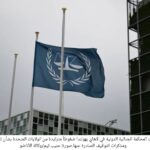
The administration of US President Donald Trump is preparing a new and broader campaign against the International Criminal Court, with proposed sanctions that could target the Hague-based institution as a whole rather than focusing only on individual judges and prosecutors.
According to reports by Reuters and The Wall Street Journal, the Trump administration is preparing to announce measures that could significantly restrict financial and commercial dealings between US individuals and companies and the International Criminal Court. The proposed sanctions could affect the court’s finances, access to services and routine operations.
The Wall Street Journal reported that the proposed measures could prohibit most transactions with the ICC after a grace period of six to seven months. Reuters, citing two people familiar with the matter, also reported that the Trump administration was preparing to announce sanctions against the court.
The details of the proposed measures have not yet been formally announced by the US government. Reuters reported that it had not independently verified all of the details contained in the Wall Street Journal report.
If implemented, the measures would represent a significant escalation in Washington’s campaign against the ICC. Previous US sanctions have largely targeted individual judges, prosecutors and other officials associated with the court. The latest reported plan would instead place restrictions on the institution itself.
Such a move could create difficulties for the ICC in obtaining financial, technological, insurance and other services from companies that have links to the United States or depend on access to the US financial system.
From Individual Sanctions to Institutional Pressure
The United States has already imposed sanctions on more than a dozen ICC judges and prosecutors under an executive order signed by President Donald Trump in February 2025.
In August 2026, Washington expanded its measures to include ICC President Tomoko Akane and senior trial lawyer Abdoulaye Seye. The restrictions on the two officials took effect on September 17.
The reported new measures would go further by targeting the court itself.
Under the proposed sanctions, US citizens and companies could generally be prohibited from providing money, goods or services to the ICC without a licence from the US Treasury Department.
The potential impact could extend beyond American companies. International banks and businesses frequently take a cautious approach when dealing with entities under US sanctions because of their reliance on the American financial system and the potential legal and financial risks associated with sanctions compliance.
For the ICC, this could create practical problems even if the court remains legally able to continue its investigations and judicial proceedings.
The court depends on a wide range of services to operate, including information technology, insurance, banking, recruitment, investigative services and other administrative support. ICC officials have previously warned that broad sanctions against the institution could make it more difficult to obtain some of these services.
Why Washington Opposes the ICC
The United States has never joined the International Criminal Court and is not a party to the Rome Statute, the treaty that established the court.
The ICC was established in 2002 to prosecute individuals accused of genocide, war crimes and crimes against humanity when national authorities are unable or unwilling to genuinely investigate and prosecute such cases.
Washington, however, disputes the court’s authority to exercise jurisdiction over officials and citizens of countries that are not members of the Rome Statute under circumstances that the United States does not accept.
The Trump administration has argued that the ICC has exceeded its authority by pursuing officials from countries that are not members of the court.
The disagreement has become particularly serious because of the ICC’s investigations and actions involving Israel and the United States.
In November 2024, the court issued arrest warrants for Israeli Prime Minister Benjamin Netanyahu and former Israeli Defence Minister Yoav Gallant over alleged war crimes and crimes against humanity related to the Gaza conflict.
Israel, like the United States, is not a member of the ICC and rejects the court’s jurisdiction in the case.
The US government has strongly objected to the ICC’s actions against Israeli officials and has also opposed an earlier investigation into alleged abuses in Afghanistan involving US personnel.
Gaza at the Center of the Dispute
The ICC’s actions concerning the Gaza war have become one of the most sensitive issues in relations between Washington and the court.
The court’s decision to issue arrest warrants for Netanyahu and Gallant intensified criticism from the United States and Israel. Washington has argued that the ICC should not be able to exercise jurisdiction over officials from countries that have not joined the Rome Statute.
The ICC and its supporters take a different legal position, arguing that the court’s authority is based on the Rome Statute and its applicable rules of jurisdiction.
The dispute therefore involves a broader question about the limits of international criminal jurisdiction and the relationship between national sovereignty and international accountability.
The disagreement has also become part of a wider debate over whether international judicial institutions should be able to investigate alleged serious crimes when the individuals involved are nationals or officials of states that do not recognize the court’s authority.
The Afghanistan Investigation
The disagreement between Washington and the ICC predates the Gaza case.
The United States previously objected to an ICC investigation into alleged crimes in Afghanistan, including allegations involving US personnel.
Washington has maintained that American citizens should not be subject to the jurisdiction of an international court to which the United States has not agreed to submit.
The ICC, however, operates under the legal framework established by the Rome Statute and decisions taken through its judicial institutions.
The dispute over Afghanistan therefore became another major point of tension between Washington and the court.
Together with the Gaza investigation, it has contributed to the Trump administration’s broader campaign against the ICC.
Possible Impact on the Court’s Operations
The proposed sanctions could affect areas of the ICC’s daily operations that are often less visible than its courtroom proceedings.
The court requires information technology systems, communications infrastructure, insurance services, financial services, investigators, legal support and other specialized resources to conduct investigations and trials.
ICC officials have previously warned that broad sanctions against the institution could interfere with its ability to purchase technology and insurance services, recruit investigators and make routine payments.
The court also employs American citizens and other international staff. Restrictions affecting financial transactions could therefore complicate salary payments and other routine administrative activities.
This does not necessarily mean that the ICC would stop functioning.
The court is an international institution supported by member states and operates under an international treaty framework. Its ability to continue its work would depend on the final scope of the US sanctions, possible exemptions, licences issued by the US Treasury and the willingness of other countries and companies to continue providing services.
The practical effect could therefore vary considerably depending on how the measures are written and implemented.
The Role of Banks and International Companies
One of the most important potential effects of the proposed sanctions could involve private companies and financial institutions.
Even companies outside the United States may become cautious about dealing with the ICC if they believe that doing so could expose them to US sanctions-related risks.
International banks frequently assess sanctions exposure when deciding whether to provide services to organizations affected by US restrictions.
This could create an indirect effect in which companies that are not directly subject to US jurisdiction nevertheless reduce or end their business relationships with the ICC.
For the court, such a development could make certain services more expensive or difficult to obtain.
However, the actual impact will depend on the final US sanctions framework, including the scope of prohibited transactions and any exemptions or licensing arrangements.
Until the measures are formally announced, it remains difficult to determine how extensively the court’s operations could be affected.
Washington’s Wider Campaign Against the ICC
The reported sanctions are part of a wider US campaign against the ICC.
In July 2026, US Secretary of State Marco Rubio announced a campaign aimed at further isolating the court and urged other countries to consider withdrawing from the institution.
The campaign has increased pressure on governments that support the ICC while maintaining close political, economic or security relationships with Washington.
The issue has therefore become more than a dispute between the US government and an international court. It has increasingly developed into a broader debate over the future of international criminal justice.
Supporters of the ICC argue that an independent international court needs to be able to investigate serious allegations without political interference.
The US government argues that the court has exceeded the limits of its jurisdiction and that Washington must protect American sovereignty and prevent its citizens and officials from being subjected to a court that the United States has not joined.
Growing Pressure on ICC Membership
The ICC is also facing political pressure beyond Washington.
Chad and Venezuela moved in July 2026 toward withdrawing from the court, following similar moves by Burkina Faso, Mali and Niger.
The ICC’s governing body has urged countries to reconsider withdrawal decisions and warned that departures could weaken the international system established to prosecute serious crimes.
The developments have raised questions about the future strength and reach of the court.
Japan, one of the ICC’s major supporters, has also been drawn into the dispute. In August, ICC President Tomoko Akane urged Japan to resist US pressure aimed at encouraging member states to distance themselves from the court.
For European governments and other ICC members, the situation presents a difficult diplomatic question: how to maintain support for international criminal justice while managing relations with the United States.
Europe and the Future of International Justice
European countries are likely to follow the developments closely because many European governments have historically supported the ICC and the wider international criminal justice system.
If Washington imposes broad sanctions on the court, European governments and other ICC members could face practical questions about how to help the institution maintain access to financial, technological and commercial services.
The issue could also become part of a broader discussion about the independence of international judicial institutions.
The outcome will depend partly on whether other countries are willing and able to provide alternative services to the ICC and whether international companies are prepared to accept the potential risks associated with continued cooperation with the court.
What Happens Next?
The final details of the proposed US sanctions have not yet been formally announced.
Reports indicate that the Trump administration could announce the measures during the United Nations General Assembly meetings in New York or shortly afterwards.
If the reported six-to-seven-month grace period is included in the final measures, the ICC and organizations that work with it would have time to assess the consequences and make operational adjustments before most restrictions take effect.
The licensing system administered by the US Treasury Department could also become important.
Depending on the final rules, licences could allow certain transactions or services to continue despite the broader sanctions.
The precise scope of any exemptions will therefore be closely watched by the court, governments, banks, technology companies, insurance providers and other organizations that have dealings with the ICC.
A Wider Test for International Institutions
The confrontation between Washington and the ICC raises broader questions about the relationship between national sovereignty and international justice.
The United States maintains that the ICC should not exercise authority over American citizens or officials without US consent. The court’s supporters argue that international criminal justice requires an independent institution capable of investigating allegations involving individuals from powerful states as well as weaker states.
The dispute also highlights the limits of international institutions when they face opposition from a major global power.
The ICC does not operate in isolation. Its ability to investigate cases and conduct trials depends on cooperation from states, access to evidence, witnesses, financial resources, technology and other forms of logistical support.
Broad sanctions could therefore affect the environment in which the court operates even if they do not directly terminate any investigation or judicial proceeding.
At the same time, the final consequences cannot yet be determined because the US administration has not formally published the full sanctions framework.
The coming weeks could therefore be important for the future relationship between Washington and the ICC.
Conclusion
The reported US plan to impose sweeping sanctions on the International Criminal Court would mark a new phase in the long-running dispute between Washington and the Hague-based tribunal.
Previous US measures have focused largely on individual judges and prosecutors. The latest reported plan would target the institution itself and could restrict its ability to access American financial, technological and commercial services.
The immediate impact would depend on the final form of the sanctions, the availability of Treasury licences and exemptions, and the response of other governments, banks and international companies.
The dispute is also connected to wider disagreements over the ICC’s investigations into alleged crimes in Gaza and Afghanistan, the jurisdiction of the court over nationals of non-member states, and the role of international criminal justice in the modern international system.
For the ICC, the challenge is both operational and diplomatic. For Washington, the issue is closely tied to its stated concerns about national sovereignty and the court’s jurisdiction.
As the United Nations General Assembly meets in New York, the question of the ICC is likely to remain part of a broader international debate over accountability, sovereignty and the future role of international courts.
The next step will depend on whether the Trump administration formally announces the reported sanctions and, if it does, how broad the restrictions ultimately prove to be.
US preparing major sanctions against ICC, could put pressure on court’s finances and daily operations