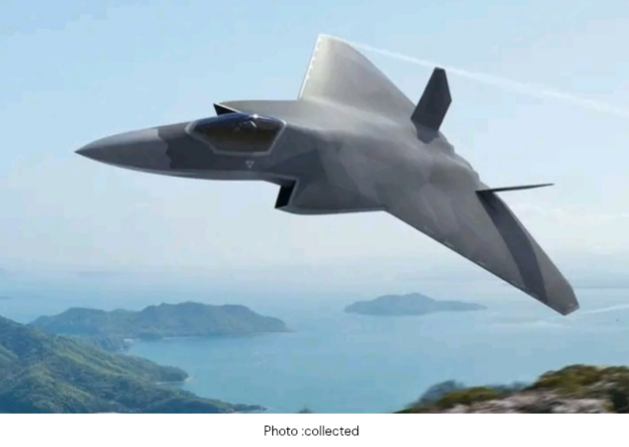
The global defense industry is entering a new era in which advanced combat aircraft are no longer viewed simply as high-speed offensive platforms. Instead, they are evolving into highly integrated command-and-control systems that combine artificial intelligence, advanced sensors, electronic warfare, cyber defense, space-enabled intelligence, and autonomous combat capabilities. Against this backdrop, the joint sixth-generation fighter aircraft program launched by the United Kingdom, Italy, and Japan has emerged as one of the most closely watched defense initiatives in the international security landscape.
Defense analysts argue that the primary objective of the program extends far beyond developing a new fighter aircraft. It is designed to strengthen the participating nations’ technological sovereignty, defense industrial capacity, and long-term strategic independence while positioning them to compete more effectively in the global defense market over the coming decades.
Most of the world’s leading air forces currently operate fifth-generation fighters. However, the rapidly evolving character of modern warfare has demonstrated that stealth characteristics and advanced missile capabilities alone are no longer sufficient. Future conflicts will require aircraft capable of collecting vast amounts of information from multiple domains, processing data in real time, disrupting enemy communications, resisting sophisticated cyber attacks, and coordinating autonomous unmanned systems. Consequently, sixth-generation fighters are increasingly being envisioned as airborne battle management centers rather than conventional combat aircraft.
A defining feature of the trilateral program is its emphasis on maintaining a balanced industrial partnership among the participating nations. Previous multinational defense projects have often faced significant challenges involving leadership responsibilities, technology sharing, production allocation, and intellectual property rights. Drawing lessons from those experiences, the current initiative seeks to establish clear industrial responsibilities and long-term cooperation mechanisms from the outset, reducing the likelihood of future disputes.
Experts also emphasize that software engineering is becoming just as important as traditional aerospace engineering in modern fighter development. Advanced combat aircraft continuously gather enormous volumes of operational data, analyze the information in real time, and provide pilots with rapid decision-support capabilities. In future battlefields, this information-centric architecture may become the decisive factor separating superior air combat platforms from their competitors.
The program also envisions a manned fighter capable of commanding multiple autonomous unmanned aerial systems simultaneously. These collaborative drones could perform reconnaissance, intelligence collection, electronic warfare, decoy operations, and even offensive strike missions while the crewed aircraft remains at a relatively safer distance, directing the overall operation. Such manned-unmanned teaming is widely regarded as one of the defining characteristics of next-generation air warfare.
Despite its technological ambition, the project faces substantial challenges. Defense economists note that sixth-generation fighter development could become one of the most expensive military programs ever undertaken. Research and development, flight testing, advanced propulsion systems, next-generation materials, artificial intelligence integration, and increasingly sophisticated software development are all expected to drive costs significantly higher over time. History has shown that many multinational defense programs ultimately exceeded their original budgets, making long-term financial sustainability one of the project’s most significant uncertainties.
Training requirements will also undergo a fundamental transformation. Future fighter pilots will need far more than exceptional flying skills. They must become proficient in managing complex digital battle networks, controlling autonomous wingmen, conducting electronic warfare operations, interpreting large volumes of battlefield data, and making rapid decisions with the assistance of artificial intelligence. As a result, future pilot training will likely depend heavily on advanced simulation technologies, integrated operational exercises, and continuous digital systems education.
From a geopolitical perspective, the initiative carries considerable strategic significance. Intensifying military competition in the Indo-Pacific region, evolving security challenges across Europe, and accelerating technological advances are encouraging Western allies to pursue deeper defense cooperation. Many analysts believe that technological superiority in future air combat will increasingly determine broader strategic influence and deterrence capabilities.
Observers further argue that the participating countries are seeking more than simply a next-generation fighter aircraft. The program is also intended to strengthen their domestic defense industries, stimulate high-technology investment, create skilled employment opportunities, expand scientific research, and reinforce long-term industrial competitiveness within their national economies.
Ultimately, however, the program’s success will depend on one critical factor: whether the partner nations can sustain political commitment, financial investment, industrial cooperation, and technological innovation throughout the next decade. History repeatedly demonstrates that developing advanced military technology is an extraordinary challenge, while delivering it on schedule and within budget is even more difficult.
According to many defense analysts, if the program is successfully completed within its planned timeline and financial framework, it could significantly enhance the military capabilities of all three partner nations while fundamentally reshaping global concepts of air warfare for decades to come. Conversely, if political shifts, budgetary pressures, or technological complexities delay development, its strategic influence on the international defense landscape could be substantially diminished.
The coming years will therefore be decisive. Progress in research, technology maturation, industrial coordination, pilot training, and manufacturing will determine whether this sixth-generation fighter initiative establishes a new benchmark for future military aviation. Defense experts, military planners, aerospace manufacturers, and strategic policymakers around the world will continue to monitor the program closely, recognizing that its ultimate success—or failure—could influence not only the security interests of its three partner nations but also the future balance of global military power.
UK-Italy-Japan joint initiative is changing global air defense