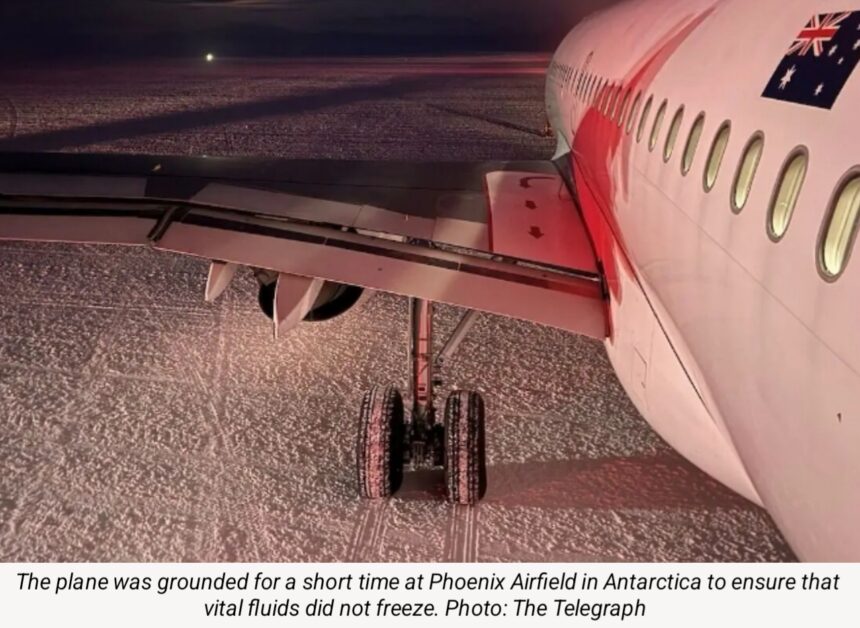
In one of the most challenging medical evacuation missions ever attempted in the depths of the Antarctic winter, an Australian rescue team last week flew into the frozen continent to evacuate a U.S. national from an American research station, confronting near-total darkness, severe cold, snowstorms and operating conditions that pushed an Airbus A319 close to its limits. The mission, carried out by the Australian Antarctic Division in cooperation with Australian aviation company Skytraders, was described by the flight crew as an exceptionally rare operation because rescue flights to Antarctica during the southern hemisphere winter are extremely uncommon. The patient, whose identity and medical condition have not been publicly disclosed, was stationed at McMurdo Station, the major U.S. Antarctic research base, and required urgent medical evacuation. The rescue team planned to land at Phoenix Airfield, a nearby runway used for Antarctic operations, before transporting the patient to medical facilities outside the continent. However, the operation was delayed for about 12 hours after severe weather and a snowstorm disrupted preparations and made the already hazardous mission even more difficult. Finally, at 2:44 a.m. local time on July 31, the specially prepared aircraft departed Hobart in Tasmania and began its long journey south toward Antarctica. Louise Robertson, the captain of the flight, said the mission represented conditions at the extreme end of what an aircraft and its crew can safely operate in, describing the Antarctic winter as a combination of complete darkness, intense cold and rapidly changing weather. According to Robertson, the flight was particularly significant because such a mission had not previously been conducted in July, making it an extraordinary undertaking for both the aviation and Antarctic research communities. Skytraders, which normally transports personnel and supplies to Antarctica during the comparatively milder summer months, had to rapidly prepare the A319 and assemble the necessary crew for the emergency operation. Antarctica presents unique challenges for medical evacuations because winter brings prolonged darkness, temperatures far below freezing, powerful winds, blizzards and limited access to runways and medical facilities. Unlike ordinary emergency flights, Antarctic evacuations require detailed planning around weather, aircraft performance, fuel requirements, runway conditions and the availability of suitable landing sites. Researchers and other personnel travelling to Antarctic stations generally undergo medical screening before deployment, while medical professionals are stationed at major bases to handle routine emergencies. Nevertheless, serious illness or injury can create situations in which treatment at an isolated research station is insufficient, forcing authorities to consider an evacuation despite the enormous risks involved. The latest operation demonstrated the difficult balance between the need to provide urgent medical assistance and the dangers faced by rescuers themselves. A delay of several hours caused by a snowstorm highlighted how quickly Antarctic weather can disrupt even carefully planned missions, while the decision to proceed in the middle of winter reflected the urgency of the medical situation. For the flight crew, the mission was not simply a long-distance journey but an operation conducted at the geographical and environmental limits of modern aviation. Antarctica remains one of the most remote and inhospitable regions on Earth, and during winter much of the continent is cut off from regular air access. The successful attempt to reach McMurdo Station therefore underscored the importance of specialized aviation capabilities and international cooperation in supporting the scientists and workers who spend months in some of the planet’s most isolated locations. While authorities have not released details about the U.S. national’s condition or the final medical outcome, the operation offered a rare glimpse into the extraordinary lengths required to provide emergency medical assistance at the bottom of the world. The mission also highlighted the continuing risks faced by personnel working in Antarctica, where even a routine medical emergency can quickly become a complex international rescue operation involving specialized aircraft, experienced crews and a narrow window of opportunity dictated by weather and daylight. As climate, weather and logistical conditions continue to challenge Antarctic operations, the July evacuation is likely to stand as a notable example of the extraordinary measures required when human health and safety collide with one of the harshest environments on Earth.
A life-saving mission in the world’s harshest environment, a risky medevac in Antarctica