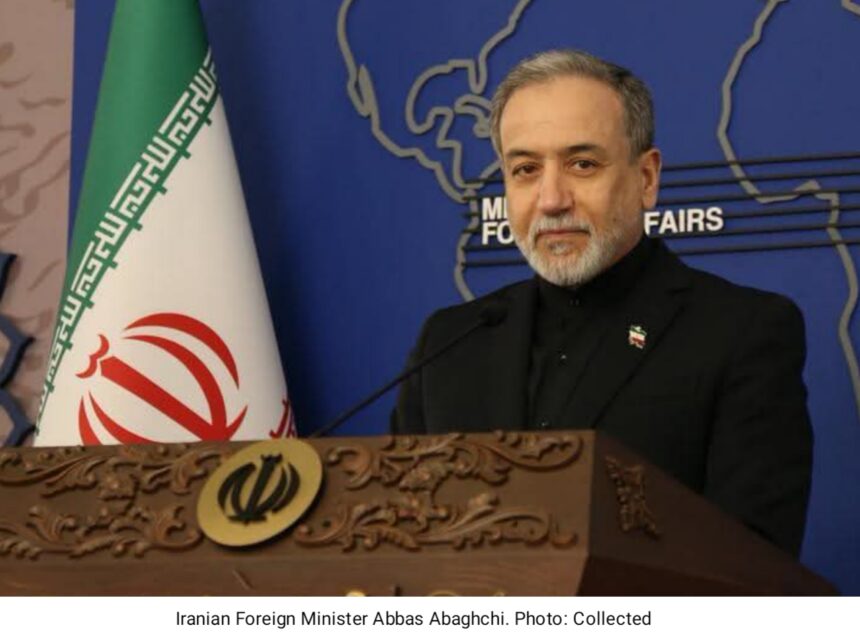
Iran has strongly condemned Washington’s threat of new sanctions against countries and institutions maintaining commercial and economic ties with Tehran, describing the move as a direct assault on state sovereignty and a challenge to the international system built around the United Nations. Iranian Foreign Ministry spokesman Esmaeil Baghaei said on Saturday that the latest US measures amounted to an assertion of extraterritorial sovereignty and risked pushing the world back towards what he described as “full-scale classic colonialism”. Baghaei argued that no state should have the power to compel foreign banks, businesses or airports to abandon legitimate commerce with Iran, framing Washington’s proposed measures as an attempt to extend US economic authority beyond its own borders. His remarks came after US President Donald Trump threatened what he called the most severe economic operation yet against Iran, warning that institutions in any country doing business with Tehran could face “tremendous economic consequences”. US Treasury Secretary Scott Bessent subsequently reinforced the administration’s position, saying the new sanctions regime was intended to bring Iran’s economy to the point of collapse and warning other countries that they would effectively have to choose between Washington and Tehran. Iran, however, has rejected the pressure as a strategy that has already failed in the past. Foreign Minister Abbas Araghchi said Tehran had lived under US sanctions for decades and argued that the latest measures would likewise fail to force Iran into submission. The increasingly confrontational rhetoric comes as diplomatic efforts between Washington and Tehran have stalled and hopes for a negotiated end to the conflict have weakened. At the same time, the US naval blockade around Iranian ports has disrupted oil shipments, while commercial traffic carrying energy through the Strait of Hormuz has virtually come to a standstill, raising concerns well beyond Iran’s borders. The Strait of Hormuz is one of the world’s most strategically important energy corridors, and prolonged disruption there could put additional pressure on global oil supplies, energy prices and international trade. Tehran has maintained that the strait will not return to normal operations unless the United States lifts its blockade and sanctions, turning the waterway into a central pressure point in the wider confrontation. The combination of sanctions, maritime restrictions, declining oil traffic and diplomatic deadlock has therefore transformed the conflict into an increasingly interconnected military, economic and geopolitical crisis. Analysts warn that if Washington broadly applies secondary sanctions against countries trading with Iran, the consequences could extend beyond the US-Iran confrontation, placing new strain on Washington’s economic and diplomatic relations with countries across Europe, Asia and the Middle East. Iran, meanwhile, could respond by maintaining restrictions on maritime traffic and adopting a tougher position on oil exports, potentially intensifying uncertainty across global energy markets. The crisis is consequently evolving on two parallel fronts: the military confrontation and an expanding economic war aimed at weakening Iran’s ability to trade, generate revenue and sustain international commercial links. Trump said on Friday that his administration was watching how the conflict develops, but with negotiations stalled, sanctions tightening and tensions continuing at sea, the space for a diplomatic settlement appears increasingly narrow. Tehran’s accusation that Washington is undermining national sovereignty, combined with the US threat of maximum economic pressure, has pushed the confrontation into a potentially consequential phase in which the next moves could affect not only US-Iran relations but also the security of the Middle East, global energy markets and the wider international trading system.
‘New sanctions will also fail’ – Araghchi’s counter-message to Trump