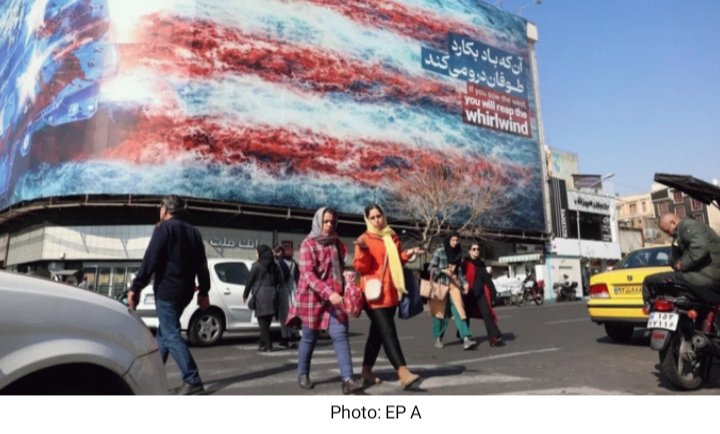
For nearly half a century, Iran has remained effectively isolated in the international arena. Citing allegations related to its nuclear program, arms competition, and human rights violations, a series of sanctions have been imposed on the country, making it one of the most heavily sanctioned states in the world. However, despite repeated efforts by the United States, the European Union, the United Kingdom, and the United Nations Security Council to isolate Iran from global trade or freeze its assets, the actual situation is far from one-dimensional. Recent analyses indicate that even under severe pressure, Tehran has managed to maintain trade relations with a large portion of the world.
Since 2019, Iran has traded with at least 170 countries. Due to sanctions, inflation in the country has surged, unemployment has become severe, and public protests have frequently emerged. Nevertheless, the import of essential goods such as food products, electronics, and vehicle parts has not been significantly disrupted. In return, Iran continues to export oil, gas, construction materials, and various specialized food products. In other words, while Western sanctions have damaged the economy, they have not completely broken it.
According to analysts, over time Iran has developed a more complex and diversified trade structure to cope with sanctions. However, the recent conflict with the United States and Israel has created new and serious obstacles. Disruptions in shipping through the Strait of Hormuz have affected Iran’s own import and export flows. In addition, attacks have caused significant damage to critical infrastructure such as power plants, factories, transportation networks, and military facilities. Although a temporary ceasefire is currently in place, concerns remain that prolonged instability could lead to even greater losses.
Despite such hostile conditions, decades of trade patterns show that this nation of over 90 million people continues to demonstrate remarkable economic resilience. This ability to adapt under pressure suggests that Iran will likely continue to find ways to survive economically in the future.
China as Iran’s Major Trade Partner
Accurate trade data on Iran is difficult to obtain, as most experts question the reliability of official statistics. Moreover, partner countries often do not disclose the full extent of their transactions with Tehran.
Nevertheless, it is clear that China is now Iran’s largest trade partner. Over the past two decades, China’s share in both Iran’s imports and exports has grown significantly. During the pandemic, China announced plans for long-term investment in Iran in exchange for a stable supply of oil.
Recent data indicates that China purchases the vast majority of Iran’s crude oil exports, while also importing significant volumes of chemicals and metals. At the same time, Iran imports a large share of its goods from China.
One of the most notable features of this trade relationship is the currency used. To avoid U.S. sanctions and bypass the dollar-based financial system, transactions are increasingly conducted in Chinese currency rather than U.S. dollars.
Beyond official figures, there is also a more opaque layer of trade involving barter arrangements, where oil is exchanged for infrastructure development projects such as airports and construction works. Experts suggest that Iran has developed an extensive “shadow economy” to bypass sanctions, relying on shell companies, intermediaries, and third countries to obscure transaction origins.
From Oil Dependency to a Diversified Economy
Two decades ago, a large portion of Iran’s exports was dependent on oil. Over time, however, this reliance has declined and the economy has become more diversified. This shift accelerated particularly after the imposition of stricter sanctions.
According to analysts, sanctions forced Iran to seek new trading partners and expand non-oil exports. In recent years, Iran has exported significant volumes of non-oil goods, comparable to the total exports of some smaller economies.
Geography as a Strategic Advantage
Iran’s geographic position plays a crucial role in its economic survival. With land borders shared with several countries and proximity to key global waterways, Iran holds a strategically important position in global trade routes.
Beyond China, Turkey and Iraq are also major buyers of Iranian goods. Since 2019, more than half of Iran’s non-oil exports have gone to these regional partners. Iran also exports products such as cement and livestock to neighboring markets, while goods like packaging materials are exported to Central Asian countries, and saffron is supplied to markets in Europe, including Spain.
Growing Self-Reliance
Years of sanctions have pushed Iran toward greater self-reliance and domestic production. The country has developed a strong industrial base producing automobiles, steel, electronics, pharmaceuticals, and food products.
However, sanctions have also made it difficult to import advanced machinery and technology required for production. In the past, a large portion of Iran’s imports came from Europe, but that share has now declined significantly, with alternative suppliers filling the gap.
According to experts, Iran’s economic diversification is not solely the result of government policy but also the outcome of private companies adapting to global constraints and seeking new markets. However, measuring the true scale of Iran’s trade remains challenging due to the presence of informal and unreported transactions.
Future Outlook
If the Strait of Hormuz remains blocked for an extended period and tensions escalate further, Iran’s economy could take years to recover. The reconstruction of damaged infrastructure—including housing, schools, factories, research centers, and transportation systems—would require significant time and resources.
At the same time, while sanctions continue to restrict Iran’s economy, the country also demonstrates that it retains the capacity to influence global energy markets through its strategic control of key transit routes. This dual reality highlights Iran’s continued resilience within the global economic system.
How Iran is surviving despite being hit by one sanctions after another by diversifying its economy