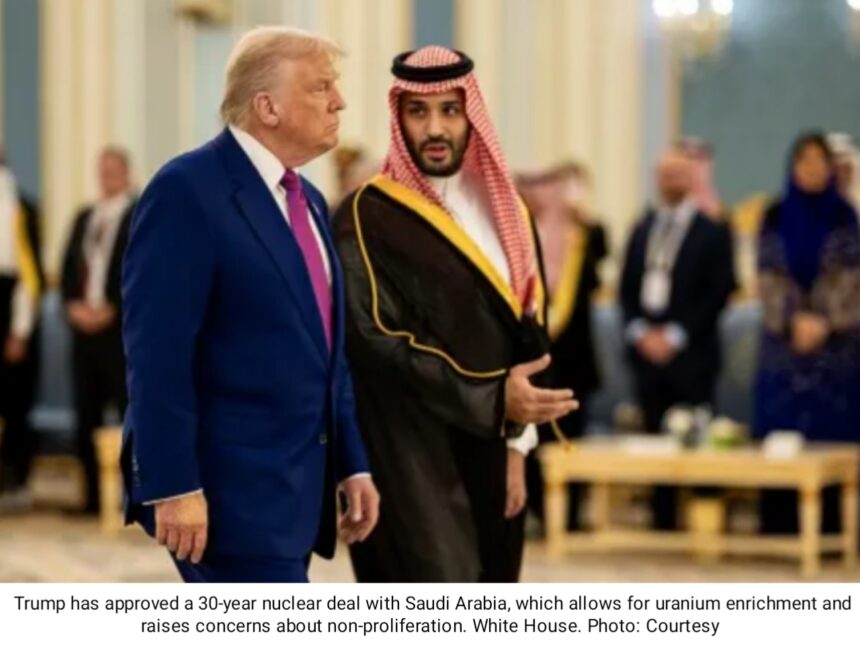
Saudi Arabia has signaled that any broader agreement involving a civilian nuclear cooperation deal would likely require progress toward the normalization of relations with Israel, placing the long-standing Palestinian issue at the center of a rapidly evolving diplomatic landscape in the Middle East. While discussions remain complex and no final agreement has been announced, regional and international observers believe the negotiations could reshape the region’s strategic balance if they ultimately succeed.
According to diplomatic sources, Riyadh continues to maintain that any formal recognition of Israel must be linked to credible and irreversible steps toward the establishment of an independent Palestinian state based on the 1967 borders, with East Jerusalem serving as its capital. Saudi officials have repeatedly emphasized that normalization cannot come at the expense of Palestinian rights, making the issue a central condition in ongoing diplomatic efforts.
The proposed civilian nuclear cooperation agreement has emerged as a key element of broader negotiations involving the United States, Saudi Arabia, and Israel. Washington has sought to strengthen regional stability by encouraging closer ties between Arab states and Israel while offering Saudi Arabia enhanced security cooperation and access to advanced civilian nuclear technology under strict international safeguards. In return, the United States hopes such an agreement could contribute to a more integrated regional security architecture.
Analysts say the negotiations face significant political obstacles, particularly in light of the continuing conflict in Gaza and heightened tensions across the occupied Palestinian territories. Public opinion throughout the Arab world remains strongly supportive of the Palestinian cause, placing additional pressure on Saudi leaders to ensure that any diplomatic breakthrough delivers tangible benefits for Palestinians rather than symbolic political commitments alone.
Regional experts argue that a successful agreement could have far-reaching consequences for Middle Eastern geopolitics, influencing security cooperation, energy development, investment, and diplomatic relations across the region. However, they caution that without meaningful progress toward a viable two-state solution, prospects for Saudi recognition of Israel are likely to remain uncertain.
As diplomatic contacts continue behind closed doors, officials from the parties involved have yet to announce a final framework or timeline for any agreement. The outcome of these negotiations is expected to depend largely on developments surrounding the Palestinian issue, regional security dynamics, and the willingness of all sides to bridge longstanding political differences.
Saudi Arabia in new equation: Nuclear deal if Israel is recognized