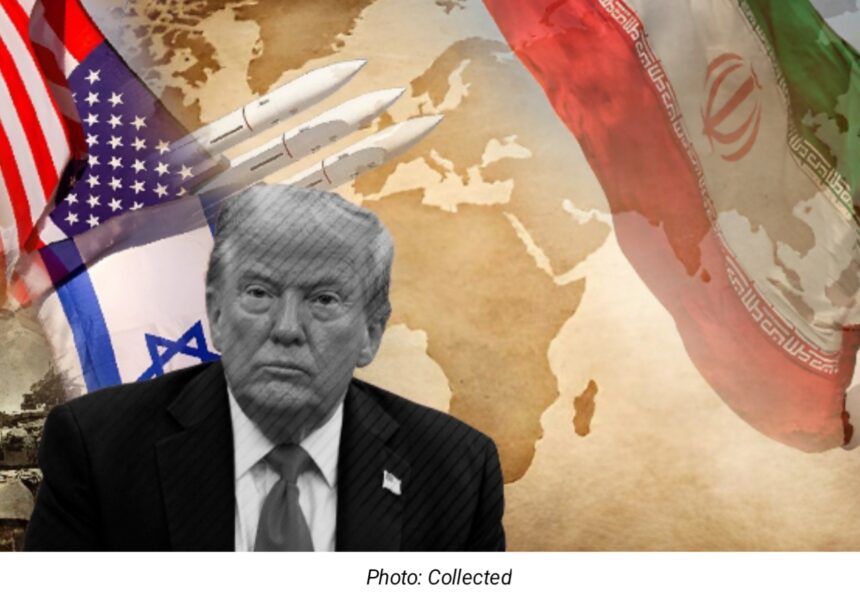
WASHINGTON, July 23 — A fresh political debate has emerged in the United States after an opinion article argued that President Donald Trump might be in a stronger political and diplomatic position today had he adopted elements of former President Barack Obama’s foreign policy approach. The assessment, which reflects the author’s opinion rather than an established fact, has reignited discussions over the contrasting visions that have shaped U.S. foreign policy in recent years amid a rapidly evolving global security landscape.
The debate comes as Washington faces multiple international challenges, including heightened tensions in the Middle East, the prolonged war in Ukraine, strategic competition with China, growing concerns over global energy security, and shifting geopolitical alliances. These developments have prompted renewed scrutiny of how successive U.S. administrations have managed diplomacy, military commitments, and relations with allies and adversaries.
Supporters of Obama’s foreign policy argue that his administration emphasized multilateral diplomacy, close coordination with allies, engagement through international institutions, and negotiated solutions to complex global disputes. They contend that these policies strengthened U.S. credibility abroad and helped preserve long-term strategic partnerships during a period of significant international uncertainty.
By contrast, Trump’s “America First” doctrine prioritized U.S. national interests through a more unilateral approach, including the renegotiation of international agreements, tougher trade measures against China, increased pressure on NATO allies to raise defense spending, and a broader effort to reshape Washington’s role in the global order. His supporters argue that these policies enhanced America’s bargaining power, protected its economic interests, and challenged what they viewed as outdated international arrangements.
Critics, however, say that several of Trump’s foreign policy decisions strained relations with traditional allies and reduced Washington’s diplomatic influence in certain regions. They argue that a greater emphasis on alliance-building and multilateral engagement could have provided the United States with broader international support in responding to today’s geopolitical crises.
Foreign policy analysts note that the comparison between Obama and Trump reflects two fundamentally different strategic philosophies: one centered on diplomacy, coalition-building, and international cooperation, and the other focused on national sovereignty, economic leverage, and a more assertive negotiating posture. As global security challenges continue to evolve, many experts believe future U.S. administrations may ultimately need to combine elements of both approaches to maintain American leadership and respond effectively to an increasingly complex international environment..
“New debate over Trump’s foreign policy, debate over Obama’s strategy”