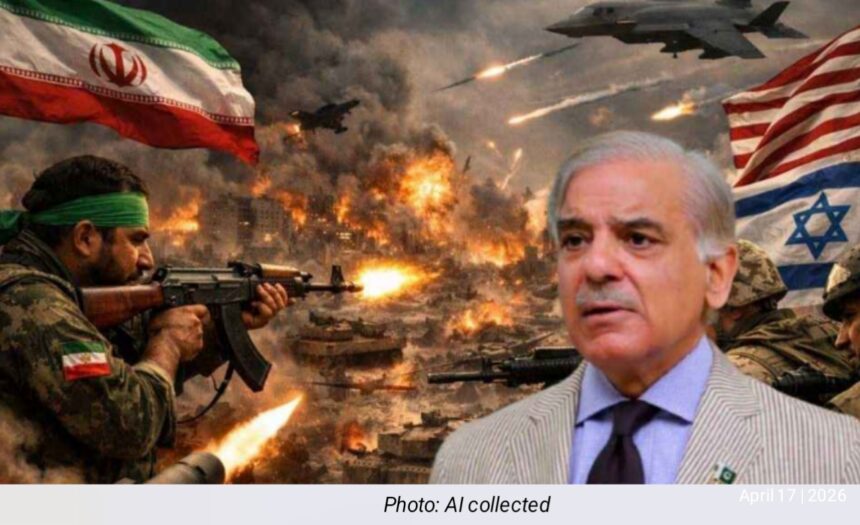
The Middle East has entered a new phase of uncertainty after Iran-backed Houthi forces launched missile attacks toward Saudi Arabia, dramatically escalating regional tensions and raising fears that the conflict could expand beyond Yemen. The latest developments have intensified concerns that Pakistan—an important regional military power with long-standing strategic ties to Riyadh—could eventually be drawn into a broader confrontation if the security situation continues to deteriorate. Analysts warn that any direct military involvement by Pakistan would significantly increase the risk of a wider regional conflict with consequences extending across the Middle East and South Asia.
According to Reuters, the escalation followed allegations by the Houthis that Saudi forces carried out airstrikes on an airport under Houthi control in Yemen. In response, the group launched missiles toward Saudi territory, effectively shattering a ceasefire that had largely held for several years. The renewed exchange has reignited fears of a prolonged military confrontation at a time when regional tensions are already elevated due to the broader rivalry involving Iran, the United States, and Gulf Arab states.
Senior Pakistani officials, speaking to Reuters on condition of anonymity, said Islamabad has conveyed a firm message to Tehran that any major attack threatening Saudi Arabia’s security would be viewed with the utmost seriousness. Officials described Saudi Arabia’s security as a strategic “red line” for Pakistan, reflecting the deep defense relationship between the two countries and highlighting the increasingly complex security environment facing Islamabad.
Pakistan and Saudi Arabia strengthened their military partnership through a mutual defense agreement signed last year, further expanding long-standing security cooperation. Thousands of Pakistani military personnel, along with air force assets, are reported to be stationed in Saudi Arabia, including areas relatively close to the Yemeni border. Security experts caution that any further escalation by the Houthis could place Pakistani personnel directly at risk and potentially trigger difficult decisions regarding Islamabad’s defense commitments.
Regional security analyst Muhammad Amir Rana said the speed and intensity of the current escalation have exceeded expectations, creating an increasingly complicated strategic challenge for Pakistan. Islamabad must carefully balance its historically close relations with Saudi Arabia while also maintaining a functional relationship with neighboring Iran, with whom it shares an extensive border and important economic and security interests.
Beyond military considerations, the crisis carries significant economic implications. Pakistan depends heavily on secure maritime trade routes through the Red Sea and the Strait of Hormuz for energy imports and international commerce. Any prolonged disruption to shipping lanes could place additional pressure on Pakistan’s already fragile economy, increase energy costs, and affect domestic supply chains. Reports indicate that authorities have already implemented emergency measures aimed at reducing energy consumption amid growing concerns over regional instability.
Retired Pakistani General Ghulam Mustafa said Islamabad’s immediate priority remains preventing further escalation through diplomacy and maintaining communication with all parties involved. However, he warned that if Houthi attacks against Saudi Arabia intensify or expand in scope, Pakistan’s strategic calculations could change rapidly, making neutrality increasingly difficult to sustain.
At the same time, Pakistani officials are closely monitoring political developments inside Iran, including reported differences between elements of the country’s civilian leadership and the Islamic Revolutionary Guard Corps (IRGC). Diplomats believe these internal dynamics could influence Tehran’s regional decision-making at a critical moment for Middle Eastern security.
Against this backdrop, a high-level Iranian delegation led by Interior Minister Eskandar Momeni arrived in Islamabad for discussions focused on regional security, the evolving U.S.-Iran situation, and efforts to reduce tensions. Pakistan’s Foreign Ministry has reiterated its call for maximum restraint, emphasizing that sustained dialogue and diplomacy remain the only viable path toward preventing a broader regional war.
While Islamabad continues to publicly advocate de-escalation and political dialogue, diplomatic sources indicate that Pakistan’s existing security commitments to Saudi Arabia could place the country under considerable pressure should Riyadh formally request military assistance. Such a scenario would represent one of the most significant strategic tests for Pakistan’s foreign and defense policy in recent years.
Observers warn that the current crisis extends far beyond the Yemen conflict itself. It now intersects with the wider geopolitical competition between Iran and the United States, Gulf security, global energy markets, and international maritime trade. As tensions continue to mount, analysts caution that even a limited military miscalculation could trigger a broader regional confrontation with far-reaching implications for global stability.
Tensions in the Middle East are at their peak: Pakistan’s difficult equation surrounding Saudi defense pledge