Baghdad, Iraq — Iraq’s sweeping anti-corruption campaign has uncovered one of the country’s largest alleged graft cases in recent years, with judicial authorities announcing the seizure of approximately $86 million in cash, along with 70 properties, 21 vehicles, and nearly three kilograms of gold jewelry linked to an ongoing investigation involving senior Oil Ministry official Adnan al-Jumaili.
According to Iraq’s Supreme Judicial Council, the confiscated assets are believed to be connected to public funds allegedly misused through government projects overseen by al-Jumaili and several individuals associated with the case. Investigators say the recovered cash and valuables represent only part of a broader probe into suspected corruption and financial misconduct within Iraq’s energy sector.
Al-Jumaili, who served as the Oil Ministry’s Undersecretary for Refining Affairs and also headed the Iraqi North Refineries Company, was arrested at his residence in the town of al-Ishaqi, north of Baghdad, on May 30. His detention marked a significant milestone in the government’s expanding effort to dismantle corruption networks embedded within state institutions.
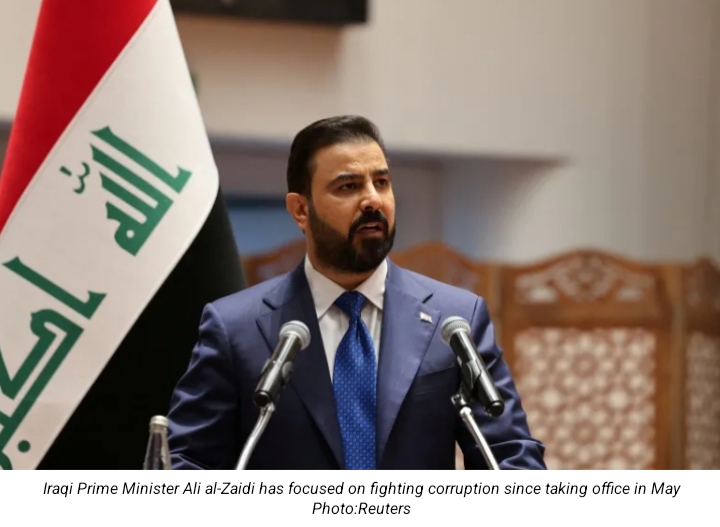
The investigation was launched shortly after newly appointed Iraqi Prime Minister Ali al-Zaidi ordered a comprehensive review of government contracts awarded in recent years. The initiative aims to uncover evidence of corruption, recover stolen public assets, and strengthen accountability across key ministries.
Judicial authorities also confirmed the arrest of Raed al-Jubouri, the former governor of Salah al-Din Governorate, who was serving as the province’s health director at the time of his detention. Officials believe the investigation may expose a wider network involving public officials and contractors suspected of diverting state resources for personal gain.
For years, anti-corruption activists have argued that Iraq’s political system has been deeply affected by patronage and entrenched corruption, allowing powerful political factions to exploit public institutions and siphon billions of dollars from state resources. Successive governments have pledged reform, but prosecutions of high-ranking officials have remained relatively rare.
Political analysts say the latest crackdown could become a defining test for Prime Minister Ali al-Zaidi’s administration. If pursued transparently and independently, the investigation could strengthen public confidence, improve governance, and signal a new era of accountability in Iraq. However, observers also warn that the probe may trigger political resistance as influential figures face increasing legal scrutiny.
The outcome of the investigation is expected to have significant implications not only for Iraq’s oil sector but also for the country’s broader efforts to combat systemic corruption and restore trust in public institutions.
High-level corruption network exposed in Iraq, 70 properties and 21 luxury cars seized