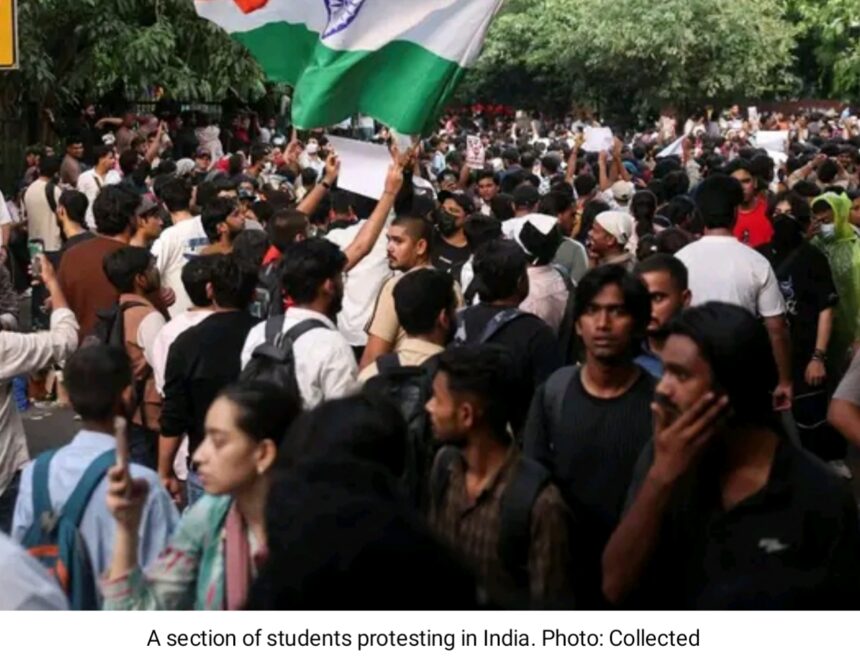
India’s youth-led protest movement has entered a decisive phase after senior government officials held high-level talks with protest leaders in New Delhi, as mounting public anger over examination paper leaks continues to fuel one of the country’s most significant political crises in recent years. Following the meeting, representatives of the movement said the government had requested until Saturday afternoon to respond to their central demand for the resignation of Education Minister Dharmendra Pradhan, a demand they described as non-negotiable. The negotiations took place only hours after prominent activist Sonam Wangchuk ended his 26-day hunger strike, a symbolic act that intensified national attention on the protests and renewed hopes for a negotiated breakthrough. Despite the dialogue, protest leaders stressed that demonstrations would continue until concrete action is taken, warning that failure to remove the minister could trigger an even broader wave of nationwide mobilization. The movement, driven largely by students and young professionals frustrated by repeated examination scandals, argues that the integrity of India’s education system has been severely undermined by recurring paper leaks that have jeopardized the futures of millions of candidates. During the discussions, the government delegation, led by senior ministers J.P. Nadda and Jitendra Singh, met representatives of the self-described Cockroach Janta Party (CJP), including spokespersons Saurav Das and Ashutosh Ranka. According to the protesters, they made it unequivocally clear that promises of reform alone would not satisfy public demands without political accountability at the highest level. Beyond the minister’s resignation, the movement is also demanding the withdrawal of criminal cases filed against protesters and financial compensation for the families of students who reportedly died by suicide following the examination leak controversy earlier this year. Government officials described the talks as cordial and constructive, confirming that discussions would resume after reviewing the protesters’ demands. However, political analysts say the crisis now extends far beyond the education sector, reflecting deeper concerns over governance, transparency, institutional credibility, and the aspirations of India’s rapidly growing youth population. The opposition has thrown its support behind the protesters, disrupting the ongoing monsoon session of Parliament and increasing pressure on Prime Minister Narendra Modi’s administration. Observers believe the movement represents the most significant youth-driven challenge to the government since Modi first assumed office in 2014, highlighting growing frustration over accountability and public trust in state institutions. With both sides preparing for another round of negotiations, attention is now focused on whether the government will make meaningful concessions or risk allowing the demonstrations to escalate into a wider national movement capable of reshaping India’s political landscape.
Indian politics is in turmoil over the question paper leak issue, the government has its last chance for compromise