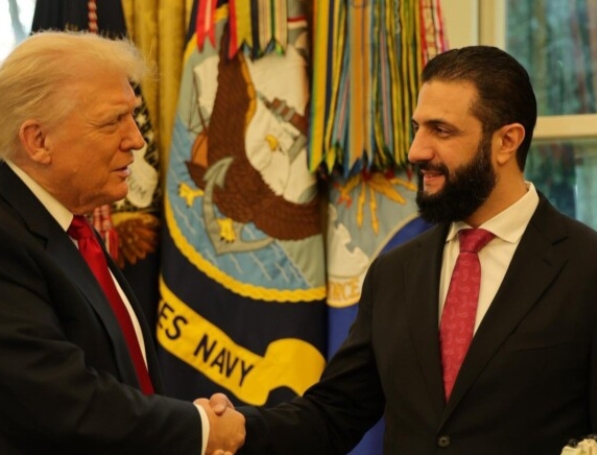
The Trump administration has taken a major step toward reshaping Washington’s long-strained relationship with Syria, announcing a significant easing of its longstanding policy toward Damascus and withdrawing the designation imposed on Hayat Tahrir al-Sham, or HTS, as a Specially Designated Global Terrorist organization, according to reports. U.S. Secretary of State Marco Rubio outlined the policy shift on Monday, describing a move that could mark a significant turning point for Syria’s diplomatic rehabilitation, economic recovery and reintegration into the international system. The decision could pave the way for the easing or removal of longstanding export and economic restrictions on Syria while also creating the possibility of expanded security and, potentially, military cooperation between Washington and Damascus. U.S. officials say that over the past year, the Syrian authorities under President Ahmed al-Sharaa, formerly known as Abu Mohammed al-Jolani, have taken steps against Islamic State, al-Qaeda, Hezbollah and Iran-backed networks, demonstrating a shift in the government’s security posture and creating new opportunities for cooperation with Washington. The policy change comes against the backdrop of Syria’s broader political transformation after years of civil war, international isolation and economic sanctions that have devastated the country’s economy and left Damascus in urgent need of foreign investment, reconstruction assistance and renewed access to international trade. The timing is also significant as Israeli military operations inside Syria and competing interests among regional powers continue to fuel tensions across the Middle East. A recent Israeli airstrike on Syria’s Abu al-Duhur military airbase has heightened diplomatic concerns involving the United States, Syria and Turkey. Tom Barrack, the U.S. ambassador to Turkey and special envoy for Syria, described the Israeli action as concerning and warned that such moves could risk pulling Turkey into a wider regional confrontation. The latest U.S. policy shift is therefore being viewed not merely as a bilateral change in Washington-Damascus relations, but also as part of a broader recalibration of the regional balance of power. Syria was placed on the U.S. list of state sponsors of terrorism in 1979, during the rule of President Hafez al-Assad. For decades, relations between Damascus and Washington remained deeply strained by sanctions, political disputes and regional conflicts. The process of changing that policy began with an executive order issued by President Trump in June, followed by intensified diplomatic engagement. A meeting between Trump and al-Sharaa on the sidelines of this year’s NATO summit further strengthened expectations of a new phase in U.S.-Syrian relations. For Western policymakers, one of the central tests facing the al-Sharaa government has been whether it can effectively confront extremist organizations and establish Syria as a more reliable participant in the international security system. The latest move by Washington suggests that the United States is increasingly prioritizing political engagement and security cooperation with Damascus over prolonged isolation. Significant risks, however, remain. The presence of armed groups inside Syria, Kurdish-led forces, Turkish security concerns, Israeli military operations and Iran-backed networks continue to pose major challenges to the country’s long-term stability. Closer ties between the new Syrian government and Western powers could also provoke reactions from regional actors and further complicate an already fragile security environment. Analysts say that the lifting or easing of U.S. sanctions could create new opportunities for foreign investment, banking, trade and reconstruction projects, potentially giving Syria’s battered economy a path toward recovery. Natasha Hall, an associate fellow at Chatham House, has described the development as a potentially transformative moment for Syria’s economic recovery, while the Syrian American Council has also welcomed the U.S. decision. The pace and scale of the changes, however, will depend on the scope of sanctions relief, the response of international financial institutions, the security policies of Syria’s new government and Damascus’s evolving relationships with regional powers. More than four decades after Syria was first placed on Washington’s terrorism-related blacklist, the latest policy shift represents far more than a change in sanctions policy: it could signal the beginning of a new U.S. strategy in the Middle East, Syria’s gradual return to the international system and a potentially significant realignment of the region’s security landscape.
Major change in four decades of policy: US removes Syria from blacklist