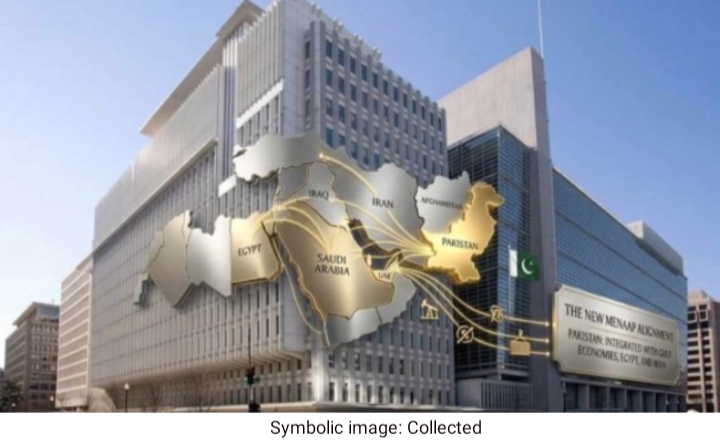
In the World Bank’s new economic classification, Pakistan has been removed from South Asia and placed within the Middle East and North Africa grouping, now categorized under the MENAP (Middle East, North Africa, Afghanistan, and Pakistan) region; this decision, effective from July 2025, is not based on geography but rather on economic realities, as the World Bank observes that Pakistan’s economic orientation has increasingly shifted westward, particularly due to its strong financial ties and labor market dependence on Gulf countries, with remittances from Saudi Arabia and the United Arab Emirates serving as one of the country’s প্রধান sources of foreign exchange; recent investments and financial assistance from these Gulf nations have further strengthened this relationship, gradually shifting Pakistan’s economic center toward the West , and under this new framework, the country now stands alongside 22 nations including Egypt and Iran; according to World Bank projections, this shift may open greater opportunities for sovereign wealth funds and large-scale investments from Gulf states, with an estimated inflow of around $20 billion expected between 2026 and 2035; however, the transition is not without risks, as geopolitical instability in the Middle East, fluctuations in oil prices, and regional conflicts could have a direct impact on Pakistan’s economy, while there is also concern that World Bank funding allocations may be lower compared to South Asia, meaning that alongside new opportunities, Pakistan will also face significant economic challenges under this new classification.
Pakistan’s name is being ‘erased’ from South Asia in the World Bank’s new economic classification!