
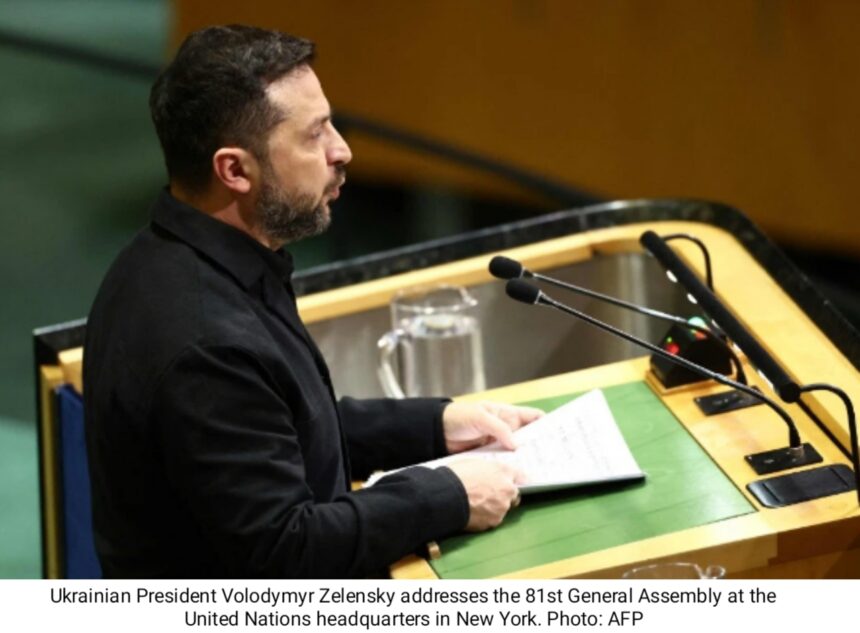
Ukraine has recently transferred two North Korean soldiers captured during fighting in Russia’s Kursk region to South Korea, Ukrainian President Volodymyr Zelensky said in an address to the United Nations General Assembly, revealing a significant development involving North Korean troops who were deployed to support Russia’s war against Ukraine. Zelensky made the announcement during his speech in New York on Wednesday, saying that Ukraine had sent the two prisoners of war to the Republic of Korea. South Korea’s government did not publicly confirm the details of their arrival, but its Foreign Ministry said Seoul had maintained communication and consultations with Ukraine and other relevant countries and agencies over the issue, while citing the safety of the individuals and their families as a reason for withholding specific information about the timing and route of the transfer.
“Recently, we sent two North Korean prisoners of war to the Republic of Korea,” Zelensky said during his address. He described the circumstances surrounding their capture as difficult, saying that one of the soldiers had attempted to take his own life after realizing that he was about to be captured. Zelensky did not provide details about how or when the two men were transferred from Ukraine to South Korea, nor did he explain the arrangements under which the transfer took place. South Korean officials have similarly avoided confirming operational details, emphasizing that the matter involves the safety and protection of the soldiers and their families.
The two North Korean soldiers were captured by Ukrainian forces in January 2025 after being deployed to Russia’s Kursk region. Their capture became an important development in the international debate over North Korea’s direct military involvement in the Russia-Ukraine war. Ukrainian authorities identified them as North Korean troops fighting alongside Russian forces, while reports from South Korea said the two men had expressed a desire to go to South Korea rather than return to North Korea. Their case subsequently became the subject of diplomatic discussions involving Kyiv and Seoul.
The question of what would happen to the soldiers had remained unresolved for months. In 2025, Zelensky said Ukraine could consider handing the prisoners over to North Korean leader Kim Jong Un if their release could be connected to an exchange involving Ukrainians held captive by Russia. Human rights groups, however, raised concerns about the possible consequences of returning the men to North Korea and called for them to be allowed to go to South Korea. The issue became particularly sensitive because of the political and security implications surrounding North Korean soldiers who had fought outside their country under an agreement with Russia. The eventual transfer to South Korea reflects the direction of discussions between Kyiv and Seoul over the soldiers’ stated wishes and their future status.
South Korea’s Foreign Ministry said it was difficult to confirm specific information about the individuals, including when and through what route they may have entered the country. A ministry official said Seoul had held necessary discussions with Ukraine and other relevant parties based on its position that the matter should be addressed in accordance with international law and humanitarian principles while respecting the free will of the individuals concerned. In June, South Korea and Ukraine had publicly agreed to work toward resolving the issue of the North Korean prisoners in accordance with international law and humanitarian principles.
The two soldiers had reportedly expressed their desire to come to South Korea through a North Korean defector organization. That issue was central to the diplomatic discussions because Seoul has maintained a policy of accepting North Korean military personnel who wish to come to the South. The South Korean government has also said that the wishes of the individuals should be respected in dealing with the prisoners. In June, Seoul and Kyiv agreed that the issue should be handled while taking into account both international law and humanitarian principles.
The transfer comes against the backdrop of expanding military cooperation between North Korea and Russia. Since 2024, North Korea has provided military support to Russia as Moscow continues its war against Ukraine. Ukrainian and South Korean estimates have put the number of North Korean troops deployed to Russia at roughly 14,000 to 15,000. Many of those troops have been deployed in the Kursk region, where Russian forces have been fighting Ukrainian troops following Ukraine’s incursion into the area. The deployment marked a major expansion of North Korea’s involvement in the conflict and brought the war into a wider international security discussion involving Europe and East Asia.
North Korea’s involvement has extended beyond the deployment of personnel. Ukrainian and independent assessments have reported that Pyongyang has supplied Russia with large quantities of artillery and mortar ammunition, ballistic missiles, long-range artillery systems and multiple-launch rocket systems. The military relationship between Moscow and Pyongyang has therefore become an important part of the broader security picture surrounding the war. Ukrainian officials have repeatedly argued that Russia’s cooperation with North Korea allows Moscow to obtain additional military resources while giving Pyongyang access to military experience and closer ties with a major international power.
Zelensky used his United Nations speech to criticize North Korea’s decision to send troops to fight on Russia’s side. He questioned why North Korean soldiers should be losing their lives in a war against Ukraine and accused Kim Jong Un of treating his soldiers as a form of currency in exchange for benefits from Russia. Those comments were part of a broader argument by the Ukrainian president that Russia’s war has increasingly involved countries and military resources from outside Europe. Zelensky has repeatedly urged other governments to maintain pressure on Moscow and to address the international networks supporting Russia’s military effort.
The fate of the two North Korean soldiers also carries particular significance because of the unusual circumstances surrounding their capture. North Korea does not have diplomatic relations with Ukraine, and its citizens generally have limited freedom to travel or make independent decisions about leaving the country. The soldiers’ reported wish to remain outside North Korea therefore became a sensitive humanitarian and political issue. Zelensky’s comments about one soldier’s suicide attempt have added another dimension to the case, although details about the circumstances of that incident remain limited and have not been independently established in full.
The soldiers were captured at a time when North Korean military involvement in the Russia-Ukraine war was becoming increasingly visible. Their identities and circumstances attracted international attention because they provided direct evidence of North Korean personnel being captured alive while fighting in the conflict. Ukrainian authorities subsequently released information about the prisoners, while South Korean media and government officials followed the case closely because of the implications for inter-Korean relations and South Korea’s policy toward North Korean nationals seeking protection in the South.
The June discussions between South Korea and Ukraine established a diplomatic framework for dealing with the prisoners. South Korean Foreign Minister Cho Hyun and Ukrainian Foreign Minister Andrii Sybiha agreed that the issue should be addressed according to international law and humanitarian principles while respecting the free will of the individuals. At the time, South Korean officials said the two governments were engaged in constructive discussions and that Seoul would continue diplomatic efforts to resolve the issue.
The eventual transfer, as described by Zelensky, appears to have followed those consultations. However, Seoul has deliberately kept the details private. The Foreign Ministry has said that the timing, route and specific arrangements are difficult to disclose because of safety concerns. This means that several aspects of the transfer remain unclear publicly, including exactly when the soldiers arrived in South Korea, how they traveled and what arrangements were made for their protection after arrival.
The case also highlights the growing connection between the European war and security issues on the Korean Peninsula. Ukraine has increasingly described Russia’s military cooperation with North Korea as a development with consequences beyond the battlefield in Ukraine. South Korean officials, meanwhile, have been closely monitoring the relationship between Moscow and Pyongyang because of concerns about the exchange of military technology, battlefield experience and other forms of cooperation. Russia’s partnership with North Korea has therefore become an issue discussed by European and Asian governments alike.
The wider relationship between Russia and North Korea has deepened since the two countries signed a mutual defense treaty in 2024. North Korea has received increasing international attention over its military support for Russia, while Russia’s ties with Pyongyang have become a subject of concern for South Korea, the United States, Japan and European governments. Recent assessments have also pointed to North Korea gaining battlefield experience through its participation in the war, although the precise scale and nature of any military technology transfers remain subjects of continuing assessment.
For South Korea, the arrival of the two soldiers represents a rare case involving North Korean military personnel captured abroad and subsequently brought to the South. Their treatment is likely to be closely watched because it involves questions of international humanitarian law, the rights and wishes of prisoners of war, South Korea’s legal position regarding North Korean nationals and the broader political relationship between the two Koreas. Seoul has emphasized that the individuals’ wishes and applicable international principles should guide the process.
For Ukraine, the case provides another example of the international dimension of Russia’s war. The presence of North Korean troops on Russian territory has allowed Kyiv to point to the involvement of an Asian military power in the conflict. The transfer of the two prisoners to South Korea also gives Ukraine and Seoul a direct point of cooperation at a time when both governments have been discussing broader security and diplomatic issues. Ukrainian Foreign Minister Andrii Sybiha said in June that Kyiv and Seoul had discussed the prisoner issue in detail and understood how they would proceed in accordance with international humanitarian law.
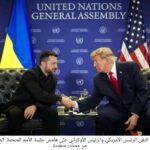
The development comes as diplomatic activity surrounding the Russia-Ukraine war continues. Zelensky was in New York for the United Nations General Assembly, where Ukraine has sought international support for its position and continued pressure on Russia. His remarks about the North Korean prisoners were part of a wider speech in which he addressed Russia’s military campaign and the international support Moscow has received. At the same time, diplomatic contacts involving Ukraine, Russia, the United States and European governments have continued as the war enters another phase.
The transfer of the two North Korean prisoners does not by itself resolve the larger questions surrounding North Korea’s military involvement in the conflict. Thousands of North Korean personnel have reportedly been deployed to Russia, while Pyongyang has provided substantial military supplies. The two soldiers captured in Kursk are therefore a small part of a much broader military relationship between Moscow and Pyongyang. Their individual case, however, has drawn attention because it involves questions of personal choice, international humanitarian law and the future of North Korean nationals who find themselves outside their country as a result of the war.
As of September 24, South Korean authorities have not publicly released detailed information about the soldiers’ current status or the circumstances of their arrival. Officials have said that necessary consultations have taken place with Ukraine and other relevant parties and that the safety of the individuals and their families remains a consideration. Further information may emerge as Seoul determines what details can be disclosed without putting the soldiers or their relatives at risk.
The episode has brought together three separate but increasingly connected issues: Russia’s continuing war against Ukraine, North Korea’s military partnership with Moscow, and South Korea’s long-standing policy toward North Korean nationals seeking to live in the South. The transfer of the two prisoners from Ukrainian custody to South Korea places those issues directly in the same diplomatic framework. It also demonstrates how a battlefield event in Russia’s Kursk region has developed into a matter involving Kyiv, Seoul and the wider international community.
For now, the most significant confirmed development is that Ukraine says the two North Korean prisoners captured in Kursk have been transferred to South Korea, while Seoul has acknowledged that it has held the necessary consultations with Ukraine and other parties but has withheld operational details for security reasons. The soldiers’ future in South Korea, their accounts of their deployment to Russia and any information they may provide about North Korea’s role in the war could receive further international attention. Their case is likely to remain closely connected to the broader questions surrounding North Korea’s military cooperation with Russia and the continuing international response to the war in Ukraine.