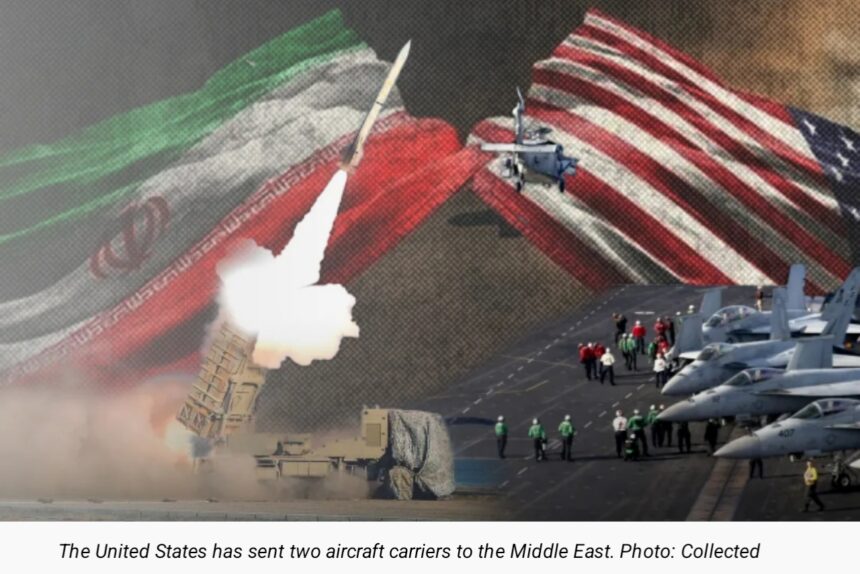
The latest escalation between the United States and Iran has once again pushed the Middle East to the centre of global attention, raising fears of a broader regional conflict with far-reaching consequences for international security, global energy markets, and geopolitical stability. Following a new wave of military strikes and counterstrikes, Washington and Tehran have presented sharply different narratives to justify their actions, while analysts continue to debate whether the region is entering a prolonged cycle of escalation or moving toward a new phase of strategic deterrence. According to the United States, its latest military operations were carried out in response to attacks against American personnel and facilities in the region and were intended to degrade Iran’s military capabilities while preventing future threats. Iranian officials, however, argue that their actions were defensive in nature and based on intelligence indicating preparations for additional military operations against Iranian interests. As with many conflicts in the region, both sides have advanced competing claims, many of which remain difficult to verify independently, underscoring the challenges of reporting accurately during periods of active hostilities. Beyond the exchange of missiles and airstrikes, the current confrontation highlights a broader transformation in modern warfare, where intelligence gathering, surveillance, cyber capabilities, satellite imagery, and rapid decision-making increasingly shape military outcomes. Security analysts argue that the side capable of obtaining timely and accurate intelligence often gains a significant operational advantage, allowing commanders to anticipate enemy movements, protect strategic assets, and respond more effectively to emerging threats. Some regional specialists have suggested that Iran has expanded its intelligence and surveillance capabilities in recent years through a combination of domestic technology, regional networks, and other sources of information. While such assessments have appeared in expert discussions and public commentary, many specific claims regarding operational capabilities remain unverified, and neither Washington nor Tehran has publicly disclosed the full extent of their intelligence activities. Military experts also note that strategic infrastructure in the region has evolved considerably over the past decade. Underground facilities, hardened missile sites, dispersed command structures, and mobile launch systems have become increasingly common, making it more difficult for conventional air campaigns to eliminate an adversary’s military capability through strikes alone. As a result, repeated military operations may succeed in damaging selected targets without fundamentally changing the strategic balance on the ground. At the same time, analysts caution that every retaliatory strike increases the risk of further escalation, especially when both sides seek to demonstrate resolve while avoiding the appearance of weakness. This dynamic has led many scholars of international security to describe the situation as an “escalation trap”—a cycle in which each round of retaliation encourages another, gradually reducing the political space for diplomacy and increasing the possibility of miscalculation. History offers numerous examples of regional conflicts that expanded because neither side wished to be seen as backing down, even when prolonged military operations produced limited strategic gains. Alongside military operations, the information battlefield has become equally significant. Governments, military organisations, researchers, satellite imagery analysts, and social media users release enormous volumes of information every day, creating a highly contested information environment. Some reports are supported by credible evidence, while others remain based on claims that cannot be independently verified. International news organisations therefore typically distinguish clearly between confirmed facts, official statements, and expert analysis, recognising that battlefield information often changes rapidly as new evidence emerges. The economic implications of continued confrontation are also considerable. Any sustained conflict involving the United States and Iran has the potential to disrupt shipping routes, increase insurance costs for commercial vessels, influence global oil prices, and heighten uncertainty across international financial markets. Countries throughout the Gulf region closely monitor developments because prolonged instability could affect regional trade, investment, and energy exports. Diplomatically, governments continue to face the difficult challenge of balancing deterrence with de-escalation. While military operations may achieve limited tactical objectives, most long-running regional conflicts have ultimately required negotiations, indirect diplomacy, or internationally mediated agreements to reduce tensions. For this reason, many foreign policy experts argue that preventing further escalation will require not only military restraint but also sustained diplomatic engagement involving regional and international stakeholders. As the situation continues to evolve, independent verification of battlefield claims remains essential. Competing narratives, incomplete information, and the fog of war make definitive conclusions difficult in real time. What is clear, however, is that the renewed confrontation between the United States and Iran represents more than another exchange of military strikes; it reflects a wider contest over regional influence, strategic deterrence, intelligence capabilities, and the future security architecture of the Middle East. Whether the coming weeks bring further escalation or renewed diplomatic efforts may ultimately shape not only the future of US-Iran relations but also the stability of one of the world’s most strategically important regions.
Middle East in ‘Escalation Trap’: Where will the US-Iran conflict end?