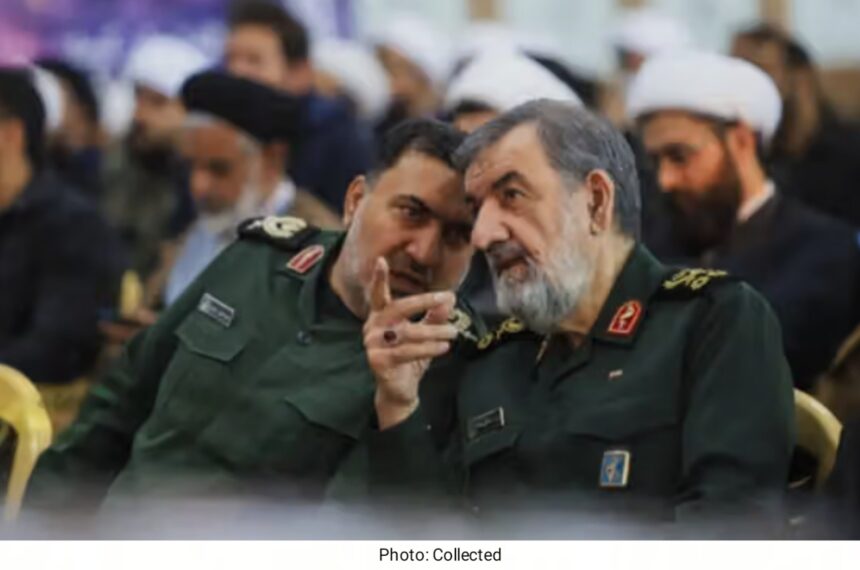
TEHRAN, August 23, 2026 — As a prolonged military and economic confrontation with the United States continues to deepen uncertainty over Middle Eastern security, energy supplies and international maritime trade, Iran has issued a fresh warning that countries joining Washington’s so-called “economic war” will no longer be regarded as neutral by Tehran. The strong remarks by Mohsen Rezaei, secretary of Iran’s Supreme National Security Council, have raised fears of another escalation across the Gulf. Rezaei said countries that participate in economic sanctions or commercial pressure against Iran could be treated as enemies and warned that Tehran could take retaliatory measures against their interests. His comments came as the United States prepares to impose additional economic pressure on Iran, while President Donald Trump has warned that countries providing Tehran with an economic lifeline could face serious consequences. The confrontation therefore risks expanding beyond a military conflict between Washington and Tehran into a wider economic and geopolitical contest involving regional powers. Rezaei specifically warned Iran’s Gulf neighbours that participation in Washington’s economic campaign could lead to a situation in which oil exports from the Persian Gulf are severely disrupted. The warning carries particular weight because the Strait of Hormuz is one of the world’s most strategically important energy corridors, carrying a significant share of global oil and gas shipments under normal conditions. Iran has long viewed the strait as a major instrument of strategic leverage, and the waterway has now become central to international energy markets and maritime security. Tehran’s latest position suggests that if Washington intensifies sanctions and succeeds in bringing regional countries into the pressure campaign, Iran may move beyond diplomatic protests and seek to impose economic and strategic costs of its own. Rezaei outlined what amounts to a three-stage approach: first, engaging with countries cooperating with the United States through diplomatic talks; second, pressing them to distance themselves from Washington’s economic measures; and finally, if they refuse to change course, potentially targeting their interests with retaliatory action. The warning is particularly significant because Saudi Arabia, the United Arab Emirates, Qatar, Bahrain and Kuwait are simultaneously important partners in the US security architecture and major players in the global energy system. Iran’s references to alternative oil-export routes beyond Hormuz have also raised new concerns. Analysts say the warning could indirectly extend to the Bab al-Mandeb Strait, a key maritime gateway to the Red Sea, because Gulf exporters could seek alternative routes to reach international markets if traffic through Hormuz is disrupted. That could link security risks across the Persian Gulf, the Strait of Hormuz, the Arabian Sea and the Red Sea, creating a wider maritime security crisis. The United States already maintains military facilities and thousands of troops across the Middle East and North Africa, including in Bahrain, Kuwait, Qatar, Saudi Arabia, the UAE and Jordan. Those installations could become strategically important if Iran decides to respond to countries supporting Washington’s campaign. At the same time, questions remain over Iran’s ability to withstand mounting economic pressure. Years of sanctions, war-related disruption, restrictions on ports and shrinking international trade have placed the Iranian economy under significant strain. Further US measures targeting Iranian oil exports, financial transactions and international commerce could deepen that pressure. Yet statements from Iran’s leadership indicate that Tehran does not intend to respond to economic pressure solely through defensive measures; instead, it appears prepared to impose costs on Washington and its partners as well. President Masoud Pezeshkian has described Iran as being engaged in a full-scale economic, military and security war with the United States, while portraying the country’s resistance and internal cohesion as evidence that Washington’s pressure has failed to force Tehran into collapse. Washington, meanwhile, is also hardening its position. The US administration has signalled not only new economic measures against Iran but also greater pressure on countries maintaining commercial ties with Tehran. Treasury Secretary Scott Bessent’s warning that countries are effectively “with us or against us” has heightened concerns about a widening divide in the international trading system, particularly because China remains a major buyer of Iranian oil. The central question now is whether the Iran-US confrontation can remain confined to the two countries or whether it will spread across the region. If Tehran follows through on its threat to impose costs on countries participating in sanctions, the geographic scope of the conflict could expand rapidly. Any major disruption to Hormuz or alternative maritime routes could also push up energy prices, create supply shortages and revive inflationary pressures worldwide. Some analysts view Iran’s latest warning not as an immediate declaration of war against Gulf states, but as a strategic deterrent designed to raise the potential cost of joining Washington’s economic campaign. Nevertheless, the severity of the language indicates that Tehran increasingly sees economic sanctions as part of a broader national-security confrontation and may prepare to answer them through military and security channels. The coming days will therefore be closely watched for developments involving new US sanctions, the positions of Gulf states, China’s trade with Iran, and security around the Strait of Hormuz and Bab al-Mandeb. Unless diplomatic efforts gain momentum, the current crisis risks evolving into a broader regional economic and security confrontation, with consequences extending well beyond the Middle East to global energy markets, international trade and the wider geopolitical balance.
Iran’s ‘three-step’ strategy to counter US pressure, heated Middle East