
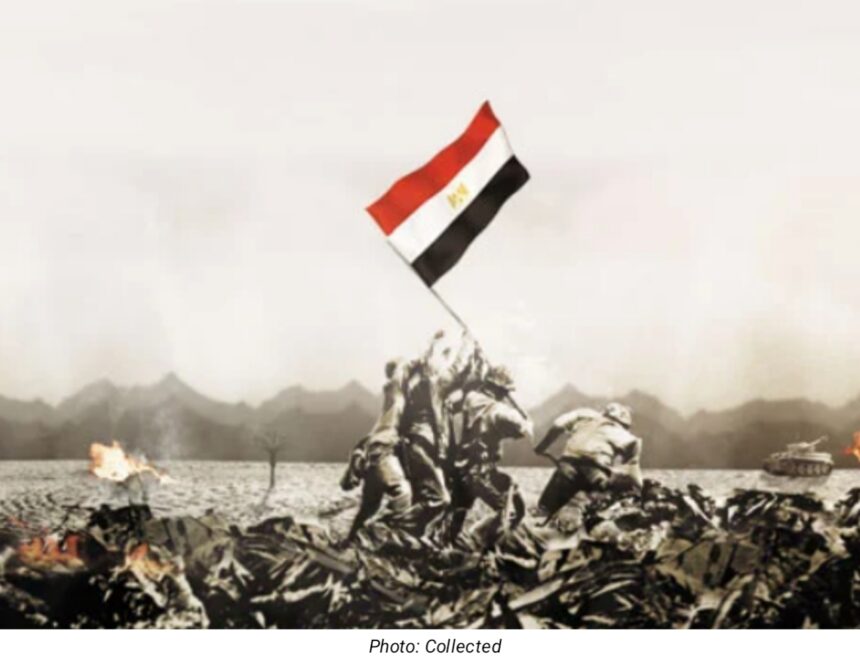
The 1973 Arab-Israeli War remains one of the most consequential conflicts in modern Middle Eastern history, and its outcome cannot be reduced to a simple tally of victory and defeat. The war began on October 6, 1973, when Egypt and Syria launched a surprise coordinated attack on Israel, a conflict known in the Arab world as the Ramadan War and in Israel as the Yom Kippur War. After Egypt lost the Sinai Peninsula in the 1967 Six-Day War, President Anwar Sadat sought to use military force to challenge the status quo and create leverage for recovering Egyptian territory through diplomacy. In the opening phase, Egyptian forces crossed the Suez Canal and breached Israel’s Bar-Lev defensive line, establishing positions on the eastern bank. Israel then mobilized its reserves and launched a counteroffensive, eventually establishing a bridgehead on the western bank of the canal. U.S. military studies have described this crossing as one of the decisive turning points of the war.
Israel’s advance created a serious strategic crisis for Egypt. As Israeli forces expanded their positions west of the canal, the supply and communications lines of Egypt’s Third Army came under severe pressure. Israeli troops also reached positions from which Cairo was within operational reach. Yet an important historical distinction is necessary: while Israeli forces came relatively close to Cairo, saying that Israel was on the verge of capturing the Egyptian capital would be an exaggeration. There was no realistic certainty that Cairo could be seized. Rather, the Israeli advance placed substantial military and political pressure on the Egyptian leadership.
Amid this crisis, Ismailia on the western bank of the Suez Canal became a critical battlefield. The city was strategically important because of its position along the canal and its communications network. As Israeli forces moved toward the area, Egyptian troops, commandos and paratroopers mounted a determined defense. Israeli forces continued operating north of Ismailia but failed to capture the city. U.S. military historical analysis indicates that the advance of Israel’s 143rd Division was halted in the Ismailia area, even as Israeli forces farther south moved to tighten the encirclement of Egypt’s Third Army.
The Battle of Ismailia therefore cannot be understood in isolation from the wider military picture of 1973. The Egyptian defense did not single-handedly stop an Israeli march on Cairo; rather, it formed part of a broader struggle involving the Third Army east of the canal, the Israeli bridgehead on the western bank, the canal’s communications routes and the security of the Egyptian capital. By the final phase of the war, Israel had gained a strong military position, but Egypt was also able to turn its initial battlefield successes into political leverage.
The war was also becoming an international crisis. The United States increased military support for Israel, while the Soviet Union continued supporting Egypt and Syria. U.N. efforts to secure a ceasefire intensified, and the possibility of a direct confrontation between Washington and Moscow became a serious concern. As a result, superpower diplomacy became as important to the war’s final outcome as developments on the battlefield.
One of the war’s most important legacies was its diplomatic aftermath. Egypt and Israel gradually moved toward direct negotiations. The 1978 Camp David Accords established a framework for Israeli withdrawal from Sinai and the restoration of Egyptian sovereignty. On March 26, 1979, Egypt and Israel signed a formal peace treaty. Under the agreement, Israel withdrew from Sinai and Egypt’s sovereignty was restored; the Israeli withdrawal was completed in 1982.
Seen in this context, the Battle of Ismailia stands as an important episode of the 1973 Arab-Israeli conflict. It demonstrates that the final outcome of a war is shaped not only by the speed of armored advances, but also by military endurance, resistance, logistics, international pressure and political strategy. Israeli forces crossed the Suez Canal and placed Egypt under intense pressure, but Egyptian resistance around Ismailia and the wider battlefield made further advances difficult. At the same time, Egypt transformed its initial military gains into diplomatic leverage, helping create the conditions that eventually led to the recovery of Sinai. The 1973 war was therefore not merely a battlefield confrontation; it was a historic turning point that reshaped the balance of power and the diplomatic trajectory of the Middle East.