

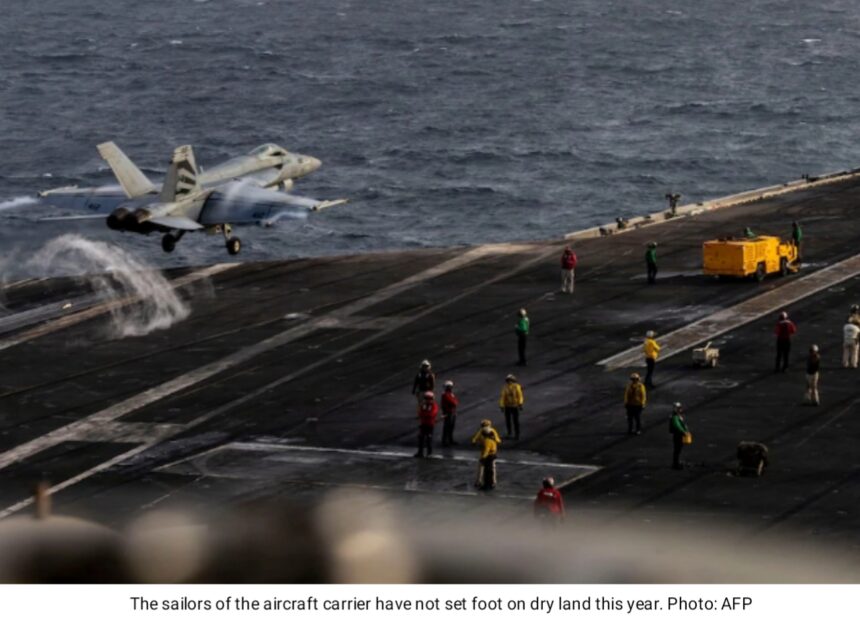
WASHINGTON — The US Navy is facing growing scrutiny over reported conditions aboard the aircraft carrier USS Abraham Lincoln after senior Democratic senators called for an official investigation into allegations of shortages of basic supplies, water contamination, plumbing problems, deteriorating mental health among sailors and safety concerns on the ship’s decks.
The concerns have emerged as the Abraham Lincoln continues a lengthy overseas deployment, placing renewed attention on the physical and psychological strain faced by thousands of US service members operating aboard one of the American military’s most strategically important warships.
In a letter to Defense Secretary Pete Hegseth, Senator Richard Blumenthal urged the Pentagon and Navy leadership to provide a detailed account of conditions aboard the carrier. He cited what he described as “widespread reports” of shortages of essential supplies, water contamination, plumbing problems, declining mental health and deck-safety concerns.
The allegations have prompted calls for greater congressional oversight of the carrier and its crew, particularly as the ship remains deployed for an extended period far from its home port.
Senator Ruben Gallego separately called for an official oversight visit involving a bipartisan Senate delegation to the Abraham Lincoln. He said lawmakers should travel to the carrier to investigate what he described as alarming reports concerning conditions experienced by sailors.
Gallego also sharply criticized the Trump administration’s handling of US service members, arguing that the pressures placed on the military during the current conflict could have serious consequences for personnel safety and operational readiness.
The USS Abraham Lincoln departed San Diego in November last year and has since remained on an extended deployment. Long-duration deployments can place significant pressure on both personnel and equipment, particularly aboard aircraft carriers that operate continuously in demanding environments and require extensive logistical, mechanical and medical support.
The US Navy has acknowledged that the deployment has been challenging. Commander Joseph Hontz, a spokesman for the Navy’s 5th Fleet, said that more than 250 days on deployment posed significant challenges for both the crew and the ship’s equipment. However, he emphasized that the sailors remained resilient and that the vessel continued to be capable of carrying out its assigned missions.
“Though more than 250 days on deployment is challenging for the crew and their equipment, they remain resilient and ready to accomplish any tasking given to them,” Hontz said, adding that the ship remained fully capable of meeting its mission requirements.
The contrasting accounts have raised an important question for US military policymakers: how long can an aircraft carrier and its crew sustain intensive operations without significant degradation in living conditions, morale and equipment reliability?
Aircraft carriers are among the most complex military platforms in the world, effectively functioning as floating cities that support thousands of sailors, aircraft, maintenance teams and command personnel. Their ability to remain operational depends not only on weapons systems and aircraft but also on reliable water, sanitation, food, medical services, accommodation and basic infrastructure.
Reports of contaminated water, plumbing failures or shortages of essential supplies can therefore become matters of operational significance rather than simply issues of comfort. Prolonged problems in these areas can affect morale, health and ultimately the ability of a crew to maintain a demanding operational tempo.
Mental health has also become an increasingly important concern across the US military. Extended deployments can separate sailors from their families for months, while irregular working hours, limited personal space, operational stress and the constant demands of naval service can place additional pressure on personnel.
For the Abraham Lincoln crew, the reported problems are emerging against the backdrop of an increasingly volatile international security environment, in which US naval forces are being asked to maintain a sustained presence across strategically important regions.
The political controversy also highlights a broader debate in Washington over the balance between military readiness and the welfare of service members. While the Pentagon has repeatedly emphasized the importance of maintaining operational capability, lawmakers are pressing the administration to ensure that readiness does not come at the expense of basic living standards and personnel safety.
The senators’ demands could now lead to closer congressional scrutiny, including requests for internal Navy assessments, inspections and testimony from military officials responsible for the carrier’s deployment and support infrastructure.
Any formal oversight visit could provide lawmakers with an opportunity to speak directly with sailors, inspect living and working areas and determine whether the reported problems are isolated incidents or symptoms of wider difficulties associated with extended deployments.
For the Navy, the issue carries reputational as well as operational significance. The Abraham Lincoln is a high-value symbol of American military power and forms part of the United States’ global carrier strike capability. Maintaining confidence in the ship’s readiness requires not only functioning aircraft and weapons systems but also a healthy, properly supported and adequately equipped crew.
The Navy has so far maintained that the carrier remains fully capable of accomplishing its assigned missions. But the growing number of questions from members of Congress suggests that the Pentagon may face increasing pressure to demonstrate that operational readiness is being maintained without compromising the welfare of the sailors responsible for sustaining it.
As the debate intensifies, the Abraham Lincoln has become the focus of a larger question facing the US military: whether the demands of prolonged global deployments are outpacing the resources and support available to the personnel expected to carry them out.
The US Navy has been asked to respond to the allegations and provide further details about conditions aboard the carrier. The outcome of any congressional investigation could determine whether the reported problems represent temporary difficulties associated with an unusually long deployment or point to deeper structural challenges within the US Navy’s ability to sustain its forces at sea.