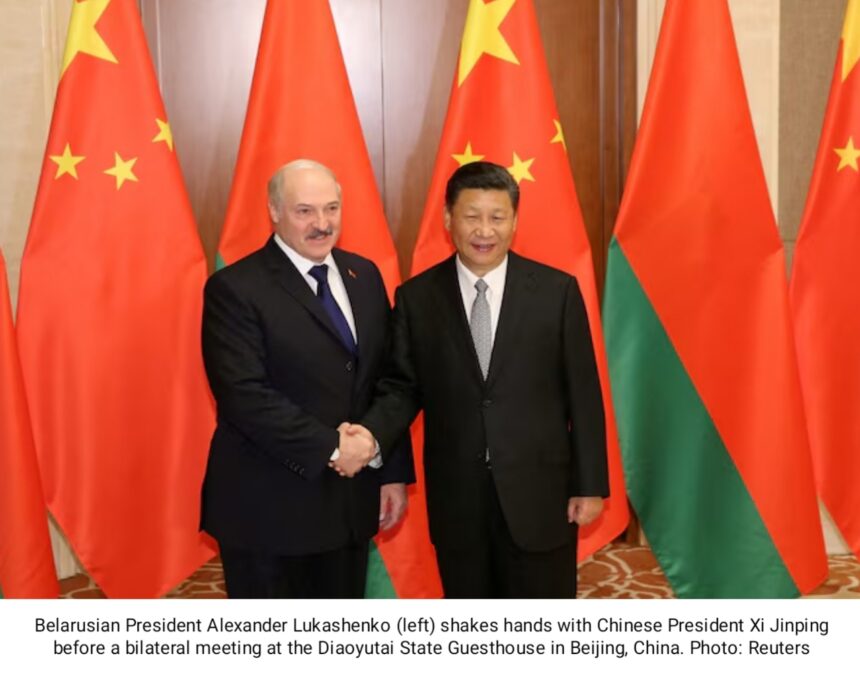
Belarus has signaled a new phase in its strategic partnership with China as President Alexander Lukashenko visited Beijing, describing the growing relationship as the realization of a long-held vision for comprehensive cooperation between the two nations. Speaking during his meetings with Chinese officials, Lukashenko remarked that the current level of collaboration reflects what both countries had envisioned years ago, emphasizing that the partnership extends beyond trade and investment to encompass broader geopolitical and long-term strategic objectives. The visit comes at a particularly sensitive moment in international affairs, only days after Lukashenko held high-level talks with Russian President Vladimir Putin, reinforcing close coordination between Minsk and Moscow as the conflict in Ukraine continues to reshape the regional security landscape. At the same time, Ukrainian President Volodymyr Zelenskyy has expressed concerns that the Kremlin is seeking to persuade Belarus to expand its support for Russia’s military campaign, a claim that underscores growing anxiety over the possibility of deeper Belarusian involvement in the war. While Belarus has not announced any new military commitments, analysts believe its diplomatic engagement with both Moscow and Beijing demonstrates an effort to strengthen political resilience, diversify economic partnerships, and reinforce its strategic position amid sustained Western sanctions and increasing geopolitical polarization. Observers note that China’s expanding cooperation with Belarus forms part of Beijing’s broader engagement across Eurasia, where infrastructure development, trade connectivity, and political coordination continue to gain momentum. As global power dynamics evolve, Lukashenko’s visit is widely viewed as more than a routine diplomatic engagement; it represents an important step in consolidating Belarus-China relations while highlighting the increasingly interconnected strategic interests of Minsk, Beijing, and Moscow. International observers will closely monitor whether these growing partnerships lead primarily to expanded economic cooperation or play a broader role in shaping the future geopolitical balance across Eastern Europe and the wider Eurasian region.
Belarus Deepens Strategic Partnership with China Amid Rising Regional Tensions and Shifting Global Alliances