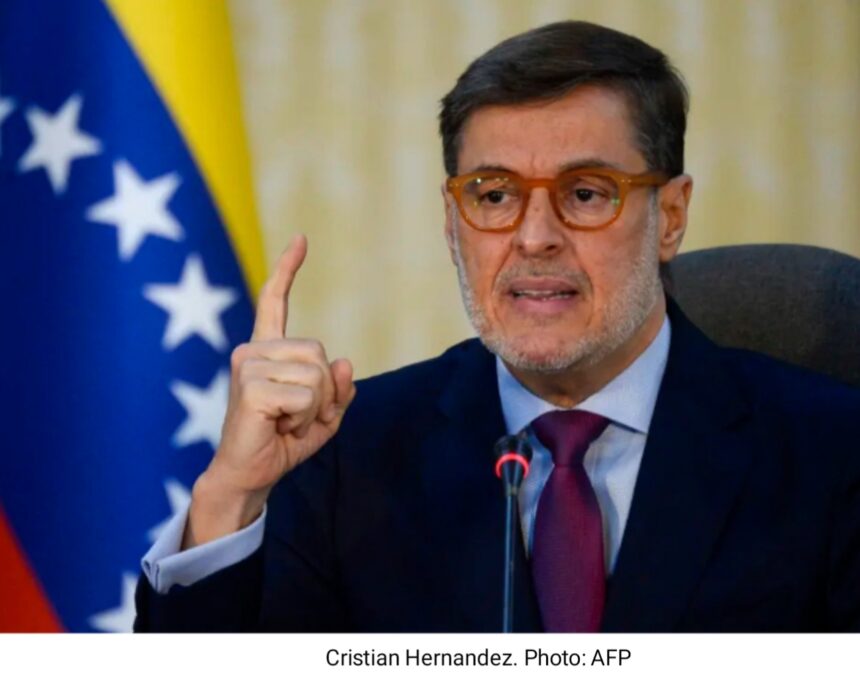
Venezuela has announced its intention to withdraw from the International Criminal Court (ICC), accusing the Hague-based tribunal of political bias and selective justice in a move that is expected to intensify tensions between Caracas and the international community. The decision marks a significant escalation in Venezuela’s long-running dispute with the court, which has been investigating alleged crimes against humanity linked to the government’s response to anti-government protests and other security operations. Venezuelan officials argue that the ICC has abandoned its founding principles by targeting certain states while ignoring alleged violations committed elsewhere, describing the court’s actions as politically motivated rather than legally impartial.
In a statement explaining the decision, Venezuelan authorities said the government no longer has confidence in the independence and neutrality of the ICC, claiming that the institution has been used as an instrument of geopolitical pressure against sovereign nations. Officials accused the court of applying international law selectively and failing to uphold the principle of equal justice, arguing that countries aligned with major global powers have escaped similar levels of scrutiny despite facing allegations of serious human rights violations. The government maintained that Venezuela possesses functioning judicial institutions capable of investigating alleged offences domestically and therefore rejected what it described as external interference in its internal affairs.
The announcement comes after years of legal and diplomatic friction between Caracas and the ICC. The court has been examining allegations that Venezuelan security forces committed crimes against humanity, including arbitrary detention, torture and excessive use of force during operations against political opponents and demonstrators. Venezuelan authorities have consistently denied the accusations, insisting that security forces acted within the framework of national law to preserve public order and protect state institutions from violent unrest.
The decision to leave the ICC is likely to generate widespread international attention because the court serves as the world’s permanent tribunal for prosecuting individuals accused of genocide, crimes against humanity, war crimes and the crime of aggression when national authorities are unable or unwilling to do so. Human rights organisations have repeatedly argued that international oversight remains essential in cases involving allegations of grave abuses, while governments critical of the ICC have increasingly accused the institution of inconsistency and political selectivity in its investigations.
Legal experts note that withdrawing from the Rome Statute, the treaty establishing the ICC, is a formal legal process that does not automatically terminate the court’s jurisdiction over investigations already initiated while a country was still a member. Under the Rome Statute, withdrawal generally takes effect one year after formal notification is submitted to the Secretary-General of the United Nations, and obligations arising before the withdrawal remain legally relevant. Consequently, any ongoing legal proceedings or investigations relating to the period of Venezuela’s membership could continue under the court’s existing mandate.
The announcement also reflects a broader debate over the role of international justice institutions in global politics. While supporters of the ICC argue that the court remains an essential mechanism for ensuring accountability where domestic justice systems fail, critics contend that its investigations have at times appeared uneven and disproportionately focused on certain countries. These competing narratives have fuelled longstanding political disagreements over the court’s legitimacy, jurisdiction and effectiveness.
Diplomatic observers believe Venezuela’s decision could further complicate its already strained relations with several Western governments and international human rights bodies. The move may also encourage renewed debate among other states that have previously questioned the ICC’s authority or criticised its handling of politically sensitive investigations. At the same time, supporters of international accountability are expected to argue that continued engagement with multilateral legal institutions remains essential to strengthening the global rule of law.
As Venezuela moves towards formally withdrawing from the International Criminal Court, attention is likely to focus on the legal implications for existing investigations, the reaction of ICC member states, and the broader impact on international justice. The development underscores the continuing tension between national sovereignty and international accountability, a debate that remains central to contemporary international law and global diplomacy.
‘Court has been turned into a political tool’ – Venezuela announces withdrawal from ICC