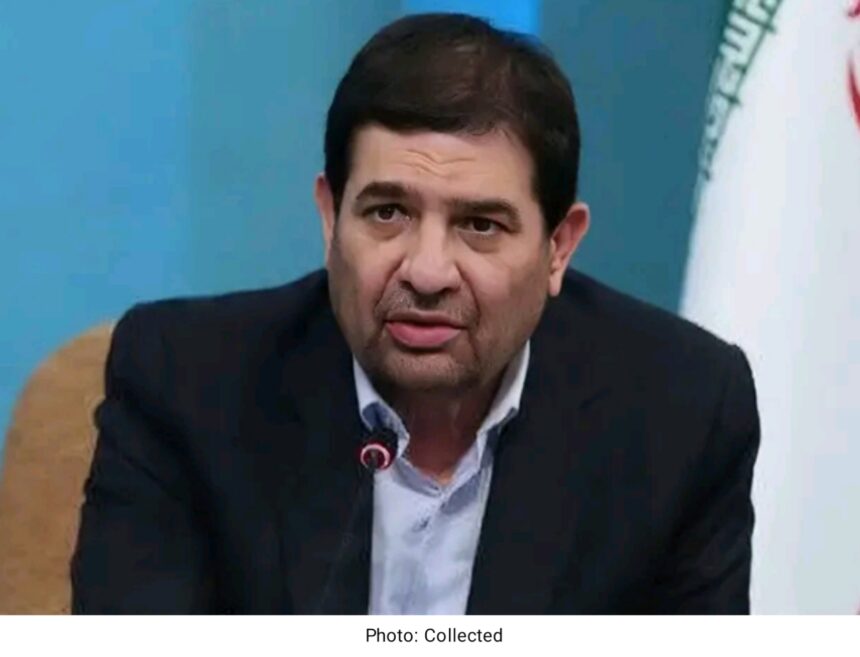
Global energy markets are facing renewed uncertainty as a senior adviser to Iran’s Supreme Leader warned that crude oil reaching $100 per barrel is only the beginning of a much broader economic shock. Mohammad Mokhber argued that the current rise in oil prices reflects growing geopolitical tensions, but cautioned that a direct escalation targeting the Middle East’s energy infrastructure could unleash consequences far beyond today’s market volatility. According to his assessment, the world has yet to witness the full economic impact of a conflict involving the region’s major oil and gas facilities.
“The price of oil reaching $100 is only the beginning,” Mokhber said. “The United States is igniting a fire beneath this region’s energy fields that could ultimately engulf the entire world.” His remarks come amid heightened tensions between Washington and Tehran, with concerns mounting over the security of strategic energy corridors and critical oil production sites across the Gulf.
The Middle East remains the backbone of global energy supplies, accounting for a significant share of internationally traded crude oil. Any disruption to production facilities, export terminals or maritime routes—particularly around the Strait of Hormuz—could send shockwaves through international markets. Analysts have long warned that even limited military escalation in the region has the potential to drive up energy costs, fuel global inflation, disrupt supply chains and place additional pressure on already fragile economies.
Mokhber’s comments reflect Iran’s official perspective that continued US military and strategic pressure risks transforming regional energy infrastructure into the centre of a wider confrontation. While these assertions cannot be independently verified in full, they underscore the growing geopolitical tensions that have intensified concerns among governments, investors and energy traders over the stability of global oil supplies.
Energy economists note that sustained conflict in the Gulf would likely have repercussions extending well beyond crude prices. Higher transportation costs, rising food prices, increased manufacturing expenses and greater volatility across financial markets could collectively deepen the economic burden on both developed and developing nations. As geopolitical risks continue to rise, global markets remain highly sensitive to developments that could reshape the world’s energy landscape and economic outlook.
Oil prices hit $100, Tehran hints at bigger shock ahead