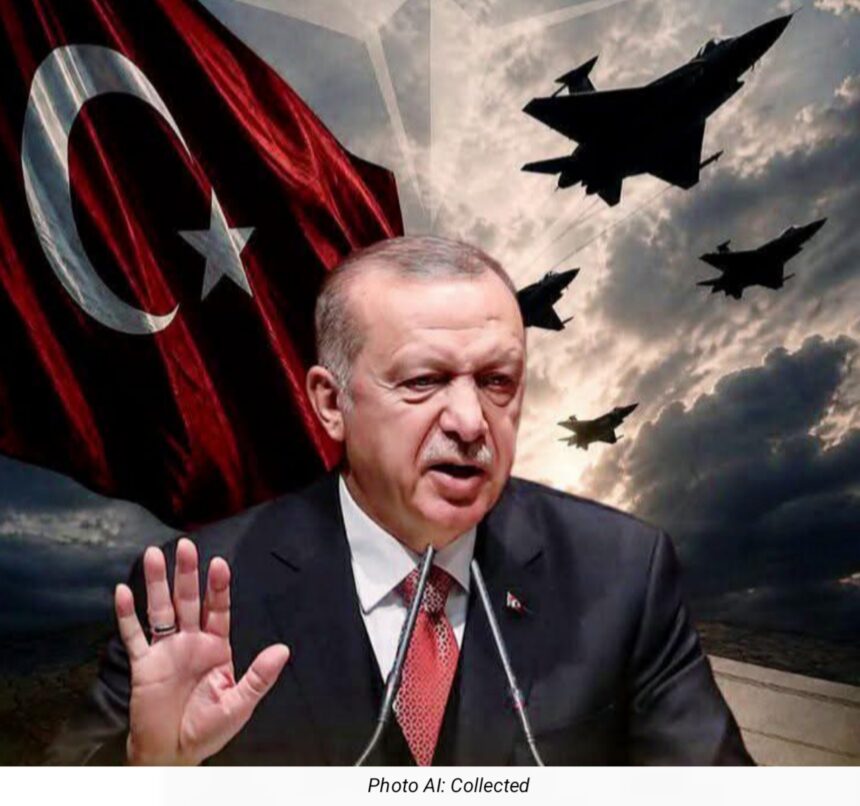
Relations between Turkey and Israel are entering another period of heightened tension as Ankara pursues a dual-track strategy combining diplomatic pressure with continued military modernization, raising concerns in Israel over the evolving regional balance of power. While Turkish officials have largely refrained from publicly discussing the full scope of their military activities, President Recep Tayyip Erdoğan’s administration has intensified its political rhetoric and strategic positioning, signaling a broader effort to strengthen Turkey’s influence across the Middle East. Turkish Foreign Minister Hakan Fidan has argued that Israel is no longer merely a regional issue but a challenge for the international community, stating that Israel has become “a burden on the collective conscience of humanity.” His remarks drew a swift and strong response from Israel, where Foreign Minister Gideon Sa’ar condemned the statements as inflammatory and instructed Israeli diplomats to pursue a formal complaint within NATO regarding Turkey’s rhetoric. Israeli officials increasingly view Ankara’s policy as a significant departure from previous years, expressing concern that Turkey is seeking to consolidate regional alliances capable of reshaping the strategic landscape. According to Israeli assessments, if Ankara succeeds in strengthening its partnerships and expanding its political and military influence, Israel could face a far more complex security environment in the future. Alongside its diplomatic campaign, Turkey continues to accelerate the modernization of its armed forces, with particular emphasis on enhancing air superiority, expanding its domestic defense industry, and equipping the Turkish Air Force with advanced next-generation combat aircraft. Defense analysts note that these initiatives reflect Ankara’s long-term ambition to establish greater strategic autonomy and reinforce its role as a leading regional military power. However, Turkish authorities have maintained a degree of ambiguity regarding the operational details of these military developments, declining to comment publicly on several aspects of their defense planning. The growing exchange of criticism between Ankara and Tel Aviv comes at a time of heightened geopolitical uncertainty across the Middle East, where conflicts in Gaza, Syria, and the Eastern Mediterranean continue to reshape regional alliances and security calculations. Analysts say the latest diplomatic confrontation illustrates the widening political divide between the two countries, while the simultaneous expansion of Turkey’s military capabilities is being closely monitored by Israel and other regional actors. Although no direct military confrontation appears imminent, experts warn that continued political escalation, coupled with expanding strategic competition, could further complicate an already volatile regional security environment, underscoring the importance of sustained diplomatic engagement to prevent tensions from escalating into a broader crisis.
Erdogan on two-way path of diplomacy and military power, Tel Aviv cautious