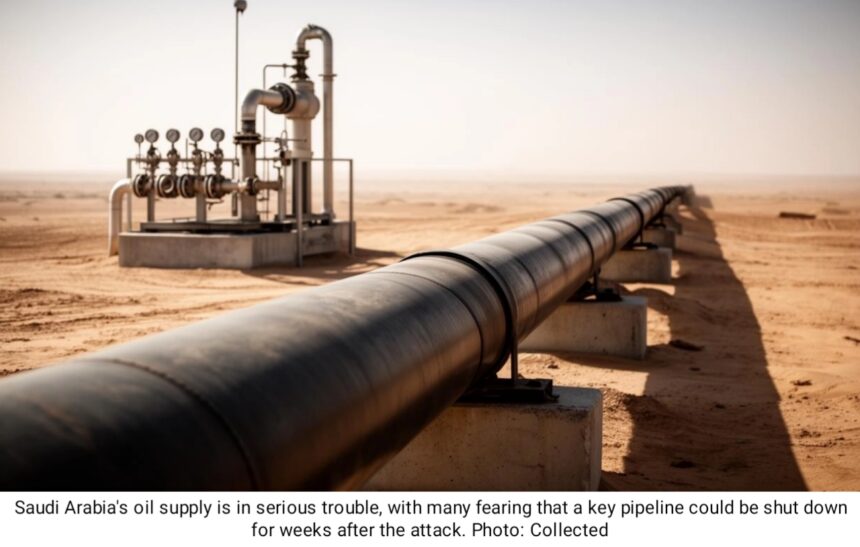
Cairo — A key Saudi oil pipeline could remain largely out of service for several weeks as repairs continue following an attack, according to two regional officials. At the same time, Yemen’s Houthi rebels have seized additional islands near major Red Sea shipping routes, adding fresh pressure on Saudi Arabia’s oil exports. The developments have raised concerns over the ability of one of the world’s largest oil exporters to maintain the flow of crude to international markets and have intensified uncertainty over global energy supplies. Oil prices have already risen by more than 2% amid growing concerns about disruptions to petroleum supplies. The regional conflict has forced Saudi Arabia to adjust its export routes as shipping through the Persian Gulf has faced increasing disruption. With the Strait of Hormuz, the Gulf’s main maritime exit, affected by attacks and heightened security risks, Saudi Arabia has become increasingly reliant on alternative routes to move crude toward international markets. A key part of that strategy is the East-West Pipeline, which stretches roughly 1,200 kilometers across Saudi Arabia and connects the country’s major oil-producing areas with its western coast. A prolonged disruption to the pipeline could reduce the kingdom’s ability to use alternative export routes at a time when maritime transport is already facing serious risks because of the wider regional conflict. The increased Houthi activity around Red Sea shipping routes adds another layer of pressure to Saudi Arabia’s western export infrastructure and raises broader concerns about the security of one of the world’s most important energy corridors. Any prolonged disruption to Saudi oil transportation could have consequences beyond the Middle East, potentially affecting crude prices, shipping costs, insurance premiums and the wider availability of petroleum supplies in international markets. The scale of the damage, the time required to complete repairs and Saudi Arabia’s ability to compensate through alternative export arrangements will determine how significantly the disruption affects global supplies. As tensions continue across the Persian Gulf, the Strait of Hormuz and the Red Sea, international energy markets are closely monitoring developments that could further threaten the movement of crude oil from the region.
Saudi Arabia’s oil supply hit, key pipeline feared to be shut down for weeks after attack