

President Donald Trump has urged Republican voters to cast their ballots early or by mail in the November midterm elections, marking a notable change in tone after years of attacking mail-in voting and promoting claims that the system is vulnerable to fraud.
In a video released on social media over the weekend, Trump told Republican voters: “Vote early. Vote by mail. Or vote in person on Election Day.”
The message came just weeks before Americans are due to vote in the 2026 congressional midterm elections, when control of both chambers of Congress will be at stake.
Trump’s appeal is striking because he has spent years criticizing mail voting, including during his first presidency and in the period surrounding the 2020 presidential election. He has repeatedly alleged that mail ballots are vulnerable to cheating, even though there is no evidence of widespread fraud in US mail voting.
The president has also supported efforts to restrict the use of mail ballots and has described the method in sharply negative terms. Yet he has personally used mail voting on multiple occasions, including in Florida elections.
His latest appeal therefore represents a significant political reversal, at least in his public messaging to Republican voters.
Trump tells Republicans to use every available voting method
Trump’s weekend video was direct in its message. Republican voters, he said, should not wait until Election Day if they have an opportunity to vote earlier.
The president also promoted a Republican Party website providing information about voting options.
The campaign reflects a broader effort by Republicans to maximise turnout before November 3. Early voting and mail voting allow campaigns to lock in ballots before Election Day rather than relying entirely on voters appearing at polling stations on a single day.
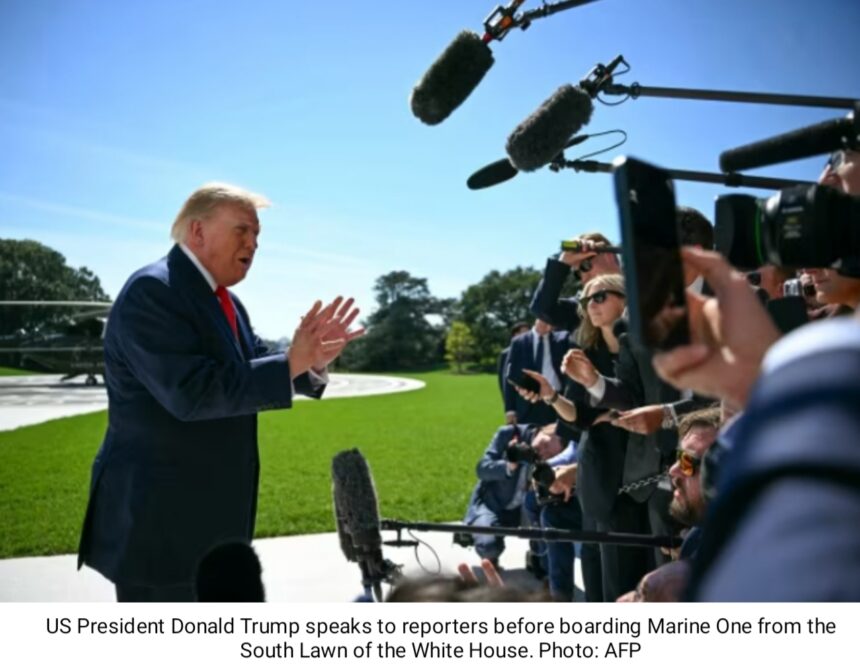
Reuters reported on October 6 that Trump had again defended the option of voting by mail while saying he personally preferred voting in person. He told reporters that supporters could choose either method.
The change comes as Republicans face a difficult political environment heading into the midterms. Recent polling has shown dissatisfaction with Trump’s presidency, while concerns over prices and the economic impact of the war involving Iran have become increasingly important issues for voters.
A sharp contrast with Trump’s previous position
Trump’s new message stands in contrast to his longstanding criticism of mail-in voting.
For years, he has argued that voting by mail creates opportunities for fraud. His claims became a central part of the political dispute surrounding the 2020 presidential election.
Trump repeatedly challenged the legitimacy of the 2020 election after losing to Democrat Joe Biden. He and his allies promoted allegations involving mail ballots, voting machines and election administration. Courts, election officials and multiple reviews rejected claims of widespread fraud sufficient to change the outcome.
Trump nevertheless continued to criticise mail voting after returning to the White House.
His position has sometimes produced an unusual contradiction: while warning Republican voters against mail ballots, Trump himself has used the system.
As a Florida voter, he mailed his ballot during a special election in March. He also voted by mail in Florida’s Republican primary in August.
The president has previously described mail-in voting in highly negative terms, but his latest appeal suggests that the Republican campaign is now prioritising turnout over his earlier political objections.
Why the change matters for Republicans
The shift has a practical electoral dimension.
Republicans have traditionally relied heavily on Election Day turnout, while Democrats have often made greater use of early and mail voting. A Republican campaign that discourages its own voters from using those methods could potentially leave some supporters at a disadvantage in elections where participation is decided over several weeks.
The Trump campaign now appears to be encouraging Republican voters to use whichever legal method is most convenient.
The strategy could be particularly important for voters who live far from polling stations, have work or family obligations, are elderly, or otherwise face difficulties voting in person on Election Day.
Mail voting can also provide campaigns with a longer period to organise supporters and ensure that ballots are returned before voting closes.
For Republicans, Trump’s willingness to promote mail voting may therefore represent an attempt to remove a potential barrier to participation among his own supporters.
Mail voting remains a major political battleground
The dispute over mail voting is part of a much larger political fight over election administration in the United States.
Trump has sought to impose tighter restrictions on voting by mail, arguing that stronger safeguards are needed to prevent fraud.
His administration has also pursued broader changes affecting the country’s election system.
Some of those efforts have faced opposition from lawmakers, state officials and the courts.
The legal battle has become particularly important because election administration in the United States is largely decentralised. States and local governments play major roles in determining how ballots are requested, distributed, collected and counted.
That means national attempts to impose uniform restrictions can quickly become the subject of legal challenges.
The Supreme Court has also played a role in determining which election rules will apply before the 2026 midterms.
A recent ruling blocked enforcement of a federal restriction affecting mail ballots, restoring the status quo that had previously governed mail voting.
Postal Service prepares for a major mail-ballot operation
The US Postal Service is also preparing for the expected increase in election-related mail as November approaches.
The agency has announced additional measures designed to ensure ballots are processed and delivered on time.
These measures include extended retail hours, special lines for ballot postmarks, drive-through ballot drop-offs, additional deliveries and special ballot pickups.
From late October through Election Day, postal carriers are also expected to check delivery points for outgoing election mail, including locations where they may not have incoming mail that day.
The measures highlight the continuing importance of postal voting in American elections despite the political controversy surrounding it.
In the 2024 presidential election, the Postal Service handled tens of millions of ballots. Mail voting was less common than during the pandemic-era 2020 election but remained a significant part of the national voting system.
Trump’s own voting history complicates his criticism
Trump’s personal use of mail voting has repeatedly complicated his political attacks on the practice.
During the 2020 election period, he frequently warned Republican voters about mail ballots while making clear that he could use the system himself.
In 2026, the pattern has continued.
He has criticised mail voting but then used it when it suited his own circumstances. Now he is openly encouraging Republican voters to do the same.
The distinction Trump has drawn is that mail voting can be used under certain circumstances while still arguing that the system as a whole requires stronger safeguards.
However, his latest video does not focus on those concerns. Instead, it delivers a simple instruction to Republican voters: vote early, vote by mail or vote in person.
That message puts turnout at the centre of the campaign.
Republicans face a challenging midterm environment
Trump’s intervention comes as the Republican Party seeks to maintain its control of Congress.
The midterm elections will take place on November 3, with all 435 seats in the House of Representatives and a portion of the Senate seats on the ballot.
The political environment has become increasingly difficult for Republicans as the election approaches.
Recent polling has shown Trump’s approval rating at a low level, while Democrats have held an advantage in some national measures of voter preference. A Reuters/Ipsos poll reported on October 5 put Trump’s approval at 32%, with Democrats ahead of Republicans among registered voters.
Those figures do not determine the outcome of congressional elections, which are decided state by state and district by district. But they provide an indication of the political pressure facing the administration and Republican candidates.
Republicans currently hold majorities in both chambers. Losing control of either chamber would significantly change the political environment in Washington.
A Democratic majority in either the House or Senate would provide the opposition party with greater power to investigate the administration, block legislation and shape congressional oversight.
Cost of living becomes a central issue
Economic concerns are also influencing the midterm campaign.
American voters have faced continued pressure over household costs, fuel prices and other expenses. The conflict involving Iran has added another source of uncertainty to global energy markets and contributed to concerns about fuel costs.
Trump’s administration has faced criticism over the handling of the economic consequences of the conflict.
Republicans have sought to emphasise economic achievements and policies intended to reduce energy costs, while Democrats have focused heavily on the impact of inflation and household expenses.
The economic debate is likely to remain central as voters decide whether to support the party controlling the White House or use the midterms to express dissatisfaction.
Trump turns the midterms into a referendum on his presidency
Although Trump is not personally on the ballot in the 2026 congressional elections, he has increasingly positioned the midterms as a test of his administration.
He has travelled to Republican-leaning states and competitive areas to campaign for candidates and energise his supporters.
At a rally in Nebraska on October 5, Trump sought to reinforce Republican support in a traditionally conservative state while warning voters about the consequences of a Democratic victory.
He has also appeared at events in states where Senate and other congressional races are being closely watched.
The strategy reflects Trump’s continued role as the central figure in Republican politics.
His popularity among the Republican base remains a major asset for candidates, but his national approval rating and the broader political environment have created concerns about whether his involvement will be enough to overcome economic dissatisfaction and Democratic momentum.
The political importance of early voting
Early voting has become a significant feature of American elections.
Rather than requiring voters to appear at polling stations on one specific day, many states allow eligible voters to cast ballots before Election Day.
The rules vary considerably from state to state.
Some jurisdictions provide extensive early-voting periods, while others have more limited options. Mail-ballot requirements also differ, including rules governing applications, deadlines, identification and ballot return.
For national campaigns, this creates an opportunity to organise voters over an extended period.
Political parties can contact supporters who have not yet voted, provide information about deadlines and encourage them to submit their ballots.
Trump’s instruction to Republicans to vote early is therefore more than a general statement about voting options. It is part of a broader campaign effort to make sure supporters participate before Election Day.
The continuing fight over election security
While Trump is now promoting mail voting, his administration continues to argue that American elections require greater security.
The disagreement over election security has expanded beyond mail ballots.
The administration has also pursued investigations into claims that voting machines and foreign actors played a role in manipulating previous elections.
A Reuters investigation published in October reported that a federal effort to investigate allegations surrounding the 2020 election found no evidence that foreign actors had infiltrated US voting systems or manipulated the result.
The investigation nevertheless showed how claims about election fraud have continued to influence government policy and political debate.
The issue has become particularly sensitive ahead of the midterms because election officials fear that renewed allegations could undermine confidence in the voting process.
The tension is clear: the administration is promoting stronger election security measures while the president is simultaneously encouraging his own supporters to use a voting method he has previously criticised.
What Trump’s message could mean for Republican voters
The immediate goal of Trump’s latest message is likely to be straightforward: encourage Republicans to cast ballots by whatever lawful method is available to them.
The president’s comments remove a potential source of confusion among Republican voters who may have previously believed that voting by mail was unacceptable or unsafe.
By telling supporters that they can vote early, by mail or in person, Trump is effectively giving them permission to use the system he has spent years criticising.
That could help Republican voters who prefer mail ballots or cannot easily reach polling stations on November 3.
It could also allow the Republican Party to focus its campaign resources on voters who have not yet cast ballots rather than waiting until Election Day.
Whether the strategy will have a measurable impact remains uncertain.
A reversal driven by electoral realities
Trump’s latest position highlights the difference between political rhetoric and electoral strategy.
His criticism of mail voting has been an important part of his political identity since 2020. Yet elections require parties to maximise participation among their supporters, regardless of which voting method those supporters choose.
With the midterms approaching, Republicans have little reason to discourage any legal form of voting that could increase their turnout.
Trump’s new message therefore places practical electoral considerations ahead of his earlier rhetoric.
The shift does not necessarily mean that he has abandoned his broader concerns about election administration. His administration continues to pursue changes to voting rules and election security.
But the immediate message to Republican voters is clear: do not wait until Election Day if you can vote earlier.
The final weeks before November 3
With the midterm elections approaching, both parties are entering the most important stage of the campaign.
Republicans are attempting to defend their congressional majorities while Democrats are seeking to gain control of one or both chambers.
Trump is using his political influence to mobilise Republican voters, while Democrats are attempting to capitalise on dissatisfaction with the administration and concerns about economic conditions.
Early voting and mail ballots will form a significant part of that contest.
The president’s decision to encourage Republicans to use those methods represents a notable change from his previous approach and could reshape how his supporters participate in the election.
At the same time, the continued legal and political battles over voting rules mean that election administration will remain a major issue.
The November election will ultimately be determined by voters in individual states and congressional districts. National polling can indicate broader political trends, but it cannot determine the outcome of every race.
For now, Trump’s message reflects a simple electoral calculation: Republican voters should use every available legal opportunity to cast their ballots.
After years of attacking mail voting, the president is now telling his supporters that they can use it.
That reversal is likely to remain one of the more closely watched features of the final weeks of the 2026 US midterm campaign.