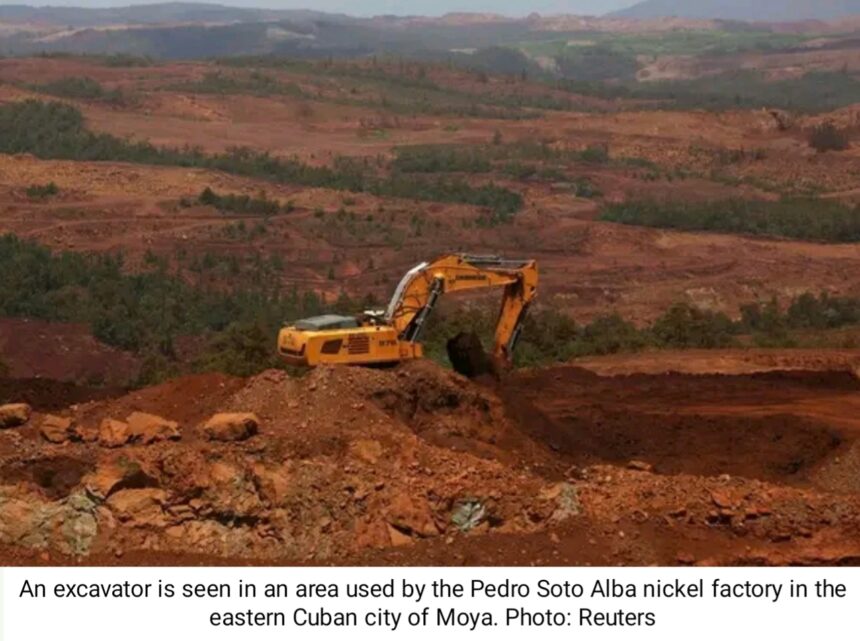
The United States has imposed new sanctions targeting Cuban state-linked nickel enterprises and military-related institutions, expanding Washington’s economic pressure on Havana and focusing on sectors considered strategically important to Cuba’s economy and security structure. The measures announced by the U.S. target several entities involved in Cuba’s nickel industry, along with military enterprises and officials, as Washington seeks to restrict the Cuban government’s access to revenues and resources that it says contribute to the country’s military and security apparatus. The sanctions include companies connected to nickel exploration, mining, engineering, research and technical services, while additional entities linked to military research, defense technology, communications and other strategic activities have also been designated. Nickel is among Cuba’s important mineral resources and has long played a role in the country’s export economy, making the targeting of companies connected to the sector significant beyond the immediate restrictions placed on individual entities. Under U.S. sanctions rules, designated entities can face restrictions on financial transactions and access to the U.S. financial system, while assets subject to U.S. jurisdiction may be blocked. Washington has repeatedly used economic sanctions as a tool to pressure the Cuban government, particularly against institutions and sectors that it considers connected to state security, defense or the generation of government revenue. The latest action reflects the continued effort by the Trump administration to increase economic pressure on Cuba while focusing on state-controlled industries and organizations linked to the country’s military establishment. U.S. officials have argued that revenues generated through strategically important state enterprises can help sustain Cuba’s government and military institutions, while Cuban authorities have consistently criticized Washington’s sanctions policy as economic pressure that harms the Cuban population and restricts the country’s ability to conduct normal international trade. The new measures therefore add another layer to the long-running dispute between Washington and Havana, with the impact likely to extend beyond the sanctioned organizations themselves because companies, banks and international businesses dealing with designated Cuban entities may face increased compliance risks. The restrictions could also complicate Cuba’s efforts to attract foreign investment, secure international financing and maintain commercial relationships involving the nickel sector and other strategic industries. The development comes as Cuba continues to face serious economic challenges, including shortages of fuel, electricity and foreign currency, while the government seeks to maintain production and preserve access to international markets. The United States maintains that its sanctions are intended to pressure the Cuban government and limit resources available to its military and security institutions, whereas Cuban officials and critics of the policy have argued that prolonged U.S. restrictions contribute to broader economic hardship. The latest sanctions are therefore likely to remain part of the wider political and economic confrontation between the two countries, with their longer-term effect depending on Cuba’s ability to find alternative markets, financial channels and foreign partners for its strategic mineral and industrial sectors.
New US sanctions on Cuba’s nickel resources and military installations