
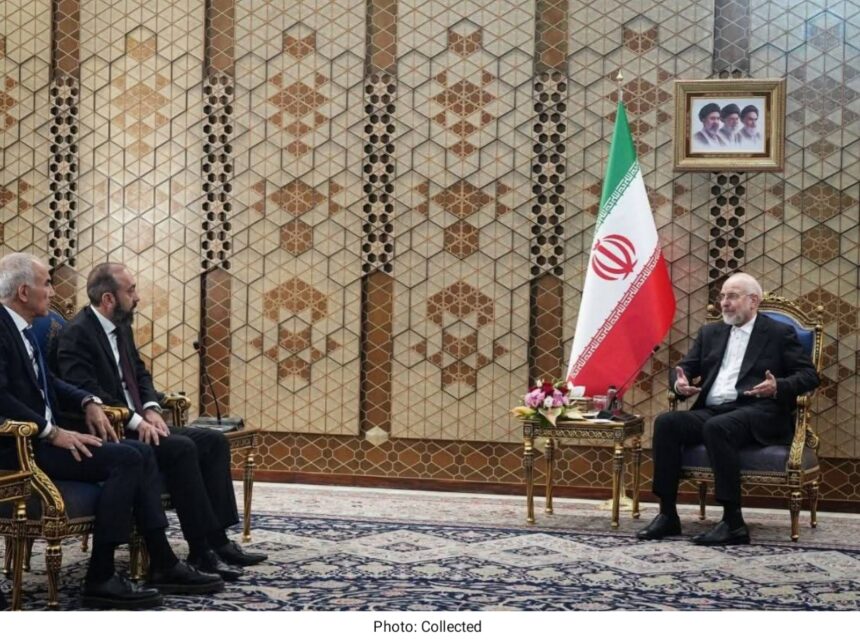
Iran and Armenia have called for stronger bilateral cooperation and greater regional connectivity during a meeting between Iranian Parliament Speaker Mohammad Bagher Ghalibaf and Armenian Foreign Minister Ararat Mirzoyan in Tehran.
Ghalibaf said the South Caucasus should remain stable and should not become an arena for geopolitical rivalry among outside powers. He also stressed the importance of strengthening Iran-Armenia relations and said Tehran viewed Armenia as an important opportunity for expanding ties with its neighbors.
The meeting came as regional powers continue to focus on transport routes, energy links and infrastructure projects across the South Caucasus. Armenia and Iran have described their bilateral relationship as strategic and have been working to expand cooperation in several sectors.
Ghalibaf also criticized the United States over its recent confrontation with Iran, claiming that Washington had failed to achieve its objectives and had damaged its political credibility by not honoring commitments. Those remarks reflect Tehran’s position and were not independently verified as an assessment of the outcome of the conflict.
Mirzoyan, meanwhile, said Armenia would not allow its territory to be used for actions against Iran. He also emphasized the importance of preserving the existing borders of countries in the region and called for expanded cooperation between Armenia and Iran.
The two sides also discussed expanding transport connections with neighboring countries. Mirzoyan highlighted Armenia’s efforts to develop infrastructure and improve freight links, while Iran has expressed support for greater regional connectivity.
During his Tehran visit, Mirzoyan also met Iranian Foreign Minister Abbas Araghchi. The two foreign ministers discussed cooperation in energy, transport and infrastructure, including plans for a second bridge on the Armenia-Iran border and the completion of a third electricity transmission line between the two countries. They also discussed regional connectivity projects, including Armenia’s “Crossroads of Peace” initiative and the implementation of the TRIPP project.
The meetings underline the economic and strategic importance both governments attach to maintaining direct links between Iran and Armenia. For Yerevan, stronger transport connections could expand access to regional markets. For Tehran, closer ties with Armenia provide an important northern connection at a time when the wider Caucasus is becoming increasingly important to regional transport and trade.
Iranian Foreign Minister Araghchi separately warned against the involvement of outside powers in the Caucasus, arguing that regional countries should resolve their disputes themselves and prevent interference by extra-regional actors.
The discussions in Tehran therefore combined immediate regional security concerns with longer-term plans for infrastructure, energy and transportation. While political tensions continue across the wider region, Iran and Armenia are signaling an interest in maintaining their bilateral channels and expanding practical cooperation.