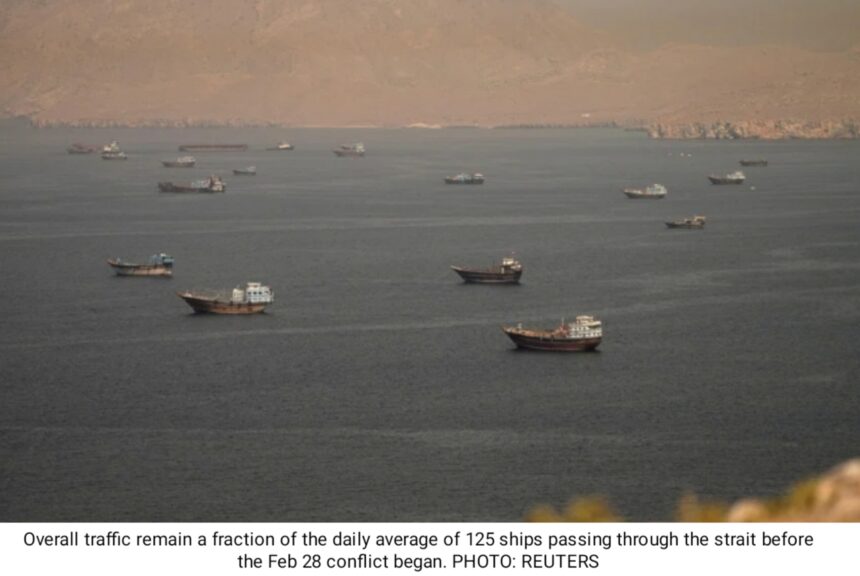
China’s shifting crude oil purchasing pattern, marked by a reduction in imports from Saudi Arabia and growing demand for Russian crude, is emerging as a significant development in the global energy market as geopolitical tensions and disruptions along key maritime routes reshape the economics of oil trade. According to reports and market trends, Chinese buyers are reducing their reliance on Saudi crude amid growing concerns over shipping disruptions around the Strait of Hormuz and continued security risks in the Red Sea and Bab al-Mandab corridor, where Yemen’s Houthi movement, also known as Ansar Allah, has carried out attacks and threatened maritime traffic during periods of heightened regional tension. The Strait of Hormuz is one of the world’s most strategically important energy chokepoints, with a substantial share of global oil and liquefied natural gas shipments passing through the waterway, meaning that any prolonged disruption could increase freight costs, insurance premiums and delivery risks for major Asian energy importers. China, the world’s largest crude oil importer, has increasingly sought to diversify its sources of supply and strengthen energy security, allowing refiners to adjust purchasing patterns when geopolitical risks, prices or shipping conditions change. Russia has become an increasingly important supplier to the Chinese market since Western sanctions and restrictions imposed after the war in Ukraine pushed Moscow to redirect a large share of its energy exports toward Asia. Russian crude, often offered at competitive prices because of sanctions-related market discounts and changing trade arrangements, has provided Chinese refiners with an alternative to supplies from traditional Middle Eastern producers. The shift does not necessarily mean that China is abandoning Saudi Arabia as a major energy supplier, but it highlights how rapidly geopolitical risk and commercial considerations can alter crude purchasing decisions. At the same time, the growing use of currencies other than the US dollar in some China-Russia energy transactions has attracted renewed attention to the future of the international oil trade. China and Russia have expanded the use of the Chinese yuan and Russian rouble in bilateral commerce as both countries seek to reduce their exposure to Western financial systems and dollar-based transactions. There have also been discussions for years about the possibility of expanding yuan-denominated oil trade between China and major Gulf producers, including Saudi Arabia, although the US dollar remains deeply entrenched in global energy markets and continues to play a dominant role in international oil pricing, financing and settlement. Any increase in yuan-based transactions should therefore be viewed as part of a gradual diversification of the global monetary and energy trading system rather than as evidence of an imminent end to dollar dominance. For Saudi Arabia, China remains a crucial energy market, and Riyadh has strong economic incentives to preserve its position as one of Beijing’s major crude suppliers. However, heightened security risks in the Middle East could encourage Chinese refiners to place greater emphasis on supply flexibility, alternative routes and diversified sources of crude. If instability around the Strait of Hormuz and the Red Sea persists, Asian importers could increasingly seek supplies that offer more favourable combinations of price, reliability and transportation risk, potentially strengthening the position of Russia and other non-Middle Eastern producers in the Chinese market. The development also carries wider implications for the global energy order. A sustained increase in Russian oil sales to China could deepen the energy relationship between Moscow and Beijing, while reduced Chinese purchases from Saudi Arabia could force Gulf producers to compete more aggressively for market share through pricing, long-term contracts and supply guarantees. Meanwhile, greater use of the yuan in bilateral energy transactions could gradually expand the role of non-dollar currencies in selected segments of global oil trade, although significant structural barriers remain before such transactions could seriously challenge the dollar’s central position. Ultimately, China’s changing crude procurement strategy reflects a broader transformation in the global energy landscape, where commercial interests are increasingly intertwined with maritime security, sanctions, geopolitical competition and currency policy. As tensions continue to reshape trade routes and energy alliances across the Middle East and Eurasia, the movement of Chinese oil purchases between Saudi Arabia, Russia and other suppliers could become an important indicator of how the world’s largest energy-consuming economies are adapting to a more fragmented and geopolitically uncertain global oil market.
Unrest in Hormuz-Red Sea: China turns to Russia after Saudi oil cuts