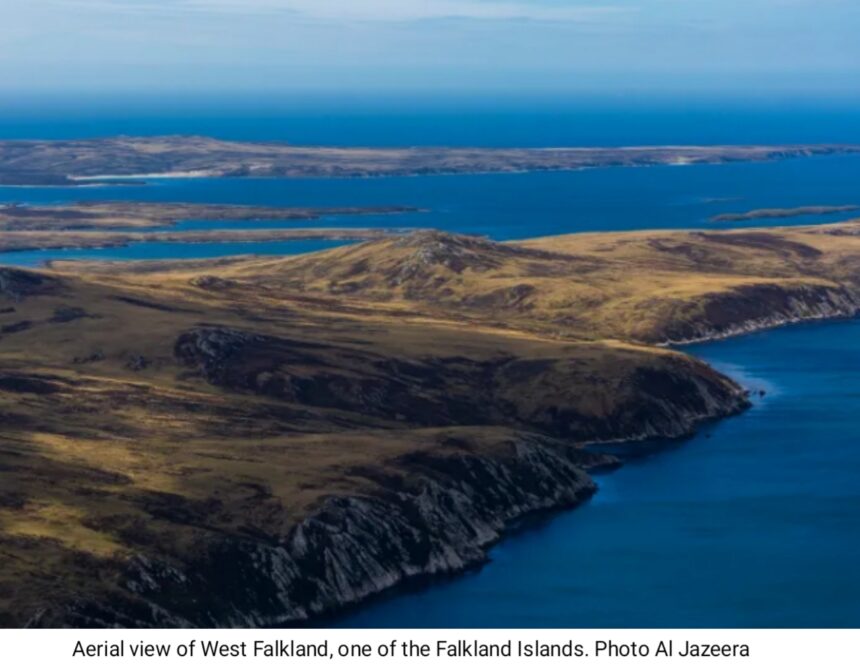
Speculation over a possible shift in the United States’ longstanding position on the Falkland Islands has intensified, raising fresh concerns in Britain over the future of its sovereignty over the disputed South Atlantic territory. For months, reports have circulated that Washington could reconsider aspects of its policy toward the Falklands, particularly amid growing tensions between US President Donald Trump and the British government over defence spending, foreign policy and Britain’s approach to US military decisions. The speculation gained further momentum in April after a leaked Pentagon email reportedly suggested that Washington should review Britain’s claim to the islands, allegedly in response to London’s lack of support for Trump’s decision to launch military action against Iran. Trump has also repeatedly criticised Nato allies for what he considers insufficient defence spending, adding another layer of uncertainty to relations between Washington and London. Any formal change in the US position on the Falklands would carry significant political and psychological consequences for Britain, given the islands’ importance to British sovereignty and national identity. The dispute dates back decades, but tensions reached a critical point in 1982 when Argentina invaded the Falkland Islands, prompting then-British Prime Minister Margaret Thatcher’s government to dispatch a naval taskforce to retake the territory. The British military campaign ultimately restored UK control of the islands, while Washington’s diplomatic support proved an important factor in strengthening London’s position. Under President Ronald Reagan, the United States ultimately sided firmly with Britain despite maintaining its own alliance with Argentina’s military junta at the time. That historical episode has since become a powerful symbol of the depth of the US-UK strategic relationship and Washington’s traditional backing for British sovereignty over the Falklands. A significant alteration in that position under the Trump administration could therefore be viewed in London not simply as a diplomatic adjustment, but as a potentially serious blow to Britain’s international standing and its claim to sovereignty. For Argentina, which continues to assert sovereignty over the islands it calls the Islas Malvinas, any indication that Washington is becoming more sympathetic to Buenos Aires could represent a major diplomatic opportunity. For Britain, however, the issue touches directly on questions of territorial integrity, national security and its broader relationship with the United States. The emerging controversy highlights how changing geopolitical priorities, disputes over defence commitments and disagreements over foreign policy can place even longstanding alliances under pressure, with the Falkland Islands once again becoming a sensitive test of the durability of the US-UK relationship.
US Position on Falkland Islands Comes Under Renewed Scrutiny