

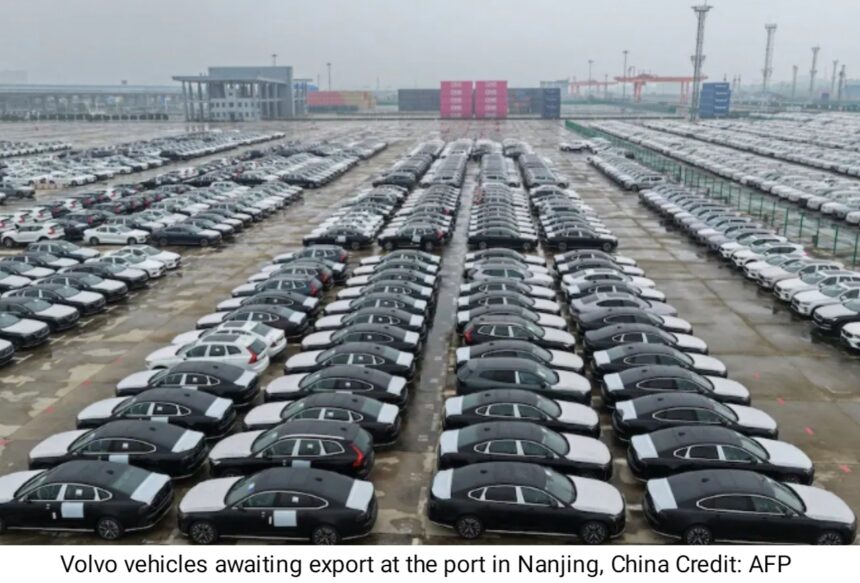
Volvo Cars is facing an important period of strategic change as the Swedish automaker looks to strengthen its position in an increasingly competitive global automotive industry, with growing pressure from Chinese electric vehicle manufacturers, changing consumer preferences and uncertainty surrounding international trade policies. Although Volvo has a close relationship with Chinese automotive giant Geely, industry observers believe the Swedish manufacturer has yet to take full advantage of the technological resources, vehicle platforms and industrial capabilities available through its parent group.
One of Volvo’s biggest potential advantages is its connection with Geely, which provides access to a broad automotive technology network and substantial experience in developing modern vehicle platforms, electric powertrains and advanced automotive systems. According to Munoz, Volvo has not fully exploited the opportunities created by this relationship, despite the fact that such a partnership gives the company an advantage that competitors such as BMW and Mercedes-Benz do not have in the same form.
“This relationship they have with Geely is something that neither BMW or Mercedes have,” Munoz said, highlighting the strategic value of the partnership. He added that Volvo has an advantage through its connection with the Chinese automotive group but has not yet made sufficient use of it.
The relationship between Volvo and Geely has become increasingly important since the Chinese company acquired Volvo Cars from Ford in 2010. The partnership has allowed Volvo to maintain its Swedish identity while gaining access to the financial resources, manufacturing capabilities and technological development of a much larger automotive group. However, balancing the company’s independent brand identity with the benefits of deeper cooperation has remained a significant strategic challenge.
Volvo has traditionally positioned itself as a premium automotive brand associated with Scandinavian design, safety, comfort and engineering. Maintaining that reputation is particularly important as the company expands its electric and hybrid vehicle offerings while competing against established European manufacturers and rapidly growing Chinese brands.
The challenge is especially visible in China, one of the world’s largest and most competitive automotive markets. Chinese manufacturers have made considerable progress in electric vehicle technology, software integration, battery development and pricing strategies. Domestic brands are increasingly attracting customers who previously preferred international premium manufacturers.
Volvo’s position in China has consequently come under pressure. Munoz believes the company may struggle to regain the market position it previously enjoyed, reflecting the scale of competition and the speed at which consumer preferences have changed. Nevertheless, the company is preparing a new strategy that places greater emphasis on cooperation with Geely.
As part of this approach, Volvo plans to introduce two of six models being developed with Geely specifically for the Chinese market next year. The programme is expected to help the company respond more effectively to local consumer demand by developing vehicles suited to China’s increasingly technology-focused automotive market.
Developing models specifically for China could also allow Volvo to benefit from Geely’s deeper understanding of local customers, supply chains and technological trends. The Chinese market has become increasingly demanding, with buyers placing greater importance on digital features, connected services, electric driving capabilities and competitive pricing.
Despite its difficulties in China, Volvo still sees opportunities to maintain and strengthen its position in Europe and the United States. European sales have remained relatively stable so far this year, suggesting that the company continues to benefit from an established customer base and strong brand recognition in the region.
The situation in the United States, however, is more challenging. Volvo’s American sales have declined by 11 per cent, creating additional pressure on the company to reassess its commercial strategy and strengthen its competitiveness in the market.
Trade policy has also become an important factor in Volvo’s international operations. The company has traditionally manufactured vehicles in Sweden and exported them to the United States, but changing trade conditions have increased the importance of producing vehicles closer to their final markets.
Volvo has announced plans to bring production of the XC60 and a new hybrid vehicle to its manufacturing facility in South Carolina. Expanding production in the United States could help the company reduce its exposure to import-related trade costs, improve its ability to respond to local demand and strengthen its long-term industrial presence in the American market.
Another important development concerns the regulatory environment for connected vehicles. Volvo has secured approval from the Trump administration to sell internet-connected vehicles in the United States, despite a more restrictive decision affecting its sister brand Polestar, which is also owned by Geely. The difference highlights the complicated regulatory and political environment facing international automakers with Chinese ownership or corporate connections.
For Volvo, maintaining access to the American market is particularly important because the United States remains a major market for premium vehicles. The company’s ability to combine its established brand identity with locally adapted manufacturing and modern technology could play an important role in determining its future performance.
More broadly, Volvo’s position reflects the changing structure of the global automotive industry. Traditional European manufacturers are facing increasing competition from Chinese companies that have invested heavily in electric vehicles, battery technology, software and large-scale production. Partnerships, shared platforms and international manufacturing networks are becoming increasingly important as automakers seek to control costs while accelerating technological development.
Volvo’s connection with Geely could therefore become one of its most valuable strategic resources. However, the benefits of that relationship will depend on how effectively the Swedish company integrates shared technologies into its products without weakening the distinctive identity that has helped establish its reputation in the premium automotive market.
The coming years will be important for Volvo as it seeks to strengthen its operations in Europe and the United States while adjusting its approach to China. The launch of new Geely-linked models, the expansion of production in South Carolina and the greater use of shared automotive technology could help shape the company’s next phase of development.
Ultimately, Volvo’s ability to compete internationally will depend on whether it can turn its relationship with Geely into a practical advantage while preserving the qualities that distinguish its vehicles from those of other manufacturers. In an automotive industry undergoing rapid technological and commercial transformation, making better use of available resources could prove essential to the company’s long-term competitiveness.