
Washington and Tel Aviv Strengthen Military Coordination as Regional Tensions Rise; Additional US Aircraft Reportedly Deployed to Jordan, Saudi Arabia and Qatar
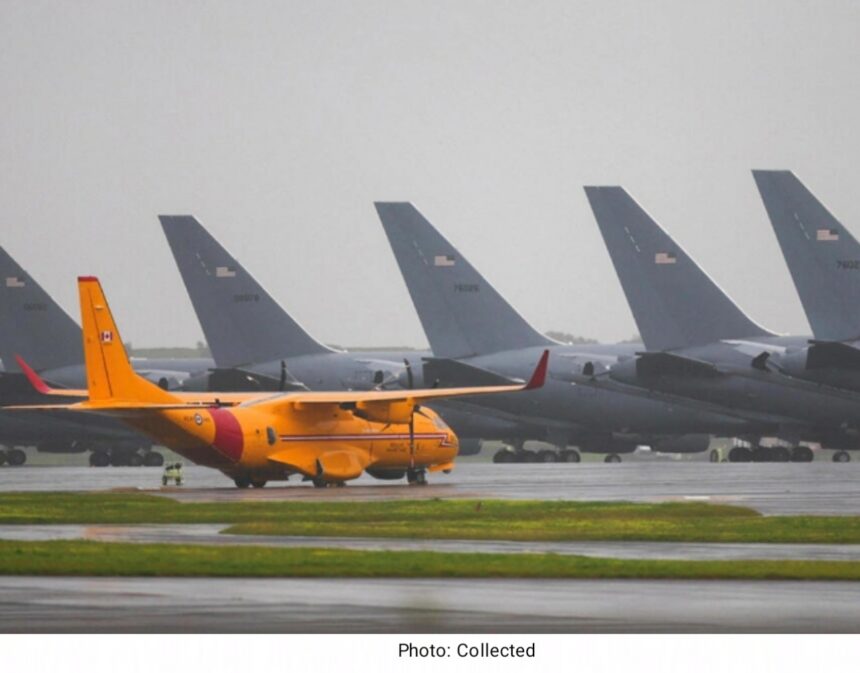
The United States has reportedly sent 10 military cargo aircraft to Israeli airbases in the Negev Desert as part of preparations for a possible military operation against Iran, raising fresh concerns about a potential escalation of tensions across the Middle East. According to Israel’s state broadcaster Kan, the aircraft landed at the Ovda and Nevatim airbases in southern Israel on Thursday, October 29. The reported deployment comes amid growing speculation over Washington’s military options against Tehran and increasing signs of closer operational coordination between the United States and Israel.
The aircraft reportedly departed from Fort Bliss in Texas, one of the major US military installations associated with the country’s air defence capabilities. However, the precise nature of the equipment or military supplies carried aboard the aircraft has not been disclosed. Neither the Pentagon nor the US government has immediately provided an official confirmation of the reported cargo or clarified the specific purpose of the deployment. The lack of detailed information has left considerable uncertainty surrounding the scale and operational objectives of the latest American military movement.
Kan also reported that additional US aircraft had been dispatched to military facilities in Jordan, Saudi Arabia and Qatar, suggesting that Washington may be strengthening its logistical and defensive infrastructure across several strategically important locations in the region. These countries occupy significant positions in the broader US military presence in the Middle East, providing access to airbases, operational facilities and regional security networks. Any expansion of American military activity across these locations could have implications for regional air defence arrangements and the ability of US forces to respond to a rapidly changing security situation.
An Israeli official told Kan that the United States and Israel were maintaining close coordination over military preparations and possible developments involving Iran. According to the official, both countries were preparing to respond to whatever decision US President Donald Trump might ultimately make. However, the official stressed that no final decision had yet been taken regarding a military strike against Iran. This distinction is significant because the reported military movements could reflect preparations for several possible scenarios, including defensive reinforcement, logistical support, deterrence or a limited offensive operation.
The latest developments follow earlier reports that Washington had warned several Gulf countries about the possibility of a short-term and limited military operation against Iran. Kan reported earlier this week that the United States had been discussing the possibility of a restricted campaign, although the precise targets, timing and potential scale of such an operation remain unclear. Reports have also indicated that the United States has been moving Patriot air defence systems from Texas to strengthen protection across the Gulf region. The reported deployment suggests that Washington is preparing for the possibility of Iranian retaliation against American military installations or allied infrastructure if a confrontation occurs.
The Patriot missile defence system plays an important role in protecting military facilities and strategic infrastructure against incoming aerial threats, including certain ballistic and cruise missiles. Strengthening these capabilities across the Gulf could be particularly important in the event of a military confrontation involving Iran, given Tehran’s established missile capabilities and its ability to threaten targets across the region. US military planners would have to consider the security of American personnel, airbases, logistical facilities and regional partners before undertaking any major operation.
Another significant aspect of the reported preparations concerns the security of American military personnel stationed across the Middle East. According to Kan, US forces at several regional bases have reportedly been instructed to relocate away from certain facilities amid concerns about a possible escalation. Such precautionary measures could be intended to reduce the vulnerability of American personnel to potential retaliatory attacks. Iran has repeatedly warned that any direct military action against its territory could trigger a response against US interests and military assets in the region. Consequently, the protection and possible relocation of American forces could become an important element of Washington’s contingency planning.
At the same time, reports indicate that the United States is increasing its weapons stockpiles and military resources in the Middle East. A further expansion of American naval and ground forces is also expected in November, when another aircraft carrier and a Marine Corps unit are reportedly scheduled to arrive in the region. These deployments would add to the approximately 20 US warships already operating in or around the wider Middle East, according to the reports cited in the original coverage.
The arrival of another aircraft carrier would provide Washington with additional operational flexibility, including the capacity to conduct sustained air operations, support maritime security missions and strengthen its regional military presence. Aircraft carriers are central components of US power projection, allowing American forces to operate aircraft from international waters without relying entirely on land-based airbases. Their deployment can also serve as a strategic signal to potential adversaries, although the presence of additional naval forces does not necessarily indicate that an attack is imminent.
Meanwhile, The Wall Street Journal has reported that General Brad Cooper, commander of US Central Command, has briefed President Donald Trump on several military options concerning Iran. The reported briefing indicates that the US military leadership has been examining different operational scenarios and presenting possible courses of action to the White House. However, details of the options discussed have not been publicly established, and there has been no confirmed announcement that Trump has authorised military action.
The role of US Central Command would be particularly important in any potential confrontation because it oversees American military operations across the Middle East and surrounding strategic areas. Any operation against Iran would require extensive planning involving intelligence assessments, air and missile defence, logistical support, force protection and coordination with regional partners. The complexity of such planning means that even a limited military operation could carry consequences far beyond its immediate targets.
Political opposition to a possible attack has also emerged within the United States. Democratic Senator Chris Murphy has reportedly described the prospect of military action against Iran as an act of madness, warning that such an operation could expose the Middle East to a much wider and potentially devastating conflict. His remarks reflect concerns among some American lawmakers that another military confrontation in the region could produce serious strategic, political and economic consequences.
A military operation against Iran would carry several major risks for Washington and its regional partners. Tehran has developed a range of missile and drone capabilities that could potentially threaten military installations, strategic infrastructure and other targets across the Middle East. American forces stationed in Iraq, Syria, Jordan and Gulf countries could face increased security risks if Iran decided to retaliate. Regional partners hosting US military facilities could also find themselves exposed to the consequences of a conflict, even if they were not directly involved in the initial military operation.
The security of the Strait of Hormuz would be another major concern. The waterway is one of the world’s most important energy transit routes, connecting the Persian Gulf with international markets. A serious military confrontation could threaten commercial shipping, disrupt oil and gas transportation and increase uncertainty across global energy markets. Any disruption to maritime traffic in the area could have consequences for oil-importing countries, international shipping companies and the wider global economy.
The diplomatic implications could also be significant. Countries such as Saudi Arabia, Qatar and Jordan would face difficult decisions about how to manage their security relationships with Washington while avoiding direct involvement in a confrontation with Iran. Their geographical positions and economic interests make regional stability particularly important. Although the reported movement of US aircraft to military facilities in these countries indicates growing military activity, it does not independently establish that their governments have agreed to participate in an offensive operation against Tehran.
For Iran, the reported American military preparations represent a potentially serious security challenge. Tehran has consistently opposed foreign military pressure and has warned that attacks on its territory would have consequences for the wider region. Any US strike, even if described as limited or temporary, could create pressure on Iranian leaders to respond in a way that demonstrates their ability to defend the country and deter further attacks. This could produce a cycle of military escalation that would be difficult for either side to control.
The central uncertainty remains President Trump’s final decision. Although the reported deployment of military cargo aircraft, strengthening of air defence systems, relocation of personnel and preparations for additional naval forces suggest that Washington is considering a range of contingencies, none of these developments alone confirms that an attack on Iran has been authorised. Military reinforcement can serve several purposes, including deterrence, defensive protection and preparation for possible offensive action.
For now, the United States and Israel appear to be maintaining close military coordination while Washington assesses its available options. The reported movements across Israel and several Gulf countries have added to concerns that the region could be approaching another dangerous phase of confrontation. Whether these preparations will ultimately lead to military action or remain part of a broader strategy of deterrence will depend on decisions made in Washington, Tehran and other regional capitals in the coming days.
As tensions continue to rise, the possibility of miscalculation remains a serious concern. A limited operation could trigger retaliation, while a broader confrontation could draw multiple countries into a conflict with far-reaching consequences for regional security, international diplomacy and the global economy. For the Middle East, the immediate challenge is whether military preparations and growing strategic pressure can be contained before they develop into another major war.