
The United States military has carried out limited strikes against Iran’s Qeshm Island in the strategically important Strait of Hormuz, with American officials describing the operation as a defensive measure aimed at protecting US military assets in the region. The strikes, conducted on Monday, November 2, came amid continuing tensions between Washington and Tehran, even as diplomatic efforts to reach an agreement and prevent a renewed escalation of the conflict appear to be making some progress.
According to three US officials cited by CNN, the military action followed an incident in which Iran fired at a US aircraft. One American official said the operation was intended to counter threats posed by Iranian surface-to-air missile systems against US assets. Another official characterized the strikes as defensive and emphasized that the operation should not be interpreted as the beginning of a new major US military campaign against Iran.
The reported strikes appear to have been limited in scope and different from the larger military operations that US officials have previously considered. The Wall Street Journal first reported the operation, noting that similar strikes may have been conducted secretly on earlier occasions. A person familiar with the matter said the Trump administration deliberately avoided publicizing the latest action immediately in order to prevent the defensive operation from being portrayed as a major escalation.
Nevertheless, the development highlights the fragile security situation between the two countries. Despite statements from Washington suggesting that large-scale fighting has subsided, the latest military action demonstrates that the possibility of renewed confrontation remains. The operation also raises questions about the future of the ceasefire and diplomatic initiatives designed to bring the conflict to an end.
Trump Says a Diplomatic Agreement Remains Possible
US President Donald Trump has continued to suggest that negotiations with Tehran could produce an agreement. In a social media statement on Monday, Trump indicated that a deal with Iran could still happen, reinforcing the administration’s public position that diplomatic engagement remains an option.
During an appearance on Fox News that aired Monday night, Trump defended his decision to launch military operations against Iran while arguing that the situation should not be described as an ongoing full-scale war. He questioned the characterization of the conflict as an active war and claimed that there had been no recent major exchanges of fire.
Trump also warned that military action could resume if Iran refused to reach an agreement. At the same time, he expressed confidence that Tehran was interested in negotiating and suggested that there was a considerable possibility of reaching a deal.
His comments reflect an apparent effort by the administration to maintain diplomatic pressure while keeping military options available. However, the reported strikes on Qeshm Island illustrate the gap between Washington’s diplomatic messaging and the continuing military risks in the region.
JD Vance Says Washington and Tehran Have Made Progress
US Vice President JD Vance also offered a cautiously optimistic assessment of the diplomatic situation. Speaking to reporters on Monday, Vance said the United States and Iran had made some progress toward finding a way to end the conflict.
Vance confirmed that he had recently spoken with President Trump about the war and indicated that both leaders felt relatively positive about the possibility of reaching an agreement. However, he warned that Iran’s position could remain unpredictable.
The vice president said the president retained both military and non-military options, suggesting that Washington was prepared to continue negotiations while maintaining pressure on Tehran.
His remarks indicate that the US administration is attempting to balance diplomatic engagement with military deterrence. Whether this approach will lead to a lasting agreement remains uncertain, particularly as military incidents continue to create new obstacles to negotiations.
Qeshm Island’s Strategic Importance in the Strait of Hormuz
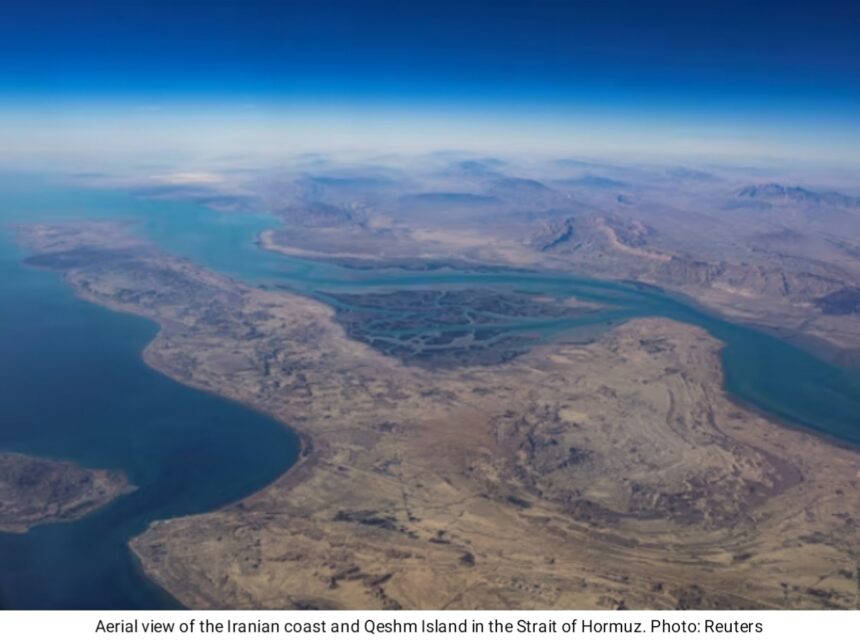
Qeshm Island occupies a strategically significant position near the southern Iranian coastline, approximately 14 miles from the Iranian port city of Bandar Abbas. Its location near the Strait of Hormuz gives it considerable importance in Iran’s ability to monitor and influence maritime traffic passing through one of the world’s most important energy corridors.
The Strait of Hormuz connects the Persian Gulf with the Gulf of Oman and the wider Arabian Sea. Before the war, approximately 20 million barrels of oil passed through the waterway every day, making it a critical route for international energy supplies.
Any military confrontation involving the island or surrounding maritime infrastructure could therefore have implications far beyond Iran and the United States. Countries across Asia, Europe and the Middle East depend heavily on the uninterrupted movement of oil and other commodities through the strait.
The island’s strategic location also makes it relevant to Iran’s broader military and security posture in the Persian Gulf. Control over the surrounding waters and the ability to monitor shipping movements are important elements of Tehran’s regional strategy.
The United States has previously targeted locations on Qeshm Island during the conflict, according to the report. The latest operation therefore represents another development in the continuing struggle over security and military influence in the Strait of Hormuz.
Regional Security Concerns Remain High
The latest US strikes come at a sensitive moment for the Middle East, where military tensions, maritime security concerns and diplomatic negotiations remain closely connected. A renewed exchange of attacks could threaten shipping routes, increase pressure on global energy markets and create additional risks for countries across the region.
For Washington, protecting American military personnel and assets remains a stated priority. For Tehran, foreign military operations near its coastline raise broader questions about national sovereignty and security. These competing positions could complicate efforts to establish a lasting diplomatic settlement.
Although President Trump and Vice President Vance have expressed optimism about the possibility of an agreement, the reported attack on Qeshm Island demonstrates that the situation remains highly sensitive. The continuation of military operations, even on a limited scale, could undermine diplomatic confidence and make negotiations more difficult.
The immediate question is whether Washington and Tehran can translate the reported diplomatic progress into a concrete agreement that reduces military tensions and restores stability in the region.
For now, the United States appears to be pursuing two parallel approaches: maintaining military pressure to protect its regional assets while leaving the door open for negotiations with Iran. The coming days may provide a clearer indication of whether diplomacy can prevent another escalation or whether the conflict will enter a new phase of confrontation.
Source: CNN, reporting by Alayna Treene and Kevin Liptak. Additional reporting originally published by The Wall Street Journal.