Rising Tensions Over Turkey’s Military Presence in Syria: Fears of Direct Conflict After Israeli Strike
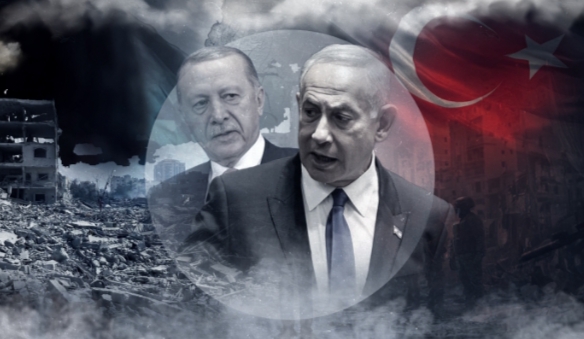
Ankara/Damascus/Jerusalem — Tensions between Israel and Turkey are rising rapidly over Ankara’s growing military and strategic presence in Syria. The situation became more complicated after an Israeli airstrike on Abu al-Duhur military airbase in northwestern Syria on August 18. Israel said the strike was intended to prevent the possible deployment of Turkish forces in Syria. Ankara rejected that justification and condemned the attack as a violation of Syria’s sovereignty.
According to international media reports, at least eight Israeli airstrikes hit the Abu al-Duhur base early on August 18. The strikes damaged the runway and military infrastructure, although no casualties were reported. Syrian officials said a Turkish delegation had visited the base several hours before the attack. The sequence of events has raised concerns about military miscalculation and the risk of a direct confrontation between Israel and Turkey.
Israel argues that Syria’s new administration had been moving toward altering the existing security arrangements by allowing a possible Turkish military deployment at Abu al-Duhur. Israeli Prime Minister Benjamin Netanyahu has said Israel views a potential Turkish deployment as a security threat. Turkey, however, has rejected that interpretation as unacceptable.
Syrian Foreign Minister Asaad al-Shaibani has given a more specific account, saying there were no plans to establish a permanent Turkish military base at Abu al-Duhur. According to his explanation, the facility was being rehabilitated primarily for use by the Syrian Air Force, while Turkish military officials had visited as part of training and defense cooperation.
There is little doubt, however, that Turkey’s military and defense cooperation with Syria is expanding. Ankara is working closely with Syria’s new leadership and is contributing to the rebuilding of the country’s security structure through military training and equipment support. That shift has created a new strategic reality for Israel.
More significantly, Reuters reported that in a recent phone call, Mossad chief Roman Gofman and Syrian Foreign Minister al-Shaibani discussed Turkey’s growing military presence. The Abu al-Duhur strike came only days after that conversation. The sequence underscores how Turkey’s role in Syria has become an important factor in Israel’s security calculations.
Against this backdrop, claims have circulated on social media that Turkey is secretly sending large quantities of weapons to Syria under the direct supervision of its intelligence agency, MIT. However, there is currently no independent and reliable evidence confirming these claims. They should therefore not be presented as established facts, but rather treated cautiously as unverified allegations amid wider speculation about military preparations and regional strategic calculations.
If Turkey further strengthens its military infrastructure in northern Syria and Israel views that presence as a direct security threat, the possibility of a new front of confrontation between the two countries cannot be ruled out. Their interests are increasingly coming into conflict, particularly over Syrian airspace and military facilities.
The United States has also become involved as the situation grows more sensitive. U.S. Syria envoy Tom Barrack said Washington is working to establish a “deconfliction” mechanism to prevent military clashes among Turkey, Israel and Syria. He has warned that a lack of military communication could allow misunderstandings to escalate rapidly into a major confrontation.
The central questions now are whether Ankara is simply seeking to strengthen Syria’s new government militarily, or whether it is building a broader deterrence structure to counter possible Israeli military action. At the same time, will Israel conduct further strikes inside Syria to limit Turkey’s military presence?
Recent developments suggest that Syria is no longer simply an arena of confrontation between Israel and the country’s new government; it is increasingly becoming a key military theater for the strategic rivalry between Israel and Turkey. The steps taken after the Abu al-Duhur strike will determine whether the tensions remain manageable through diplomacy or move toward a new direct military confrontation in the Middle East.