The history of Islam in South Asia—commonly known as the Indian Subcontinent—is not solely the story of political conquest or military expansion. Historians widely agree that long before the establishment of Muslim rule in many parts of the region, Islam had already spread through the efforts of Sufi saints, scholars, and spiritual reformers. Through their humility, devotion, justice, compassion, and commitment to serving humanity, these remarkable individuals inspired millions to embrace Islam and its moral teachings.
Across the subcontinent, Sufi saints established mosques, madrasas, khanqahs (spiritual lodges), and charitable institutions, laying the foundations of a vibrant religious and social order. Their influence extended beyond spirituality, shaping education, literature, culture, ethics, and community development. Even today, many of South Asia’s historic cities, monuments, and religious centers preserve their enduring legacy.
Among the earliest and most influential figures was Data Ganj Bakhsh Hazrat Ali Hujwiri (Rahimahullah), whose celebrated work Kashf al-Mahjub remains one of the oldest and most significant classical texts on Islamic spirituality. Likewise, Khwaja Moinuddin Chishti (Rahimahullah) played a pivotal role in spreading Islam through the Chishti order from Ajmer. His teachings emphasized love, compassion, tolerance, and selfless service to humanity.
Another towering figure was Bahauddin Zakariya (Rahimahullah), a leading representative of the Suhrawardi order, who greatly contributed to the spread of Islamic learning and spirituality throughout Multan and Punjab. Similarly, Khwaja Nizamuddin Auliya (Rahimahullah) transformed Delhi into one of the foremost centers of Islamic spirituality, advocating unconditional love for humanity, humility, and sincere devotion to Allah.
In Bengal, Hazrat Shah Jalal (Rahimahullah) remains one of the most revered Islamic personalities. His arrival in Sylhet profoundly influenced not only the religious landscape but also the social and cultural development of the region. Likewise, Nur Qutbul Alam (Rahimahullah) played a crucial role in strengthening the Muslim community in Bengal and provided religious leadership during periods of political uncertainty.
In southern Bengal, Khan Jahan Ali (Rahimahullah) became renowned for his remarkable contributions to urban development, public welfare, and Islamic civilization. Through the construction of mosques, reservoirs, roads, and public infrastructure, he left behind a lasting architectural and cultural heritage, much of which still survives today as important historical landmarks.
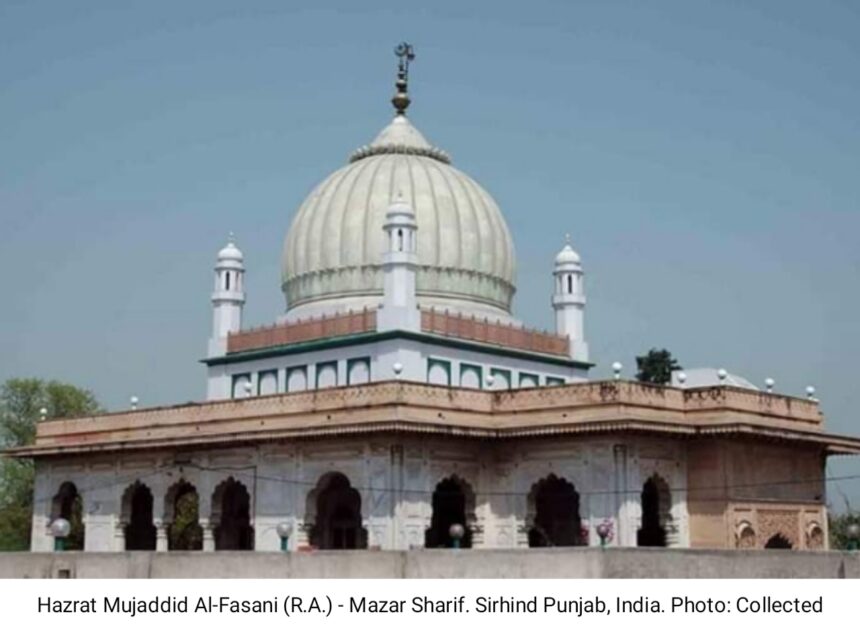
Mujaddid Alf-i Thani, Imam Rabbani Shaykh Ahmad Sirhindi (Rahimahullah) ushered in a powerful movement of Islamic revival, emphasizing the purification of faith, spiritual reform, and adherence to authentic Islamic teachings. His intellectual legacy profoundly influenced subsequent generations and played a central role in the religious renewal of Muslim society across the subcontinent.
Another distinguished reformer, Syed Ahmad Shaheed (Rahimahullah), inspired Muslims through his commitment to Islamic revival, sacrifice, and resistance against oppression. His movement fostered greater political awareness and religious consciousness among the Muslims of the Indian Subcontinent.
The nineteenth-century scholar and spiritual guide Haji Imdadullah Muhajir Makki (Rahimahullah) combined deep spiritual scholarship with active resistance to colonial domination. Many of his students later emerged as leading scholars and reformers, making lasting contributions to Islamic education and intellectual thought throughout South Asia.
According to historians, the influence of these Sufi saints extended far beyond religious preaching. They championed education, social justice, poverty alleviation, humanitarian service, moral excellence, and communal harmony. Their khanqahs, madrasas, and educational institutions served for centuries as centers of Islamic scholarship, spiritual development, and community leadership.
Today, their shrines, educational institutions, and historical monuments continue to attract millions of visitors across Bangladesh, India, Pakistan, and neighboring countries. Researchers maintain that a comprehensive understanding of Islam’s peaceful spread and the historical development of Muslim society in South Asia is impossible without studying the lives, teachings, and contributions of these extraordinary Sufi saints.
May Allah Almighty shower His infinite mercy upon these great scholars, Awliya (friends of Allah), and Sufi saints, and grant us the ability to follow their examples of knowledge, piety, sincerity, compassion, and service to humanity. Ameen.
Sufism, Social Reform and the Spread of Islam: 10 Legendary Spiritual Saints of the Subcontinent