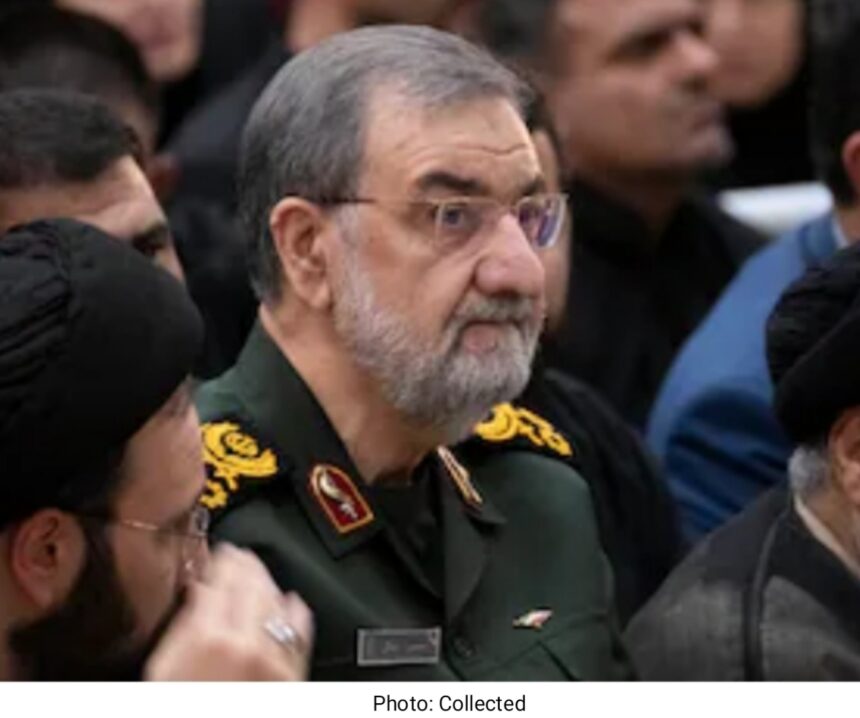
TEHRAN — Iran has appointed veteran military commander and former Islamic Revolutionary Guard Corps (IRGC) chief Mohsen Rezaee as secretary of the country’s Supreme National Security Council, marking a significant reshuffle of the Islamic Republic’s senior security leadership at a time of heightened military and diplomatic tensions with the United States, according to the Iranian presidency. President Masoud Pezeshkian appointed Rezaee to the influential post, placing one of Iran’s most experienced military and security figures at the centre of the country’s national security decision-making structure. Rezaee, who commanded the IRGC from 1981 to 1997, is a veteran of Iran’s security establishment and has remained an influential figure in the country’s political and strategic affairs for decades. His appointment comes after Supreme Leader Mojtaba Khamenei designated Rezaee as his representative to the Supreme National Security Council, further underscoring the importance of his role within Iran’s security apparatus. The Supreme National Security Council is one of Iran’s most important strategic institutions, responsible for coordinating national security policy and addressing major military, diplomatic and geopolitical challenges facing the country. The appointment therefore places Rezaee in a position where he is expected to play a central role in shaping Tehran’s response to external security threats, particularly amid the continuing confrontation with Washington. Rezaee’s long tenure as IRGC commander began during the Iran-Iraq war, when the Revolutionary Guard was transformed into one of the country’s most powerful military and security institutions. His decades-long experience inside Iran’s military establishment have made him a prominent figure in debates over national defence, regional security and relations with foreign powers. Following his departure from the IRGC command in 1997, Rezaee continued to hold senior positions within Iran’s political system and served on the Expediency Discernment Council, another key institution that advises the supreme leader and helps resolve disputes between state bodies. His return to a senior security position comes as Tehran faces a highly volatile strategic environment, with tensions with the United States remaining a major concern for Iranian policymakers. The change in leadership at the Supreme National Security Council also comes alongside a separate decision by Supreme Leader Mojtaba Khamenei to appoint outgoing security chief Mohammad Baqer Zolghadr as his political adviser. The simultaneous appointments suggest a broader reorganisation of senior security and political responsibilities within Iran’s leadership structure. Zolghadr, who had served as secretary of the Supreme National Security Council, is moving into an advisory role, while Rezaee assumes responsibility for the council at a particularly sensitive moment for the country. Iran’s leadership has in recent months faced mounting pressure over its military posture, diplomatic relations with Washington and the wider security situation in the Middle East. The appointment of a former IRGC commander could be interpreted as an effort to strengthen coordination between Iran’s political leadership and its military-security establishment as Tehran navigates the confrontation with the United States. Rezaee’s extensive experience also gives him familiarity with Iran’s strategic institutions and the country’s approach to military deterrence, regional alliances and national security planning. At the same time, his appointment does not necessarily indicate that Iran is abandoning diplomacy. The Supreme National Security Council has historically been involved in both security policy and major diplomatic decisions, making its secretary an important figure in any potential negotiations or crisis-management efforts. Rezaee is therefore likely to face the difficult task of balancing military preparedness with diplomatic calculations as Iran seeks to protect its strategic interests while avoiding further escalation. The leadership changes also come against a backdrop of deep uncertainty over the future of US-Iran relations. Washington and Tehran remain locked in a confrontation involving military threats, sanctions, regional security and competing demands over Iran’s strategic programmes and foreign policy. Any further escalation could have consequences well beyond the two countries, potentially affecting security across the Gulf and wider Middle East, global energy markets and international diplomatic efforts to contain the conflict. For Iran, the appointment of Rezaee places a highly experienced former military commander at the centre of its national security structure at a moment when decisions made in Tehran could have far-reaching regional consequences. His record in the IRGC and subsequent role within Iran’s political establishment means that he brings decades of experience in military strategy, state security and high-level political decision-making to the position. Whether his appointment signals a tougher security posture or is primarily aimed at improving coordination within Iran’s leadership remains to be seen. What is clear, however, is that Tehran is reorganising key elements of its security leadership while the country remains under intense pressure from a confrontation with Washington and faces a rapidly changing regional environment. The appointment of Rezaee, alongside Zolghadr’s new advisory role, could therefore become an important indicator of how Iran intends to manage the next phase of its military, political and diplomatic strategy.
Major reshuffle in Iran’s security structure, former IRGC chief in key positions