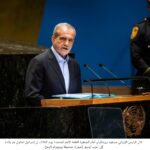

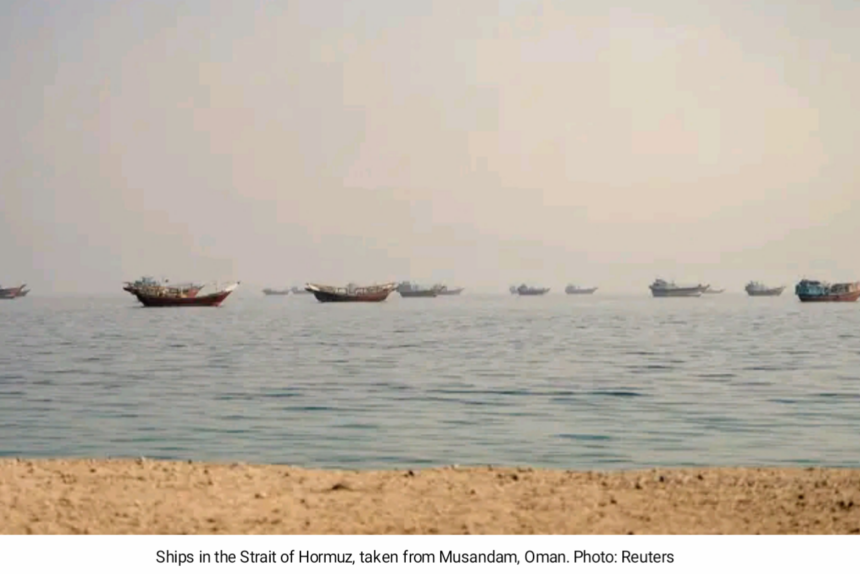
The United States and Iran are exploring a possible phased arrangement aimed at ending their nearly seven-month conflict, with the reopening of the Strait of Hormuz emerging as the central issue in negotiations taking place on the sidelines of the United Nations General Assembly in New York.
According to sources familiar with the discussions, the broad idea under consideration would involve Iran allowing shipping to resume through the strategically important waterway while the United States eases or lifts its economic blockade on Iran. Tehran could also seek access to some frozen Iranian assets as part of a wider understanding.
The talks remain uncertain, however, as Washington and Tehran are reluctant to give up the leverage they have accumulated during the conflict. Iran controls access to a vital global energy route, while the United States has imposed severe economic pressure that has sharply reduced Iran’s ability to export oil and obtain foreign currency.
The result is a diplomatic standoff in which both governments have reasons to negotiate but neither wants to appear to be surrendering under pressure.
The Strait of Hormuz has therefore become more than a military flashpoint. It is now at the centre of a wider diplomatic struggle involving oil supplies, sanctions, shipping, regional security and the future direction of the conflict.
Hormuz at the centre of the negotiations
The Strait of Hormuz is one of the world’s most important energy corridors. Its strategic position gives Iran significant influence over maritime traffic entering and leaving the Persian Gulf.
For Washington, restoring reliable freedom of navigation through the strait is a major objective. For Tehran, maintaining control over the waterway is closely linked to its bargaining position and broader national security interests.
A senior Iranian official familiar with the talks said a phased agreement could provide a way out of the current deadlock. Under such an arrangement, the first stage would focus on ending the US blockade and reopening Hormuz. Other difficult issues could then be addressed in later stages.
The proposal reflects the reality that a comprehensive agreement may be difficult to reach immediately. Instead of resolving every dispute at once, negotiators could attempt to establish a temporary framework that reduces the immediate pressure and creates space for further negotiations.
Such an approach would also allow both governments to claim that they had protected their core interests.
Iran could point to the removal of the economic pressure and the restoration of access to international trade. The United States could point to the reopening of an international shipping route that has become increasingly important to global energy markets.
But even this limited first step faces significant obstacles.
Neither side wants to surrender its leverage
The central problem is that the same tools that brought the two sides back to negotiations are also making compromise difficult.
Washington’s economic pressure is hurting Iran’s economy. The blockade and sanctions have restricted oil exports and placed pressure on the government’s access to hard currency.
At the same time, Iran’s position around Hormuz gives Tehran leverage over a waterway that is vital to global energy transportation.
Neither side wants to give up its bargaining power without receiving something significant in return.
For Tehran, simply reopening the strait without securing meaningful economic relief would weaken one of its strongest negotiating tools. For Washington, lifting economic pressure before securing reliable freedom of navigation could reduce the effectiveness of the pressure campaign.
This creates a difficult sequence problem.
Iran wants the pressure removed before making major concessions. Washington wants Iran to make concessions before the pressure is removed.
The negotiations are therefore focused on finding a sequence in which both sides can take limited steps without believing that they have given away their main advantage.
Iran may soften its position on transit fees
One area where Tehran appears to have shown some flexibility is the question of fees for vessels using the Strait of Hormuz.
Regional sources familiar with the talks said Iran may be willing to remove a demand for transit payments from the main agreement and place the issue in a separate attachment or side arrangement.
The change would not necessarily mean Iran has abandoned its broader position regarding the waterway. Instead, it would allow negotiators to remove one of the most controversial issues from the immediate agreement and concentrate on reopening navigation.
Gulf states have rejected the idea of Iranian transit fees, arguing that the strategic waterway should remain open to international shipping without becoming a mechanism for political or economic pressure.
For Iran, however, the question goes beyond money.
A senior Iranian official indicated that Tehran’s priority is maintaining what it considers administrative control over the waterway. The issue of fees could therefore be postponed, but the question of Iran’s authority and role around the strait remains much more sensitive.
That distinction could become important in any eventual agreement.
The US economic campaign is increasing pressure on Tehran
The negotiations are taking place against the backdrop of an increasingly severe American economic campaign.
Washington has imposed successive sanctions aimed at cutting off Iran’s sources of foreign currency and weakening the networks that support the Iranian government and Islamic Revolutionary Guard Corps.
The pressure has extended to Iran’s remaining commercial aviation sector and other support networks.
US President Donald Trump has warned that Iran’s economy could continue to deteriorate unless Tehran reaches an agreement with Washington.
A White House official quoted in the discussions said the administration believed the United States remained in a strong negotiating position and that Trump was under no immediate obligation to make a deal.
Iran, however, is facing its own calculation.
The longer the confrontation continues, the greater the economic cost. Prolonged restrictions on oil exports, international trade and access to financial resources could place additional pressure on the Iranian government.
That economic reality appears to be one reason Tehran is examining a phased diplomatic solution even while maintaining a hard public position.
Washington faces its own political timetable
The US congressional midterm elections on November 3 are another factor shaping the negotiations.
Trump has previously suggested that an agreement with Iran could come after the midterm elections. But some analysts and former US officials believe the period before the election could also create incentives for both sides to reach an understanding.
A reopening of Hormuz could reduce tensions in the Persian Gulf and ease concerns about oil supplies. If energy prices and US gasoline prices come under less pressure, that could have political significance in the United States.
For Iran, securing economic relief while negotiations are active could also be more attractive than waiting for a later stage when Washington might have fewer political constraints.
Former US negotiator Dennis Ross, according to the Reuters report, estimated that the chance of an agreement before the midterm elections was relatively limited. His assessment was presented as an individual analysis rather than an official forecast.
The broader point is that the election creates a deadline of sorts, even if it is not a formal diplomatic deadline.
The question is whether Washington and Tehran can convert their current leverage into a temporary agreement before the political environment changes.
Gulf states want the crisis contained
The Gulf countries are closely watching the negotiations because any prolonged confrontation around Hormuz could directly affect their economies, energy exports and security.
Regional leaders have reportedly raised questions with Trump about the US administration’s longer-term strategy and what would happen if Iran refused to return to negotiations after the current diplomatic effort.
At the same time, Gulf governments have made clear that they do not want Iran to exercise unrestricted control over the Strait of Hormuz.
Their position reflects two concerns that may appear contradictory but are closely connected.
They want freedom of navigation through the waterway, but they also want the conflict between Washington and Tehran to end before it causes deeper regional instability.
An extended war could expose Gulf states to military risks while disrupting oil exports and international investment.
The governments of the region therefore have an interest in both restoring maritime traffic and preventing the conflict from becoming a permanent regional confrontation.
Bab el-Mandeb adds another layer of risk
The Strait of Hormuz is not the only major maritime chokepoint affected by the wider conflict.
The Bab el-Mandeb Strait, which connects the Red Sea with the Gulf of Aden, has also become part of the strategic calculations surrounding the war.
The two waterways are separated geographically, but they are connected through the wider system of global shipping and energy transportation.
Any prolonged disruption in both areas could have consequences far beyond the Middle East.
The concern is particularly significant for shipping between Asia and Europe. Vessels that cannot safely use the Red Sea and Suez Canal route may be forced to take longer routes around Africa, increasing travel time and operating costs.
The combination of pressure around Hormuz and instability around Bab el-Mandeb therefore creates a much wider economic problem.
It is no longer simply a question of whether Iran and the United States can reach a military understanding. The issue also affects shipping companies, energy markets, insurers and countries dependent on imported fuel and goods.
Iran continues to prepare for another escalation
Despite the diplomatic contacts in New York, Iranian officials have made clear that Tehran is not assuming that negotiations will succeed.
A senior Iranian official said Iran continues to prepare for the possibility of renewed military confrontation with Washington.
The official also accused the United States of using economic pressure and the threat of military action as tools of coercion.
The message from Tehran is therefore two-sided.
Iran is willing to explore diplomacy, but it does not want that diplomacy to be interpreted as a sign that it has abandoned its military options.
This position reflects the difficult balance facing the Iranian government. Moving too far toward compromise could create domestic political problems, while refusing to negotiate could prolong economic pressure and increase the risk of another military confrontation.
The same dilemma exists in Washington.
The Trump administration wants Iran to make concessions, but continued pressure also carries the risk that Tehran will respond through military or regional channels rather than accept the terms demanded by Washington.
The trust problem
Even if negotiators agree on the basic principles of a phased arrangement, implementation could prove difficult.
The two governments have already experienced the collapse of an earlier understanding. That history makes both sides wary of temporary agreements that could disappear after a political or military change.
For any new arrangement to work, Washington would want confidence that Iran would maintain freedom of navigation through Hormuz. Tehran, meanwhile, would want assurances that economic relief would not be withdrawn immediately after it makes concessions.
This is why the question of durability has become almost as important as the terms of the agreement itself.
A temporary arrangement may stop the immediate crisis but fail to resolve the deeper dispute.
A more durable agreement would require both sides to accept mechanisms for monitoring compliance and responding to violations.
That could make the negotiations considerably more complicated.
A narrow diplomatic window
The New York talks have opened a possible route away from continued confrontation, but the path remains uncertain.
The basic disagreement is straightforward.
Washington wants its economic and military pressure to produce Iranian concessions. Tehran wants the pressure reduced before making those concessions. Gulf governments want the waterways open and the conflict contained.
All three objectives overlap in some areas but conflict in others.
The Strait of Hormuz sits at the centre of that tension.
If the United States and Iran can agree on a sequence in which Iran restores navigation and Washington provides meaningful economic relief, the current crisis could move toward de-escalation.
If they fail, the same leverage that brought them to the negotiating table could instead deepen the confrontation.
For Iran, Hormuz remains a central strategic asset. For the United States, restoring unrestricted navigation is a major objective. For Gulf states and much of the international economy, the priority is preventing the world’s major shipping and energy routes from becoming permanent instruments of geopolitical pressure.
The coming weeks may therefore determine whether the New York negotiations become the beginning of a gradual exit from the war or another temporary pause before renewed confrontation.
For now, neither Tehran nor Washington appears ready to surrender its main bargaining position. That leaves diplomacy alive, but fragile, with the Strait of Hormuz at the centre of the struggle.