

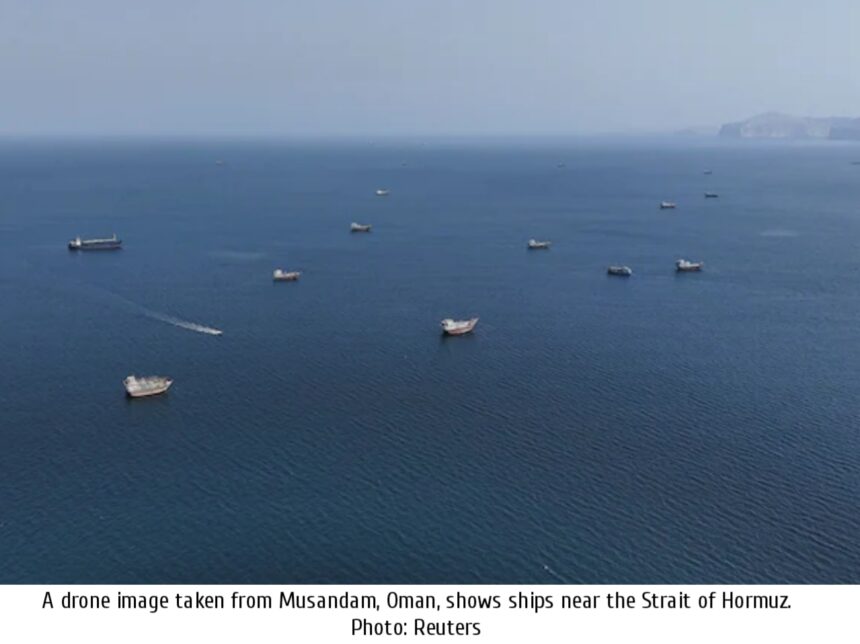
BAGHDAD, October 3, 2026 — Iraq has transported 2 million barrels of crude oil through the Strait of Hormuz aboard a very large crude carrier, marking a significant change in the way the country is moving and marketing some of its oil amid continuing tensions in the strategic waterway.
Iraq’s state-owned Oil Tanker Company said the shipment was the company’s first operation of this kind in decades. The move allows Iraqi crude to be transported beyond the country’s main export terminal at Basra and gives the State Organization for Marketing of Oil, known as SOMO, greater flexibility over where and how the cargo can ultimately be sold.
The operation comes at a sensitive time for global energy markets. The Strait of Hormuz is one of the world’s most important oil transit routes, linking the Gulf with international shipping lanes and providing a critical pathway for crude exports from several major oil-producing countries.
The waterway has become particularly significant during the current conflict involving Iran and the United States. Iran has effectively closed the strait during the conflict, creating major challenges for oil producers and shipping companies whose operations depend on safe passage through the narrow maritime corridor.
Against that backdrop, Iraq’s decision to move crude aboard a very large crude carrier through the strait represents more than a routine shipping operation. It highlights Baghdad’s efforts to preserve flexibility in its oil trade while strengthening the capacity of its state-owned tanker fleet.
Ali Qais Abdul Jabbar, director general of Iraq’s Oil Tanker Company, said the shipment could give SOMO an opportunity to benefit from better sales and pricing conditions.
For Iraq, which relies heavily on oil revenues to support its economy and government spending, the ability to control more stages of the transportation process can have significant commercial value.
A change in Iraq’s oil transportation strategy
Iraq is one of the world’s major oil producers, and most of its crude exports traditionally move from the southern oil fields toward the export infrastructure around Basra.
Under the conventional model, crude is delivered to export terminals, where international buyers arrange shipping and transportation. Iraq’s latest move indicates an effort to increase the role of its own tanker company in the transportation chain.
Rather than handing the cargo over at Basra, the Iraqi Oil Tanker Company transported the crude through the Strait of Hormuz itself. This gives SOMO more options in determining where the oil can be marketed and potentially allows the company to respond more quickly to changes in international demand and pricing.
The significance of the move lies partly in that flexibility.
Oil prices can vary considerably between different markets, depending on supply conditions, transportation costs, geopolitical risks and the availability of alternative grades of crude. Having greater control over transportation can allow an oil seller to make decisions closer to the point of sale rather than committing the cargo at an earlier stage.
Abdul Jabbar said the operation could help SOMO take advantage of better sales opportunities and prices.
That approach also reflects Iraq’s broader effort to strengthen its position in the international oil market.
Building a larger Iraqi tanker fleet
The Oil Tanker Company’s role is not expected to end with the latest shipment.
According to Abdul Jabbar, the company is working to acquire and own specialized crude oil tankers as part of an effort to expand its fleet.
Owning additional vessels would give Iraq greater control over its oil transportation and could reduce its dependence on foreign shipping companies for some cargoes.
The global oil trade depends heavily on a complex network of tanker operators. Large crude carriers move millions of barrels across oceans and through strategically important waterways. For oil-producing countries, access to these vessels can become especially important during periods of geopolitical tension, when shipping costs rise and insurance risks increase.
For Iraq, expanding its own tanker fleet could therefore be viewed as part of a longer-term strategy to strengthen its position in the international shipping market.
The plan could also increase competition between Iraq’s state-owned tanker company and established regional shipping firms.
The company has indicated that it wants to strengthen its ability to compete with regional operators. That would require not only purchasing vessels but also developing the technical, operational and commercial capabilities needed to manage a modern tanker fleet.
The Strait of Hormuz factor
The latest Iraqi shipment carries particular importance because of the circumstances surrounding the Strait of Hormuz.
The strait connects the Persian Gulf with the Gulf of Oman and the wider Arabian Sea. Its geographic position makes it a critical route for energy exports from the Gulf region.
Any prolonged disruption in the waterway can have consequences far beyond the countries immediately surrounding it. Oil traders, refiners, shipping companies and governments around the world closely monitor developments in the strait because disruptions can affect transportation costs, supply expectations and crude prices.
For Iraq, the issue is especially sensitive because its southern oil exports depend heavily on maritime routes.
The Iraqi government has previously secured Iranian permission for Iraqi oil tankers to transit the Strait of Hormuz. That arrangement has taken on greater importance during the current conflict, as Iran has effectively closed the waterway while fighting the United States.
The fact that an Iraqi tanker was able to transport such a large cargo through the strait demonstrates the importance of diplomatic arrangements surrounding the movement of Iraqi oil.
It also shows the complicated position Iraq occupies in the regional crisis.
Baghdad has to protect its economic interests while operating in a region where competing powers have major political and military interests. Iraq’s oil exports are essential to its economy, while the country’s geographic position places it close to several major points of geopolitical tension.
Implications for global oil markets
The movement of 2 million barrels is relatively small compared with global oil consumption, but its strategic significance is larger than the volume alone suggests.
The shipment demonstrates that producers and state oil companies are adapting their logistics in response to changing conditions around one of the world’s most important maritime energy routes.
Oil markets are highly sensitive to expectations. Traders do not need to see a complete halt in supplies for prices to react. Concerns about future disruptions can influence crude prices, tanker rates, insurance premiums and purchasing decisions.
The Strait of Hormuz is particularly important because a significant amount of the world’s seaborne oil trade normally passes through the waterway.
A sustained closure or severe restriction would therefore create pressure on alternative transportation routes and could increase competition for available tankers.
For Iraq, maintaining access to the strait is essential for the movement of its southern crude exports. The latest operation suggests that the country is seeking to preserve as much flexibility as possible under difficult circumstances.
The ability to transport crude farther from Basra before completing the sale could also provide SOMO with additional options in dealing with international buyers.
Why tanker ownership matters
Oil-producing countries have different approaches to shipping. Some rely extensively on international tanker companies, while others maintain large state-owned fleets.
There are advantages and disadvantages to both models.
Using external shipping companies can provide flexibility without requiring the producer to purchase and maintain large numbers of vessels. However, reliance on third-party operators can become more expensive or complicated when geopolitical risks rise.
Owning tankers gives a producer greater direct control over transportation schedules and cargo movements. But it also requires substantial investment in vessels, maintenance, crews, insurance, safety systems and management.
For Iraq’s Oil Tanker Company, the decision to expand its fleet suggests that the government sees greater control over transportation as strategically useful.
The latest VLCC operation provides an example of how such a strategy could work.
A very large crude carrier can transport millions of barrels in a single voyage. Such ships are central to the international oil trade because their large capacity allows producers and traders to move substantial volumes over long distances.
For Iraq, developing access to these vessels could increase its ability to manage exports according to market conditions.
Iraq’s wider dependence on oil
The issue also needs to be viewed in the context of Iraq’s dependence on petroleum revenues.
Oil remains the foundation of Iraq’s export economy and a major source of government income. Changes in crude prices, export volumes and transportation costs can therefore have direct consequences for the country’s public finances.
That dependence makes export security a national economic priority.
Any disruption to Iraq’s ability to move crude from its southern fields to international buyers could put pressure on government revenues. The country therefore has strong incentives to maintain reliable export routes and develop alternatives where possible.
The expansion of the tanker fleet could form part of that effort.
By increasing its own shipping capacity, Iraq could seek greater control over the movement of its crude and potentially improve its negotiating position with buyers and shipping companies.
However, tanker ownership alone cannot eliminate the risks associated with geopolitical conflicts or the closure of strategic waterways.
The Strait of Hormuz remains a geographic bottleneck, and any major military escalation affecting the waterway could create challenges for all shipping operators, regardless of who owns the vessel.
A test for Iraq’s oil logistics
The latest operation is also a test of Iraq’s ability to operate large crude carriers under difficult regional conditions.
Transporting 2 million barrels requires coordination between the tanker company, oil marketer, port authorities, maritime operators and other parties involved in the voyage.
Security considerations become particularly important when a vessel is moving through a contested or restricted maritime environment.
The Iraqi government will therefore be watching the outcome of this operation closely.
If similar voyages can be conducted safely and commercially, Iraq may have a stronger case for expanding its tanker fleet and taking a larger role in transporting its own crude.
If the risks or costs prove too high, the country may continue relying more heavily on international shipping companies.
For now, the operation sends a clear signal that Iraq is looking for greater control over the logistics of its oil exports.
Regional competition and shipping
Iraq’s ambitions also come as Gulf and Middle Eastern countries continue to invest heavily in maritime infrastructure and energy logistics.
Major oil exporters have developed extensive tanker fleets and shipping networks to support their international trade. Competition among regional shipping companies can be intense, particularly when freight rates rise because of geopolitical disruptions.
Iraq’s state-owned tanker company is seeking to become a stronger participant in this market.
Its planned acquisition of specialized crude tankers suggests that the latest voyage may be part of a broader strategy rather than a one-off experiment.
The strategy could eventually give Iraq greater independence in arranging shipments and could allow SOMO to negotiate oil sales with transportation considerations more directly integrated into the process.
What comes next
The immediate question is whether Iraq will conduct more shipments of this kind.
The company’s announcement that it is seeking to acquire additional specialized tankers suggests that further expansion is possible.
Much will depend on conditions in the Strait of Hormuz, the broader regional conflict, international shipping costs and the commercial performance of the company’s tanker operations.
The ability to secure permission for Iraqi tankers to pass through the strait will also remain an important factor.
For SOMO, the commercial objective is straightforward: maximize the value of Iraq’s crude exports by having more options over where and when cargoes are sold.
For the Oil Tanker Company, the longer-term goal appears to be greater control over the transportation side of that business.
The 2 million-barrel shipment is therefore significant because it connects two priorities for Iraq: protecting its oil export revenues and rebuilding its own maritime shipping capacity.
At a time when the Strait of Hormuz has become a major flashpoint in the global energy system, Iraq’s decision to transport crude through the waterway on its own very large crude carrier illustrates how geopolitical instability is reshaping the practical business of oil.
The shipment itself may represent only one voyage, but it reflects a wider effort by Baghdad to reduce its dependence on external shipping arrangements, increase flexibility in selling its crude and strengthen the role of its state-owned tanker company.
Whether that strategy will produce lasting commercial benefits will depend on what happens next in the region.
For now, Iraq has demonstrated that it can move a major crude cargo through the Strait of Hormuz under highly unusual circumstances. The operation gives SOMO additional flexibility, provides the tanker company with valuable experience and offers Baghdad another tool for protecting its oil trade during a period of heightened uncertainty in the Gulf.