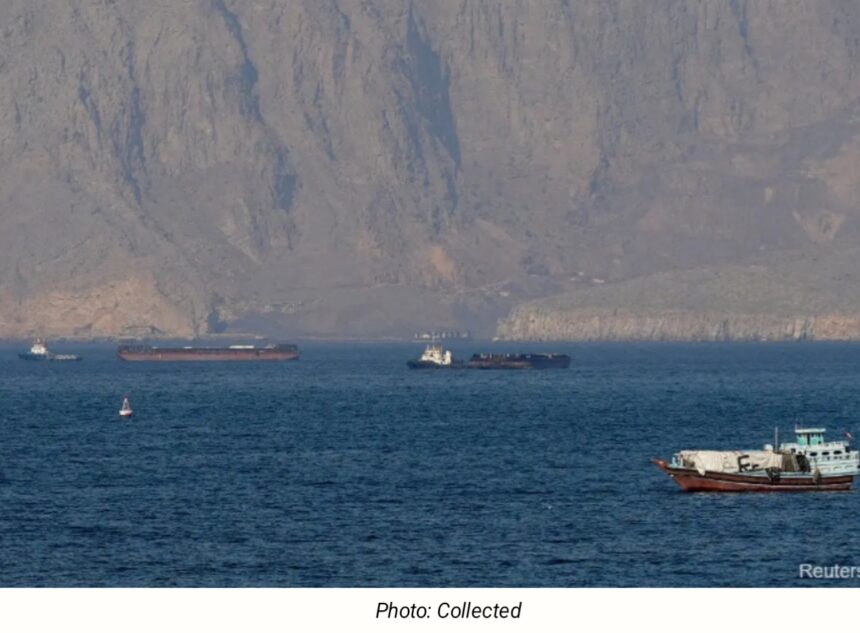
The Strait of Hormuz has once again emerged at the centre of global attention as diplomatic initiatives, military preparations and regional tensions combine to create one of the most sensitive geopolitical situations in the Middle East. The narrow waterway, through which a significant portion of the world’s energy supplies passes, has become a focal point in the confrontation between Iran, the United States and Gulf countries seeking to protect their economic and security interests.
Recent reports suggest that Oman has proposed a new framework for managing security and navigation in the Strait of Hormuz, including the possibility of a joint management mechanism involving regional stakeholders. According to these reports, the proposal draws inspiration from the model used in the Strait of Malacca, where Indonesia, Malaysia and Singapore cooperate on maritime security and navigation issues.
The reported proposal has attracted attention because it could represent a shift in how regional powers approach one of the world’s most important shipping routes. For decades, the Strait of Hormuz has been treated as an international waterway, but repeated military tensions, sanctions and threats of disruption have raised questions about whether a new regional security arrangement could emerge.
Under the reported framework, shipping companies would contribute voluntary fees rather than mandatory payments. Supporters of the idea argue that such an arrangement could provide a mechanism for cooperation while keeping Iran involved in discussions about the security of a waterway located near its coastline. Critics, however, question whether such a system could create uncertainty for international shipping and potentially increase political influence over global trade routes.
Iran has not yet announced a final position on the reported proposal. Iranian officials have repeatedly stated that regional security should be managed by neighbouring countries rather than outside powers. Tehran has also accused the United States of contributing to instability in the region through military deployments and sanctions policies.
Iranian Foreign Minister Abbas Araghchi has argued that regional insecurity has been worsened by what Tehran describes as aggressive actions by Washington. Iranian officials maintain that their country’s military posture is defensive and aimed at protecting national sovereignty. The United States, however, says its presence in the region is intended to protect international shipping, support allies and deter threats against American interests.
At the same time, military developments surrounding Iran have intensified international speculation. Reports indicate that the United States has increased military readiness in the region, including the deployment of advanced aircraft, support aircraft and other strategic assets. Analysts say such moves can serve multiple purposes, including deterrence, preparation for possible operations and strengthening negotiating leverage.
However, military experts caution that any direct confrontation with Iran would carry significant risks. Iran possesses a large missile arsenal, extensive drone capabilities, regional partners and strategic geographical advantages. A conflict could potentially affect not only Iran and the United States but also neighbouring Gulf states, international energy markets and global shipping networks.
One of the most discussed potential targets in any possible military scenario is Iran’s underground strategic infrastructure, including facilities built deep inside mountainous areas. Analysts say such locations present major challenges because of their depth, reinforced construction and difficult terrain. Even advanced military technology may not guarantee complete destruction of such facilities.
Experts warn that any military strike against Iran could trigger a wider regional response. Iran has repeatedly stated that it would respond strongly to attacks, while its regional allies and affiliated groups have demonstrated the ability to target military and economic infrastructure beyond Iran’s borders.
Meanwhile, Gulf countries are facing a complex strategic dilemma. Nations such as Saudi Arabia, the United Arab Emirates and Qatar depend heavily on economic stability, energy exports and international investment. Their modern infrastructure, energy facilities and major financial centres are considered key national assets but could also become vulnerable during a major regional conflict.
Previous attacks on Gulf energy infrastructure have highlighted these risks. Drone and missile attacks against critical facilities in the region have demonstrated that non-state actors can create significant disruption despite having fewer resources than traditional military powers.
The role of Yemen’s Houthi movement has added another layer of complexity to regional security calculations. Unlike conventional state actors, armed groups often operate with different strategic calculations and may not face the same diplomatic constraints as governments. Their ability to target shipping routes and infrastructure has become a major concern for regional powers.
The economic consequences of any escalation could be substantial. The Strait of Hormuz remains one of the world’s most important energy corridors, and disruption in the area could push oil prices higher, increase transportation costs and contribute to global inflation.
Historically, energy market pressures have often influenced diplomatic decisions during Middle East crises. Governments around the world closely monitor oil prices because sharp increases can affect economies, financial markets and consumer costs.
Analysts say Washington faces a difficult balancing act: maintaining pressure on Iran while avoiding a conflict that could destabilise energy markets and create broader security challenges. The United States remains one of the most influential military powers in the region, but experts note that regional dynamics have become increasingly complicated due to the rise of China, Russia and local powers seeking greater independence in foreign policy.
The debate over Iran’s role in regional security also reflects a wider transformation in Middle Eastern politics. Some Gulf states that historically relied heavily on American security guarantees have increasingly explored diplomatic engagement with regional rivals, including Iran. Observers say this does not necessarily represent an abandonment of traditional alliances but rather an attempt to diversify security strategies.
For Arab states, the central challenge is finding a balance between cooperation with Washington and managing relations with neighbouring Iran. Geography remains a permanent factor: Iran will remain a major regional power, and Gulf countries must consider long-term strategies that account for this reality.
The future of the Strait of Hormuz will likely depend on whether diplomacy can prevent escalation. A cooperative security arrangement could reduce tensions, but a breakdown in negotiations could increase the risk of confrontation.
The current crisis demonstrates that the Middle East is no longer shaped only by military power. Energy markets, shipping routes, diplomacy, technology and economic interests are all interconnected. The developments around the Strait of Hormuz will therefore have consequences far beyond the region, affecting global security and the international economy.
As Iran, the United States and Gulf countries navigate this uncertain period, the world is watching closely. Whether the coming months bring compromise or confrontation may determine not only the future of the Strait of Hormuz but also the broader balance of power in the Middle East.
Discussions surrounding Oman’s Hormuz proposal: Will Iran get a new strategic role?