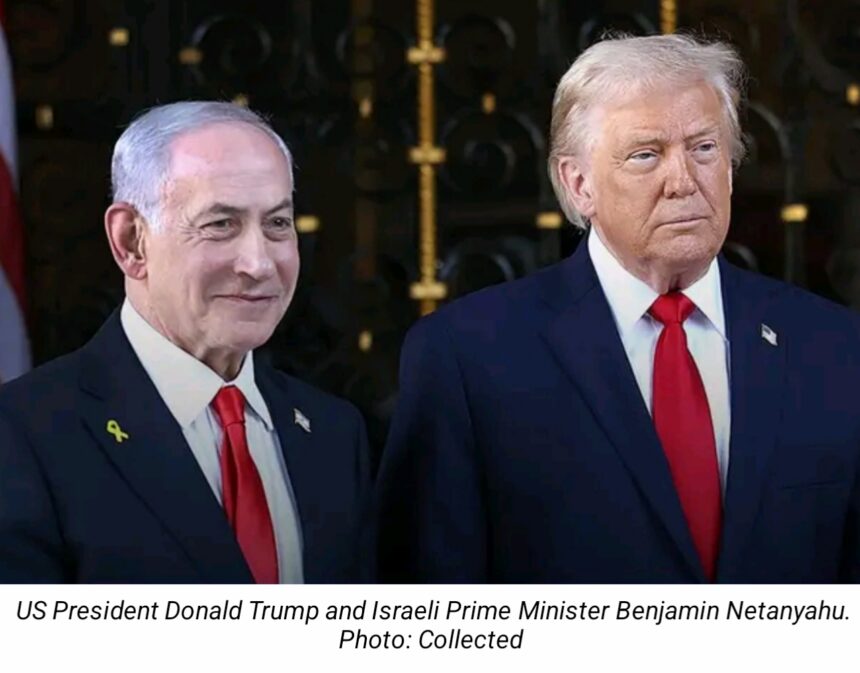
WASHINGTON — U.S. President Donald Trump has declared that Israeli Prime Minister Benjamin Netanyahu “will not be arrested, in any way, shape, or form, while in the United States of America,” directly responding to remarks by New York City mayoral candidate Zohran Mamdani, who warned that Netanyahu could face arrest if he visited the city. Trump’s statement has intensified an already heated political and diplomatic debate over the jurisdiction of the International Criminal Court (ICC), the United States’ longstanding opposition to its authority over American and Israeli officials, and the deep divisions surrounding Israel’s military campaign in Gaza. By publicly guaranteeing Netanyahu’s protection while on American soil, Trump reaffirmed Washington’s traditional position that it does not recognize ICC jurisdiction over Israel and signaled unwavering support for one of the United States’ closest allies in the Middle East.
The controversy emerged after Mamdani suggested that, if elected mayor of New York City, he would seek to have Israeli Prime Minister Benjamin Netanyahu arrested in connection with the ICC’s arrest warrant related to alleged war crimes and crimes against humanity. Although legal experts note that a New York City mayor has no independent authority to arrest a foreign head of government under international criminal law, the comments quickly drew national and international attention, prompting strong reactions from political leaders across the United States. Trump’s response was among the most forceful, dismissing any possibility that Netanyahu would face detention in America and framing the issue as one of national sovereignty and U.S. support for Israel.
The exchange reflects the increasingly polarized political landscape in the United States over the Israel-Gaza conflict. While the Biden and Trump administrations have differed on several aspects of Middle East policy, both major political traditions in Washington have consistently rejected the ICC’s jurisdiction over Israeli officials. The United States is not a party to the Rome Statute, the treaty that established the ICC, and successive administrations have argued that the court lacks authority over citizens of countries that have not ratified the treaty. Israel has likewise rejected the ICC’s allegations, describing the court’s actions as politically motivated and maintaining that its military operations are conducted in accordance with international law.
The latest dispute also underscores how international conflicts have become increasingly intertwined with domestic American politics. As campaigning intensifies ahead of key elections, issues surrounding Gaza, Israel, and international justice have become central topics of debate, particularly in cities with diverse communities and significant Jewish, Muslim, and Arab populations. Trump’s unequivocal backing of Netanyahu is expected to resonate strongly among his political base and pro-Israel supporters, while critics argue that accountability for alleged violations of international humanitarian law should apply equally to all leaders regardless of political alliances.
Diplomatic observers say the controversy is unlikely to alter existing U.S. policy toward Israel or the ICC, but it highlights the widening political divide over America’s role in the Middle East and the broader debate about international justice. As the Gaza conflict continues to shape global diplomacy, statements from senior American political figures are expected to remain under close international scrutiny, reflecting not only domestic political calculations but also Washington’s enduring strategic relationship with Israel.