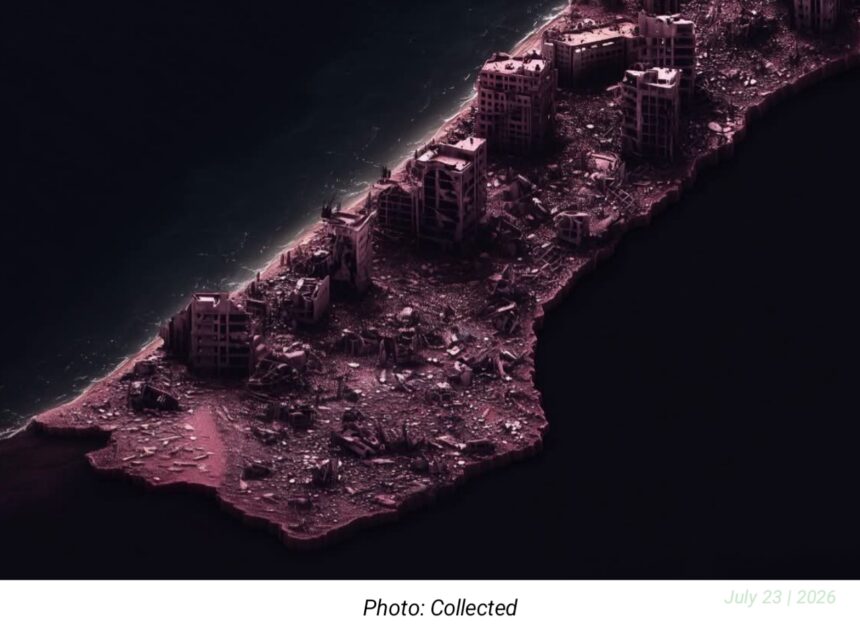
The reconstruction of Gaza will require an estimated $71 billion and must place Palestinians at the center of every stage of the recovery process, according to a new international assessment that warns rebuilding the war-ravaged enclave cannot succeed through infrastructure investment alone. The report argues that decades of conflict, compounded by the latest devastating military campaign, have left Gaza facing one of the most severe humanitarian and development crises in modern history, with widespread destruction of homes, hospitals, schools, roads, electricity networks, water systems and public institutions. It stresses that reconstruction efforts must go beyond replacing damaged buildings and instead focus on restoring essential services, reviving the local economy, creating employment opportunities and ensuring long-term political and social stability. The assessment emphasizes that Palestinians must play a leading role in planning, implementing and overseeing the rebuilding process, warning that excluding local communities from decision-making would undermine the legitimacy, effectiveness and sustainability of any recovery initiative. It also calls for coordinated international support involving donor governments, multilateral financial institutions, humanitarian organizations and regional partners, while highlighting the urgent need for secure humanitarian access, transparent governance and reliable funding mechanisms. Analysts say the estimated $71 billion price tag reflects not only the enormous scale of physical destruction but also the economic collapse and institutional damage suffered during the conflict, making Gaza’s recovery one of the largest post-war reconstruction challenges in recent decades. The report concludes that without a durable ceasefire, meaningful political progress and guarantees for the protection of civilians, even substantial international financial commitments may fail to deliver lasting reconstruction, leaving millions of Palestinians vulnerable to continued instability and humanitarian hardship.
Gaza reconstruction requires $71 billion, Palestinians must lead: International assessment