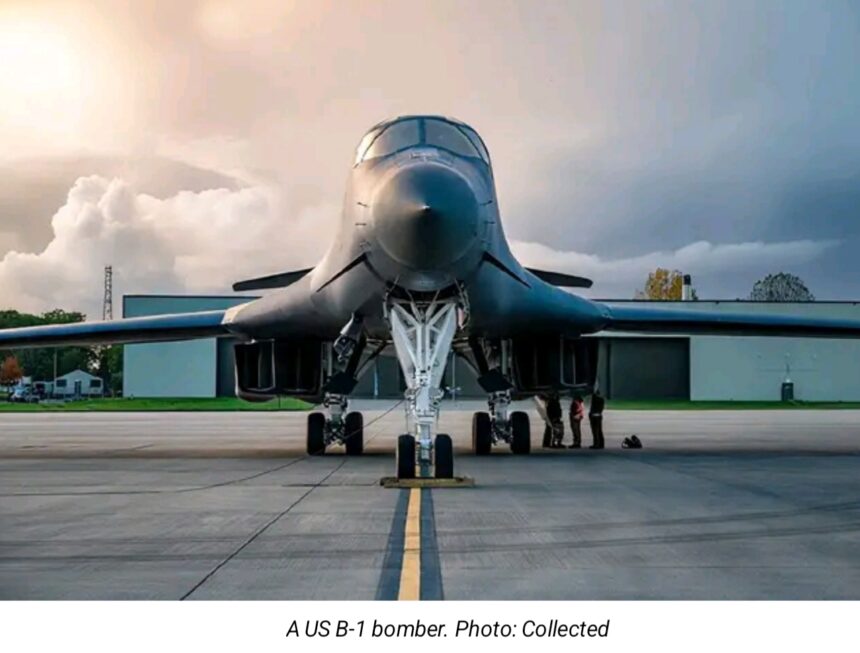
Washington/Tehran — U.S. President Donald Trump has officially authorized the deployment of U.S. Air Force B-1B Lancer strategic bombers for military operations against targets inside Iran, marking a significant escalation in the ongoing confrontation between Washington and Tehran. U.S. officials confirmed that the long-range bombers were used in coordinated strikes against designated military objectives linked to Iran’s security infrastructure, underscoring the administration’s willingness to employ high-end strategic assets in response to what it describes as growing threats to American forces, regional allies, and international maritime security. Capable of carrying a large payload of precision-guided conventional weapons over intercontinental distances, the B-1B represents one of the most powerful conventional strike platforms in the U.S. arsenal, and its deployment is widely viewed by defense analysts as both a military operation and a strategic signal intended to deter further Iranian actions. According to U.S. defense officials, the bombers operated from forward-deployed bases and conducted carefully planned strikes on selected military facilities, although authorities have not publicly disclosed the full extent of the damage or the exact number of targets hit. President Trump warned that the United States remains prepared to take additional military action should Iran or Iran-backed groups threaten American personnel, allied interests, or freedom of navigation in the region, while emphasizing that Washington would respond decisively to any further escalation. Iranian authorities have yet to release a comprehensive assessment of the reported strikes but reiterated that the country would defend its sovereignty and national security against any external aggression. Security experts say the introduction of B-1 strategic bombers into the conflict represents a notable shift in the military balance and raises concerns that the confrontation could expand beyond isolated exchanges into a broader regional crisis involving multiple actors. The development has intensified international concerns over the stability of the Middle East, with analysts warning that prolonged hostilities could disrupt global energy supplies, threaten commercial shipping through the Strait of Hormuz, and increase volatility in international oil markets. At the same time, diplomatic efforts led by regional mediators, including Qatar and Oman, continue in an attempt to prevent further escalation, although the latest military developments suggest that the prospects for an immediate de-escalation remain highly uncertain.
Global concern over Washington’s strategic move, B-1 bomber mission in Iran