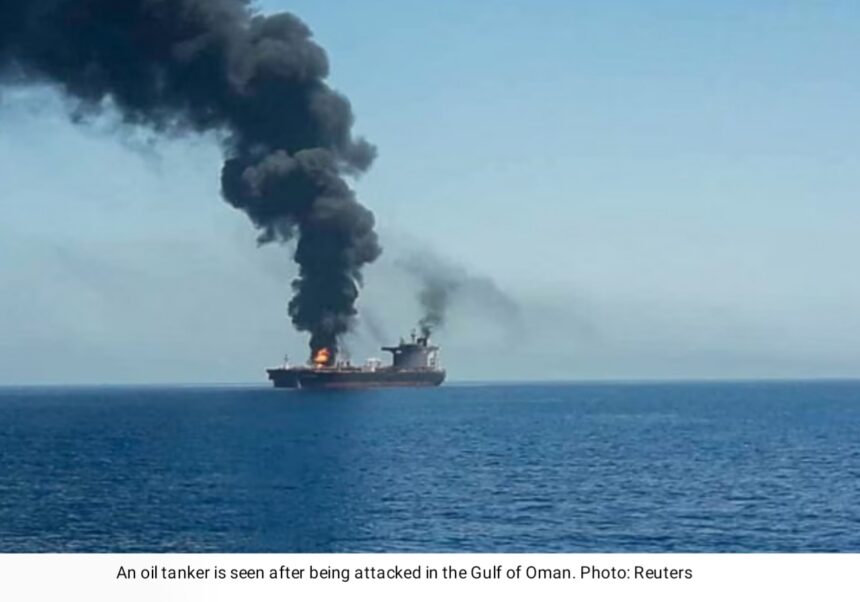
WASHINGTON/TEHRAN — Tensions between the United States and Iran have escalated sharply after the U.S. military said it struck three Iranian oil tankers on Saturday in retaliation for what Washington described as unprovoked attempts by Iran to attack two U.S. Navy warships. U.S. Central Command said the targeted vessels were part of a multibillion-dollar shadow network allegedly generating revenue for Iran’s Islamic Revolutionary Guard Corps and allied armed groups abroad. According to CENTCOM, one tanker was “permanently disabled” off the coast of Kharg Island, Iran’s primary oil-export hub, while another was struck near the southern port city of Jask. A third tanker, which the U.S. military said was carrying no oil, was “completely destroyed” in the Gulf of Oman after its crew was directed to abandon the vessel. Iran has not acknowledged attacking U.S. warships, and the timing and circumstances of the alleged missile attacks cited by Washington remain unclear. Iranian state media earlier reported that U.S. forces had struck an Iranian oil tanker near Kharg Island and circulated images showing a vessel emitting thick black smoke. The reported strikes come days after the United States and Iran engaged in their most intense fighting in weeks, further raising fears that the confrontation could widen across the strategically vital Persian Gulf. Kharg Island is central to Iran’s oil-export infrastructure, making any military action in the area particularly significant for global energy markets. Iranian oil exports have already faced mounting pressure amid a U.S. naval blockade of Iranian ports, according to the reports. The latest exchange threatens to deepen economic and military pressure on Tehran while increasing risks to commercial shipping and energy supplies across the Gulf region. Any prolonged disruption around Iran’s oil infrastructure or major maritime routes could have repercussions well beyond the Middle East, potentially affecting global crude prices, shipping costs and energy security. With neither side showing signs of backing down, the latest strikes mark another dangerous escalation in the confrontation between Washington and Tehran and raise fresh questions over whether the conflict can be contained before it develops into a broader regional crisis.
Gulf heats up over attacks on three oil tankers, US-Iran face-off